
Demetre Chiparus – The greatest sculptural artist of the art deco period.
Demetre Chiparus is considered by most collectors of Art Deco statues as King of Art Deco statues. The quality of his work was outstanding and takes your breath away. His works represented the New Woman.
Demetre Haralamb (named after his Father) Chiparus was born in 1886 in Romania.
At the age of 22 he left Romania and his upper class family and went to study sculpture in Italy.
He left Italy for Paris in 1912 – drawn as were many artists at this time by the Ecole National Superieure des Beux Arts which was the most prestigious fine arts academy in Europe. Money was not a problem for him as his family had money.
Paris was considered as the arts Capitol of the world during the 1920s and 30s. Most of the top schools and foundries were based in and around Paris at this time. Artists were drawn to its bohemian bars and meeting houses.
In 1924 Chiparus met his wife Julliene Lullier but they did not marry until 1939. I believe Julliene was his face model for many of his statues. I often imagine her saying to him “you can use your other models for your favourite other body parts but you use my face!”. The likeness can be seen in the portrait paintings by Chiparus of her on pages 206 and 207 of the 2nd edition Chiparus book by my good friend Alberto Shayo.
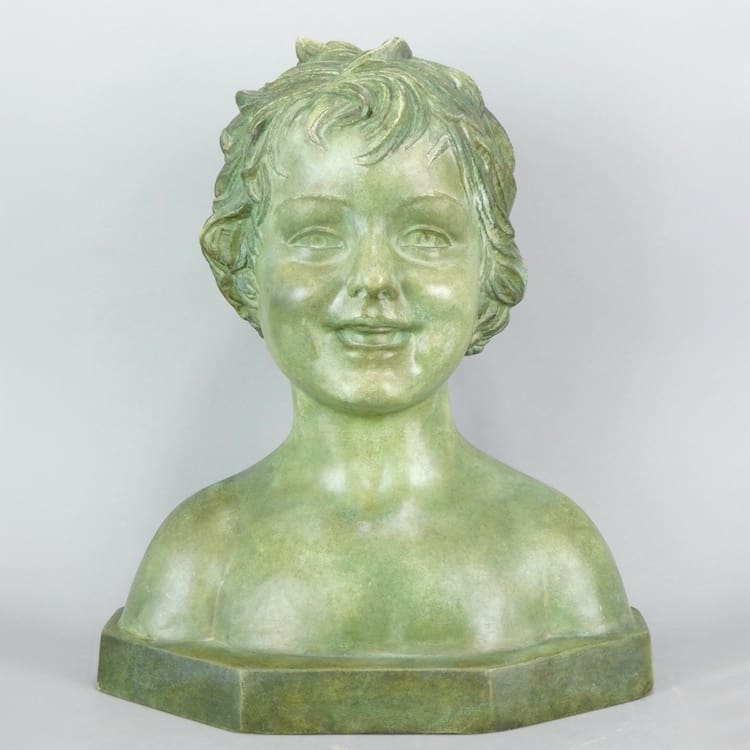
Below are 3 busts that are modelled on the face of Julliene Lullier.
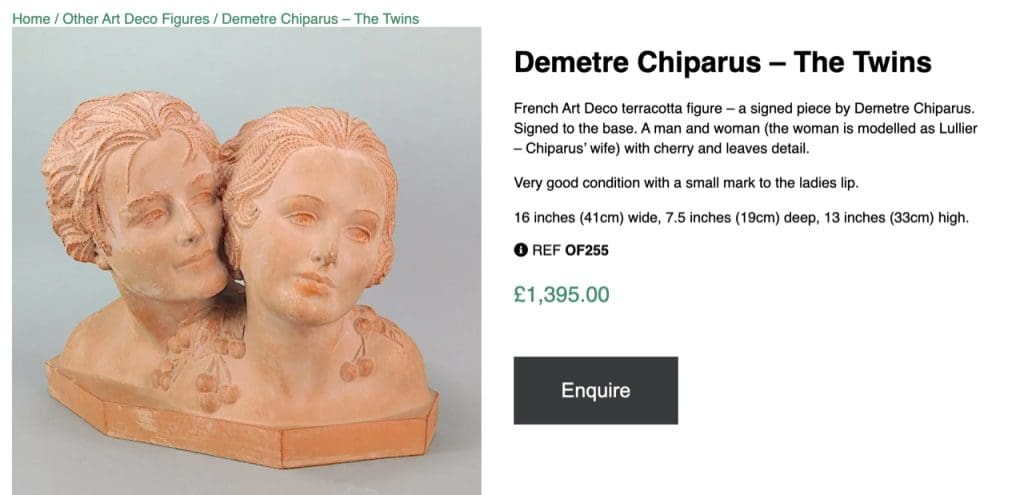
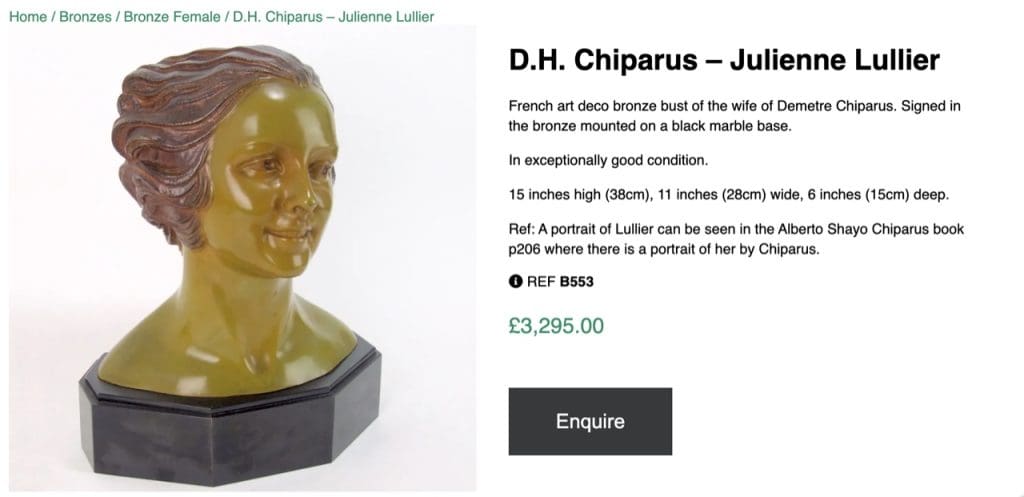
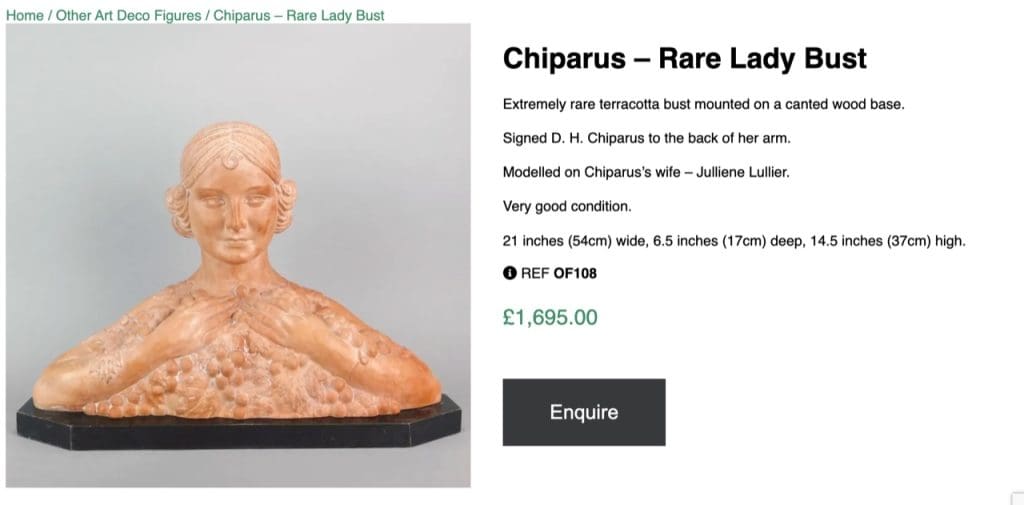
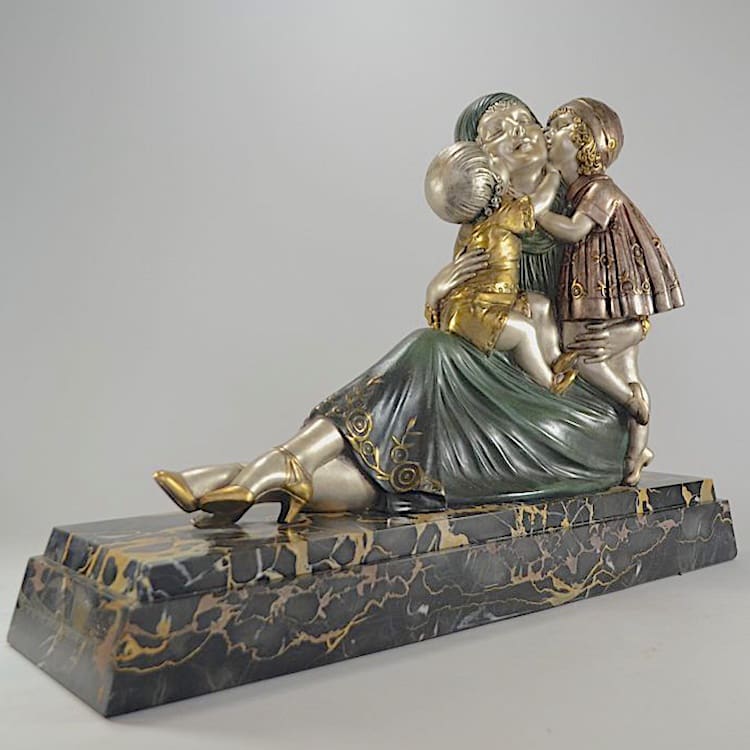
Chiparus’s earlier works were mainly children.
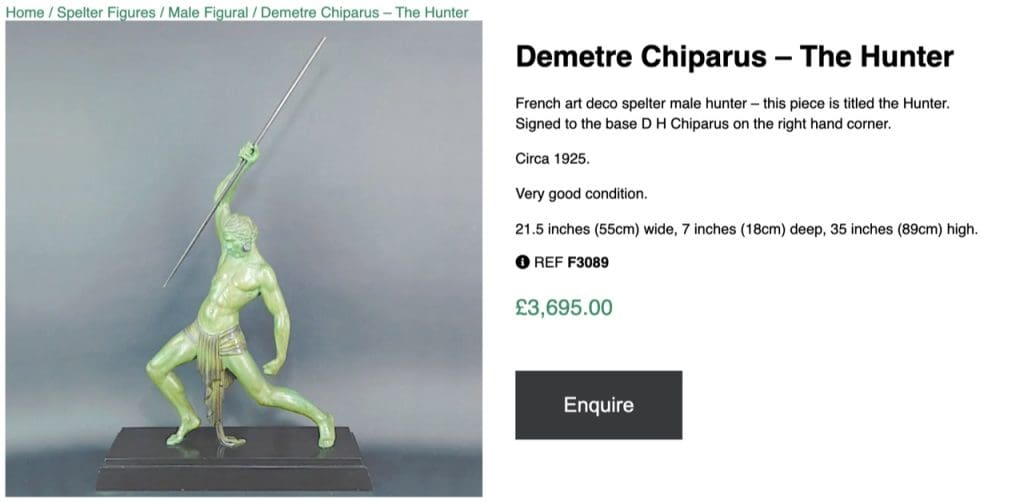
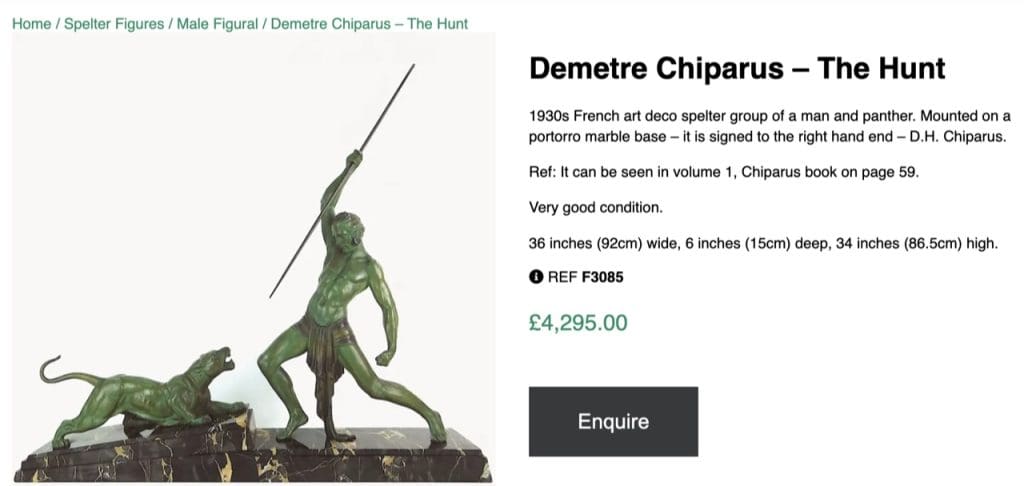
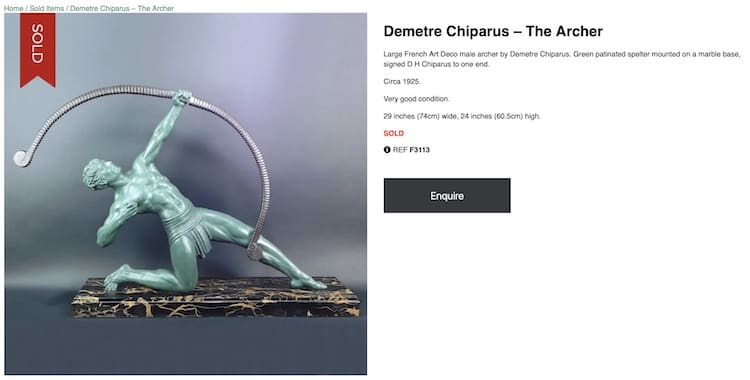
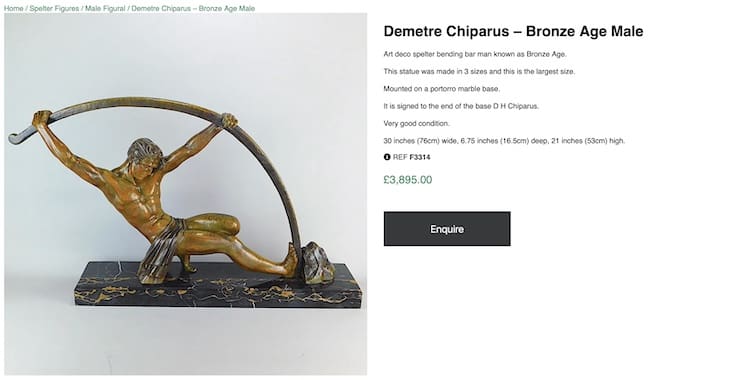
He also produced many male statues that included The Hunter (single male) and the group version with a panther (The Hunt).
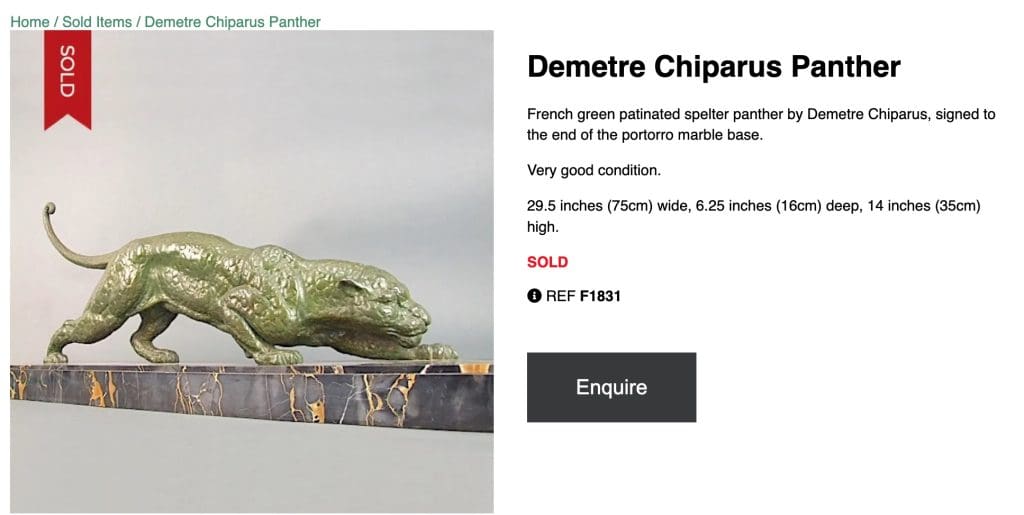
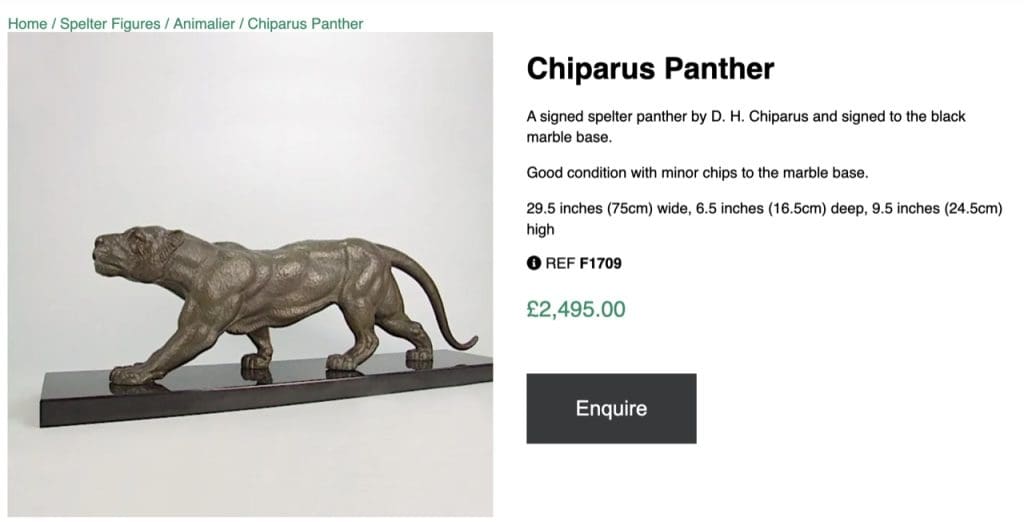
Several spelter Panthers were also produced at this time.
Then he turned for inspiration to theatrical performances like the Folies Berger and modelled the dancers in sometimes outrageous costumes and outfits. Sometimes outfits designed by Diaghilev for the Ballets Russes. These Theatrical statues were sometimes produced as spelter statues or chryselephantine (Bronze and Ivory) and in different sizes.
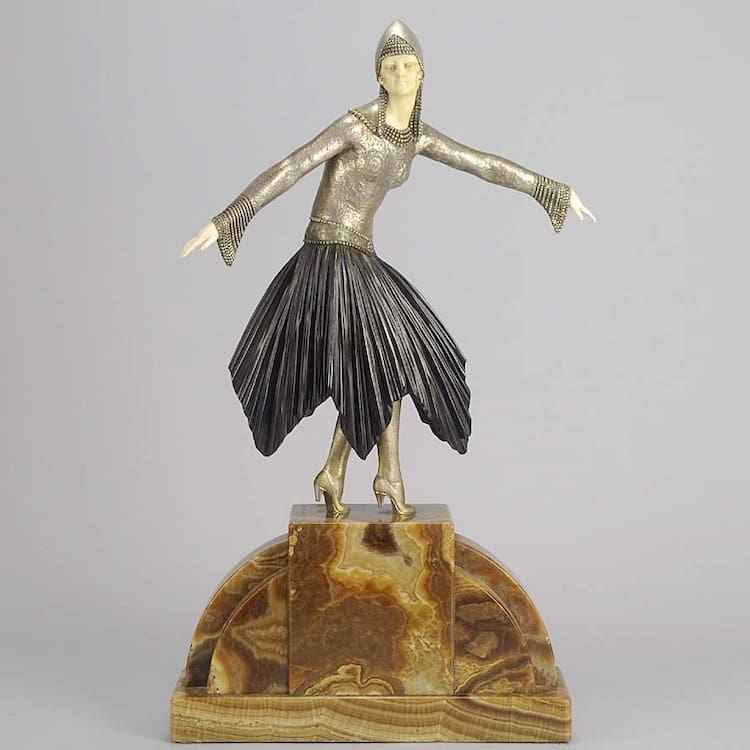
Famous performers such as the Dolly Sisters were also produced not only as metal statues but often as ceramic pieces. Most of Chiparus’ ceramic items were his bread and butter items and so he produced mainly night lights and vanity boxes as did many of the top artists at this time.
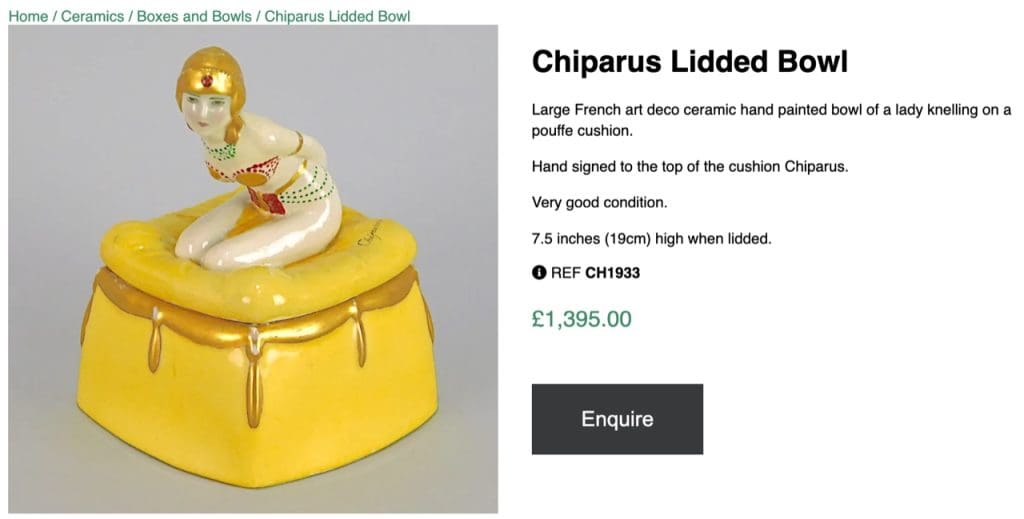
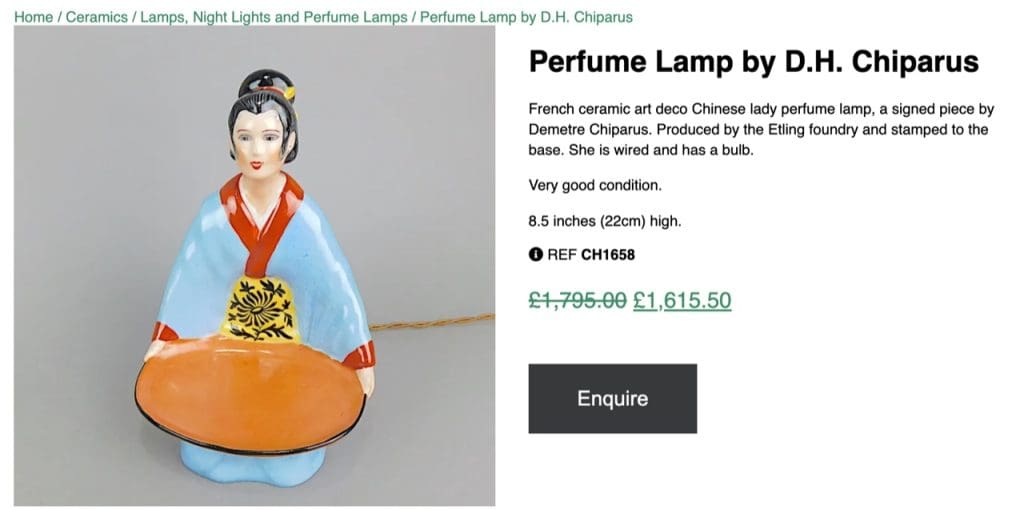
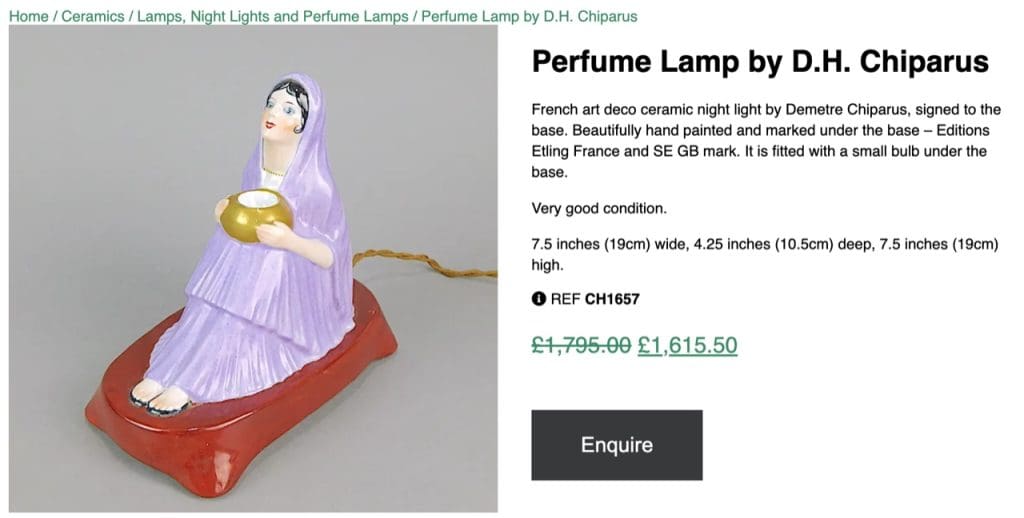
Chiparus sometimes produces spelter statues using a pseudonym – Larcourt, Darcles, Darcourt, Andin and Lullier
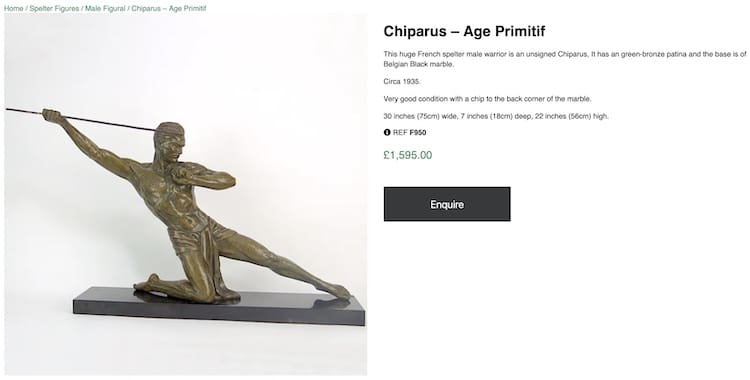
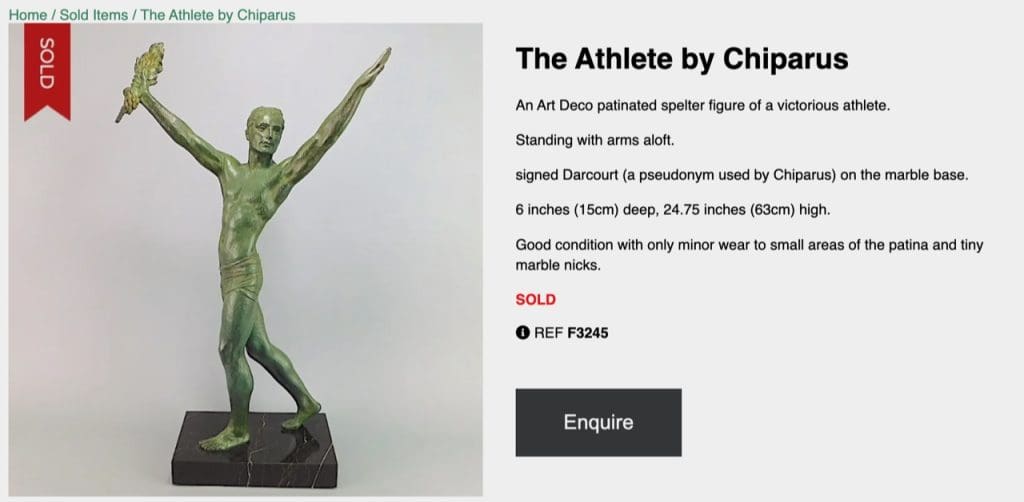
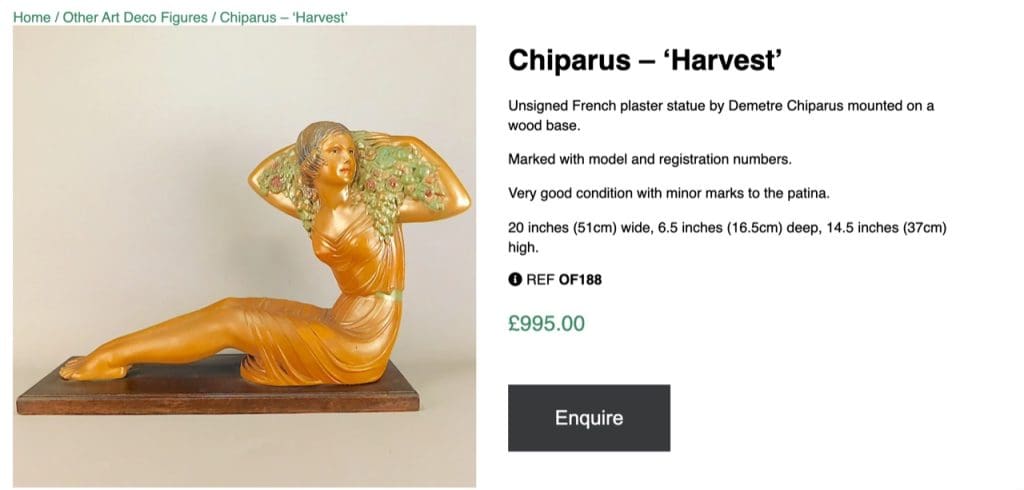
He worked in many different materials. He was even known to work in plaster on some of his very early pieces but other materials such as ceramics and spelter for his more middle market statuary figures and groups.
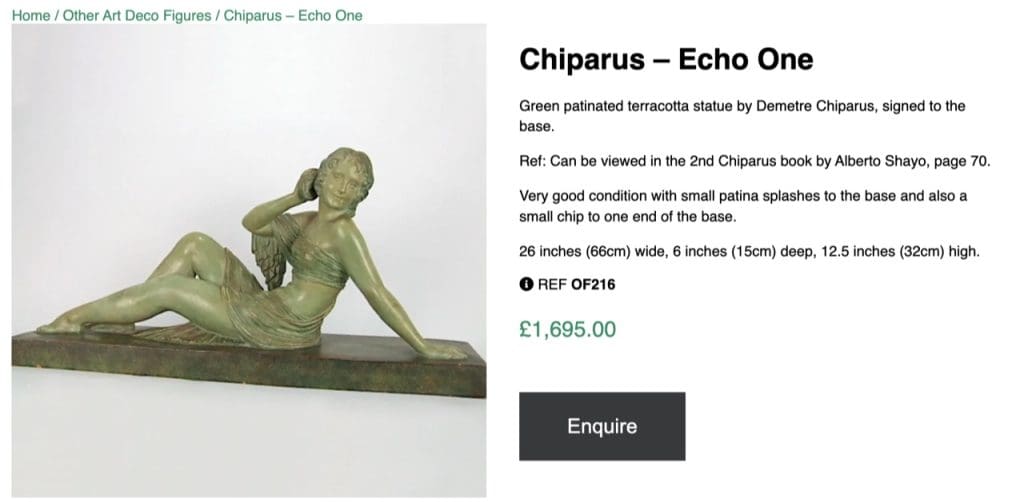
Statues like Echo One, Echo 2, Reader and Coquetry were produced in spelter as figures and also as clocks.
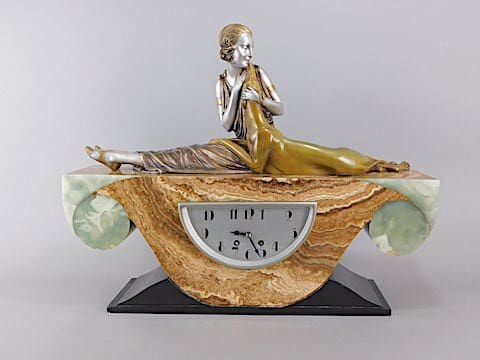
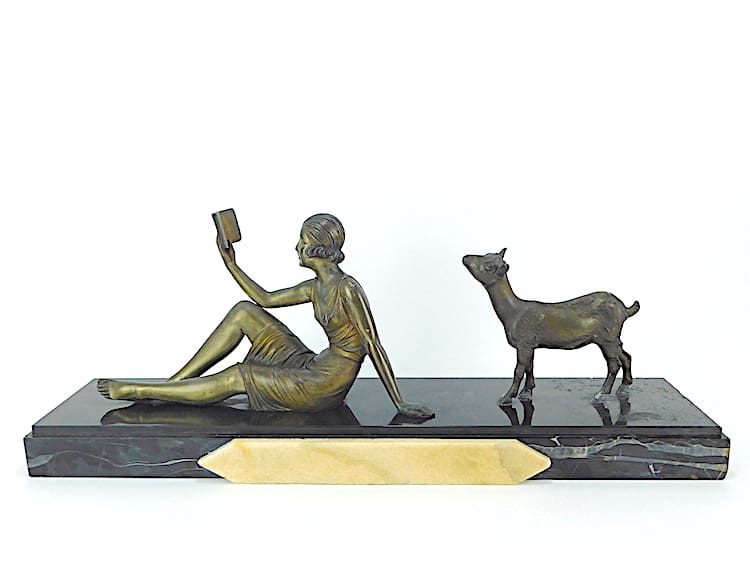
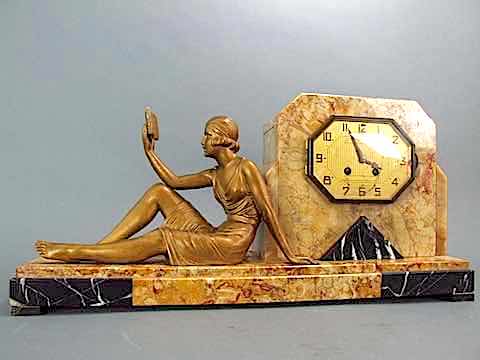
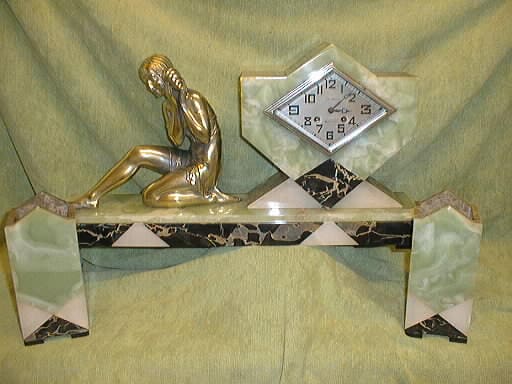
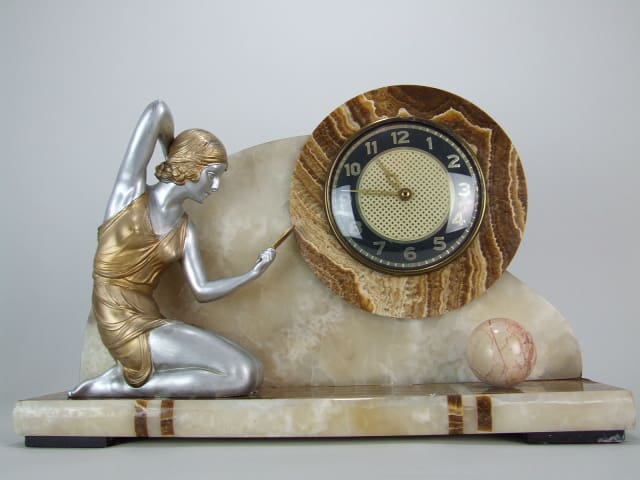
Echo 1 and Echo 2 were made in spelter and also as a terracotta.
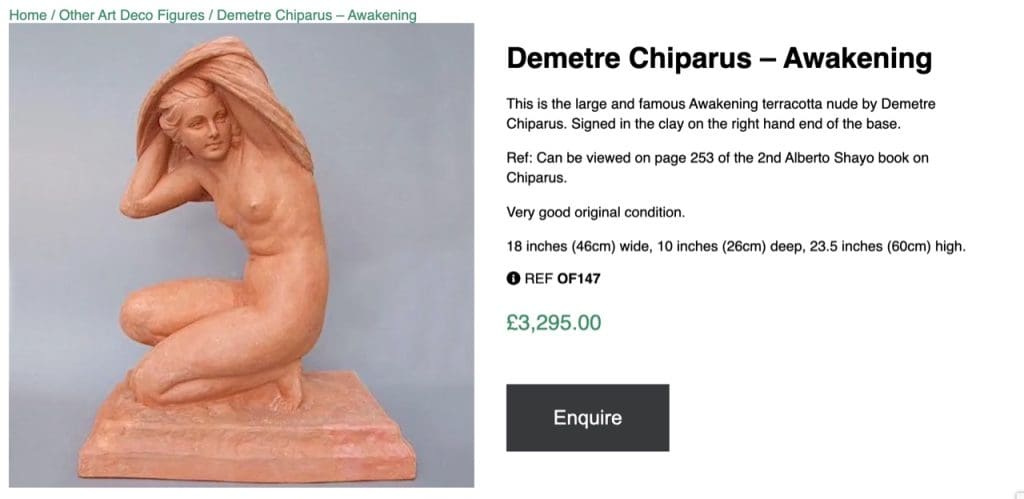
Dreaming was produced in spelter, bronze and as a terracotta. With some terracottas of nudes such as Awakening.
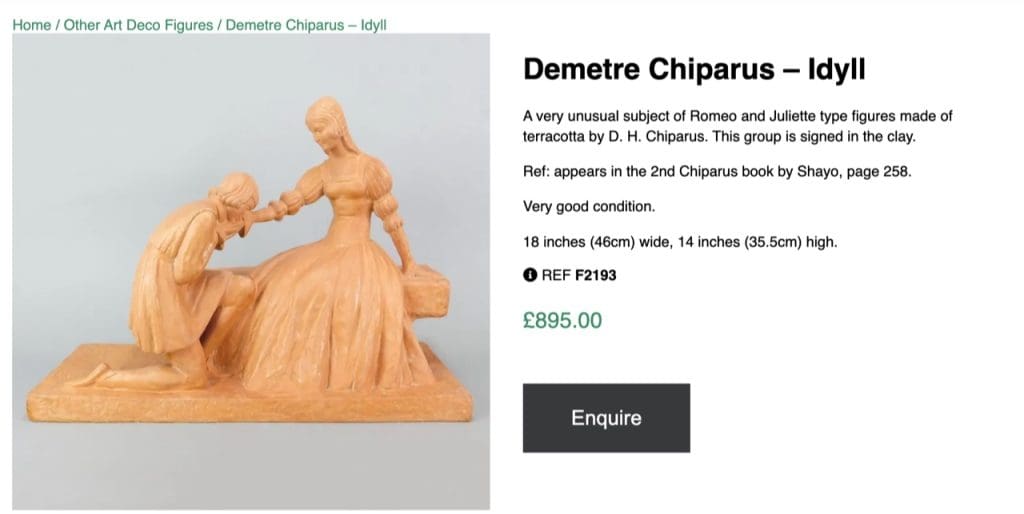
Romeo and Juliet (Idyll) and Cinderella were made as both terracottas and as bronzes.
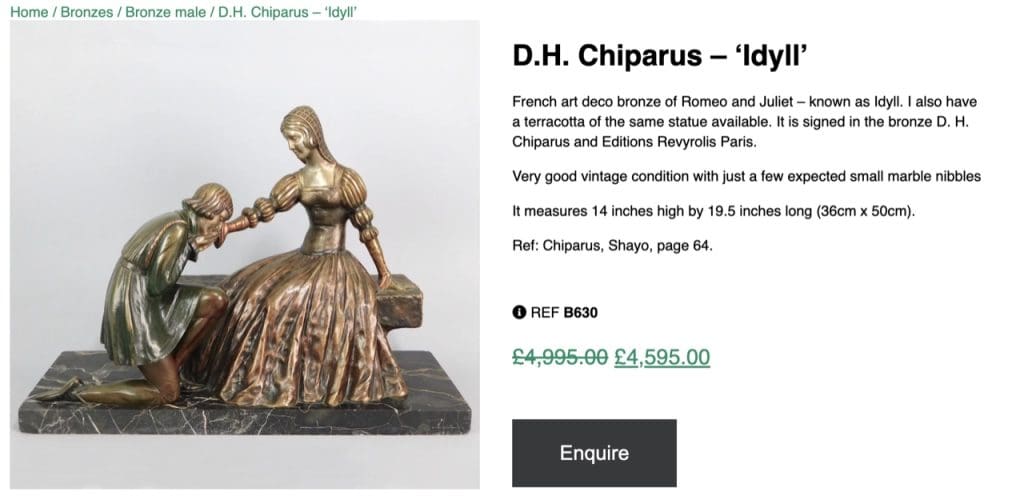
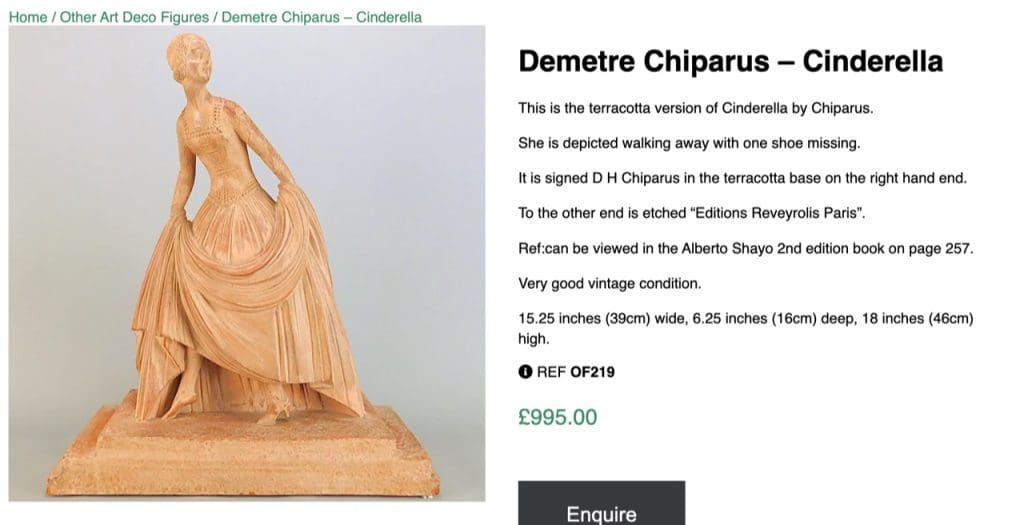
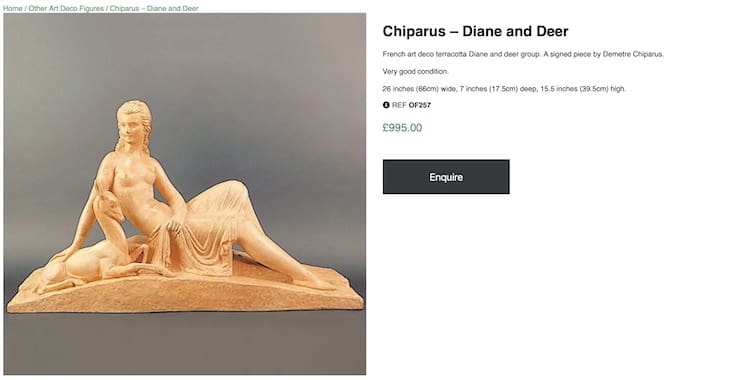
While Diana was made as a spelter and as a terracotta.
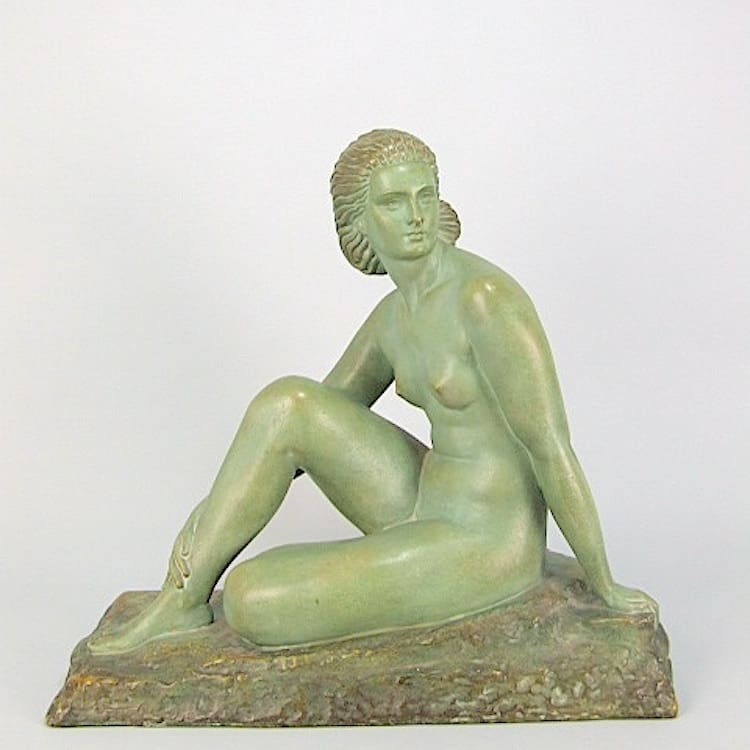
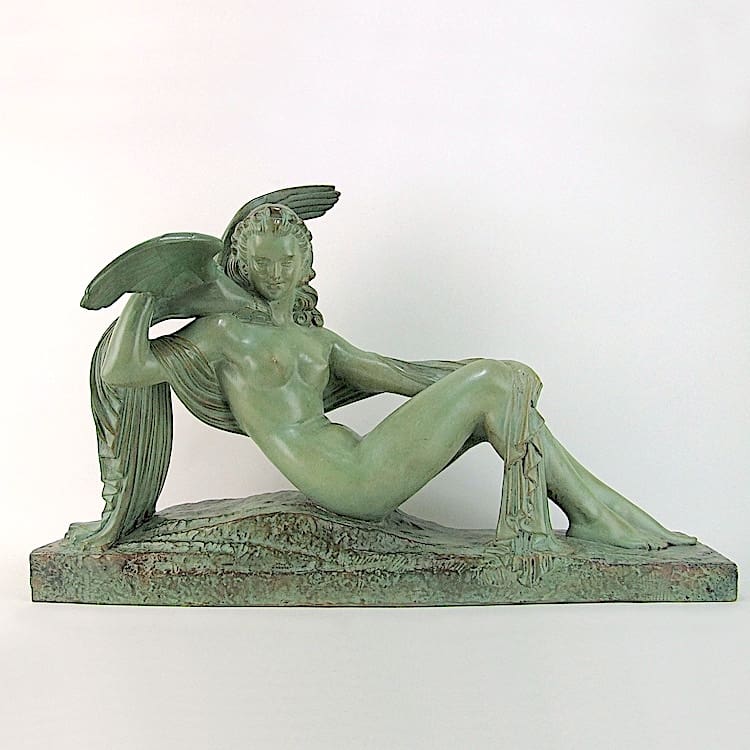
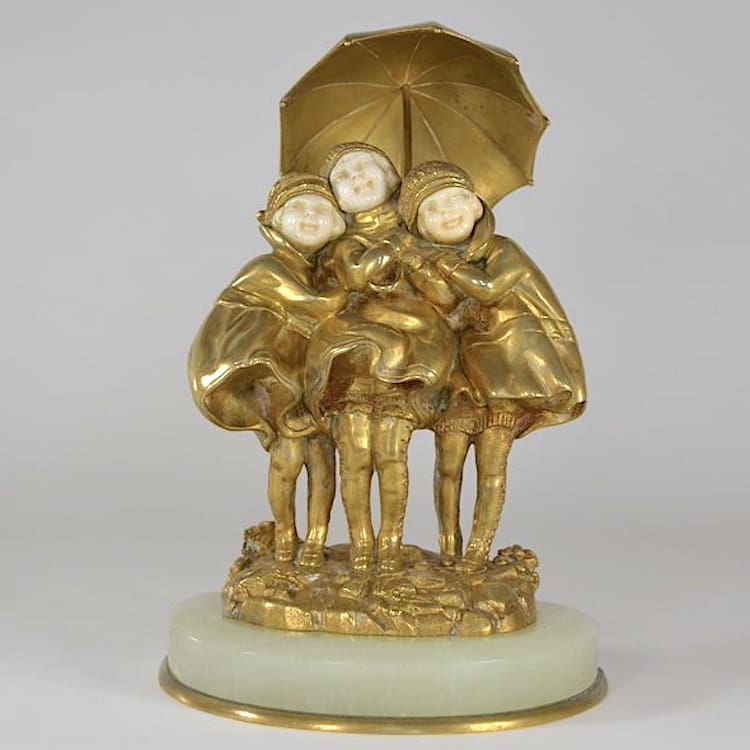
He made plaster, spelter and spelter and ivorene (a bakelite phenolic material made to emulate chryselephantines for the middle market), terracotta, full bronzes and his bronze and ivory statues know as chryselephantine. Chrysel being greek for bronze/gold and elephantine for ivory. Below is a shelter and ivorene group statue by Chiparus made to emulate a chryselephantine.
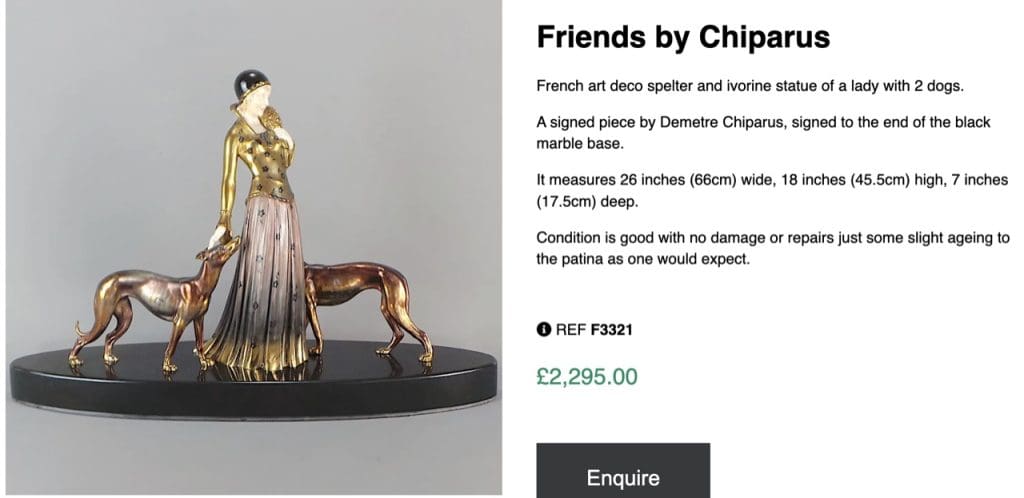
Ivory was being used by many artists at this time as the Belgian Congo had just opened up. Artists were encouraged to use it for art items, piano keys, boxes etc. In many cases it was given free to artists to encourage them to use it. Chiparus used it for many of his statues. This was before people knew any better and obviously a time when woman walked around with dead animals as coats.
On February 16, 1923, Tutankhamun’s tomb was opened by Howard Carter and Egyptology took the world by storm. This was Chiparus’s inspiration for many of his statues. Also at this time world travel was becoming available to the masses with air travel and boats becoming more affordable for everyone. So many other cultures became of interest to the affluent and art loving collectors of art deco statues.
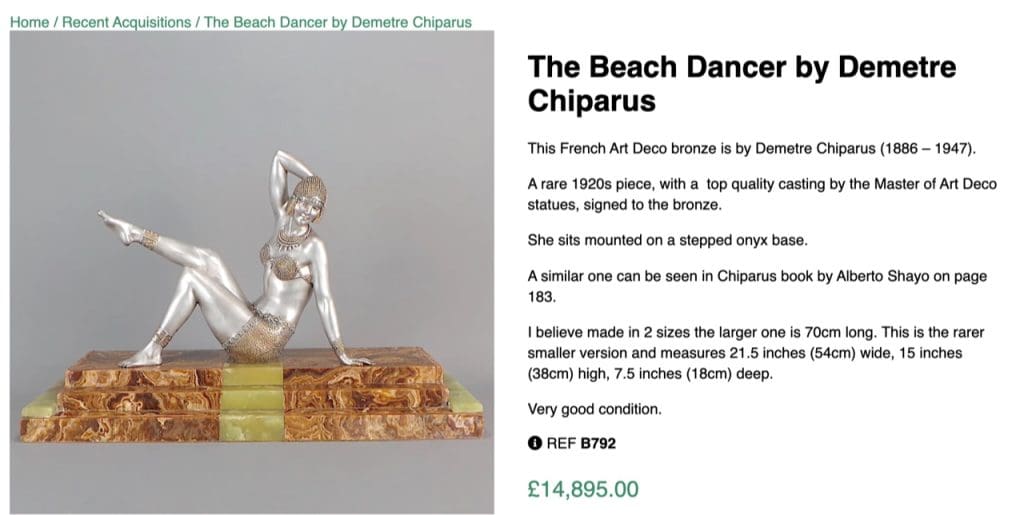
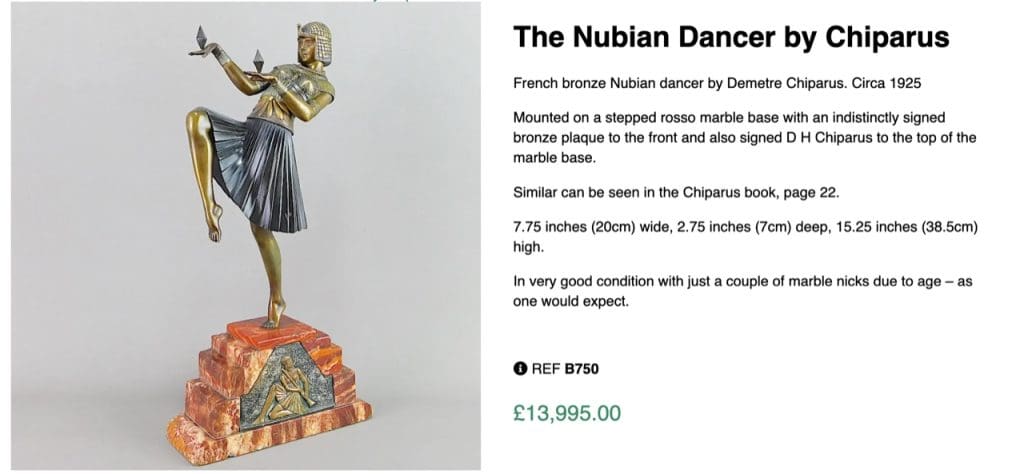
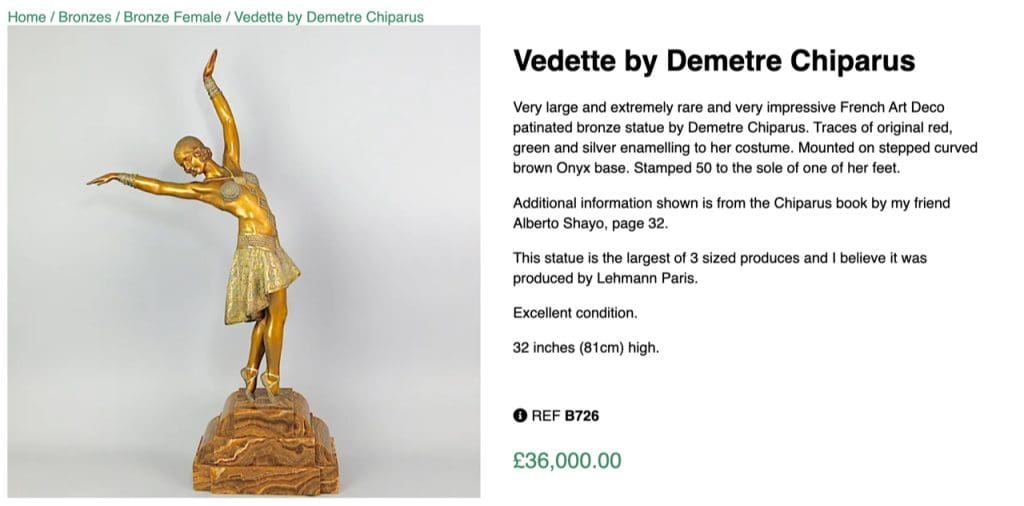
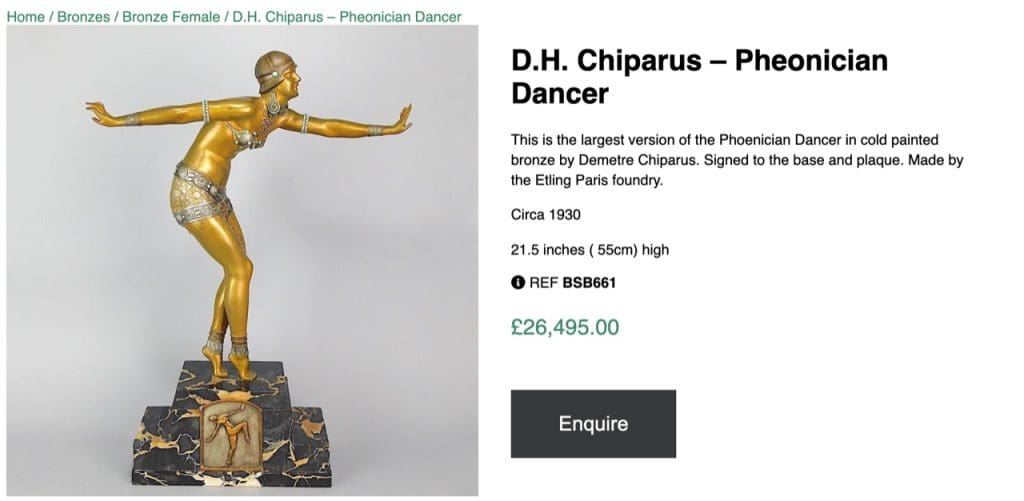
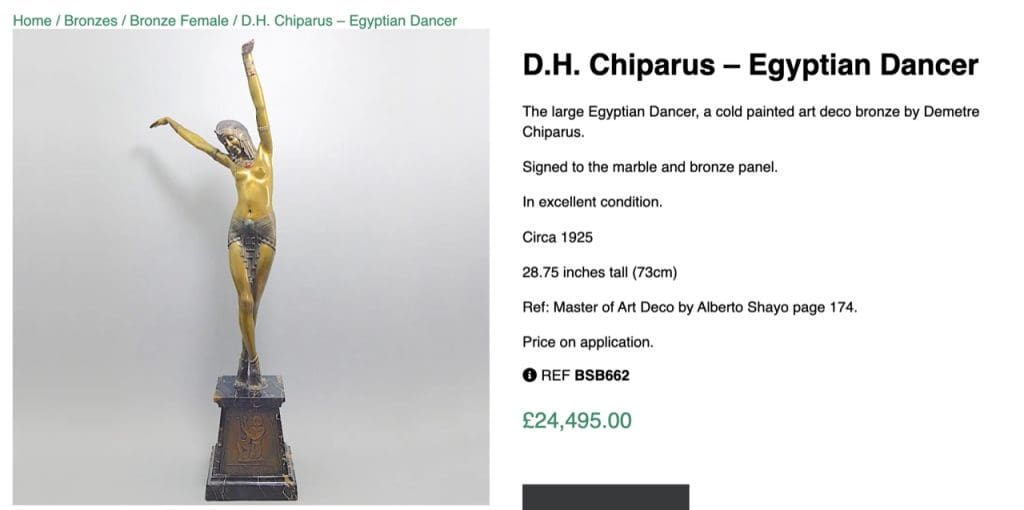
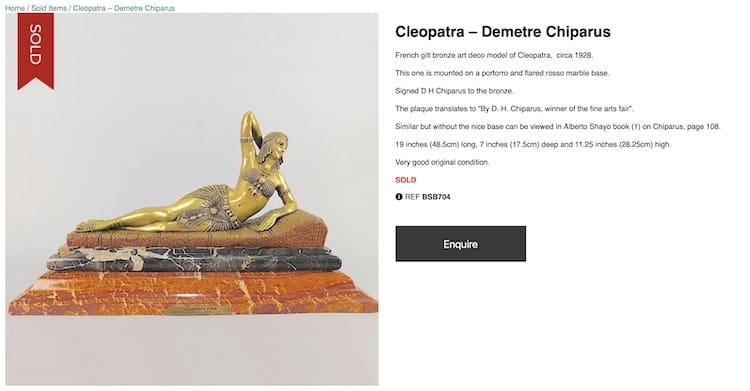
Chiparus produced many other cultural statues such as The Pheonician Dancer, The Egyptian Dancer, The Nubian dancer, Cleopatra (above), The Hungarian dancer, The Cossack dancer and the Hindu dancer to name but a few.
During the war years it became more difficult to obtain materials such as metals (spelter and bronze) so artists turned their hands to terracotta as a medium. Also marble was proving difficult to obtain so sometimes bases were made of reconstituted stone.
It would seem that it was common at the time for the artist to produce the statue made of plasterline. Plasterline was a malleable clay type material not unlike plastercine. I actually have in my private collection a box of plasterline (which is still malablre) which came from the atelier of Max Le Verrier. This was given to me as a gift from Maxs family – I am honoured!
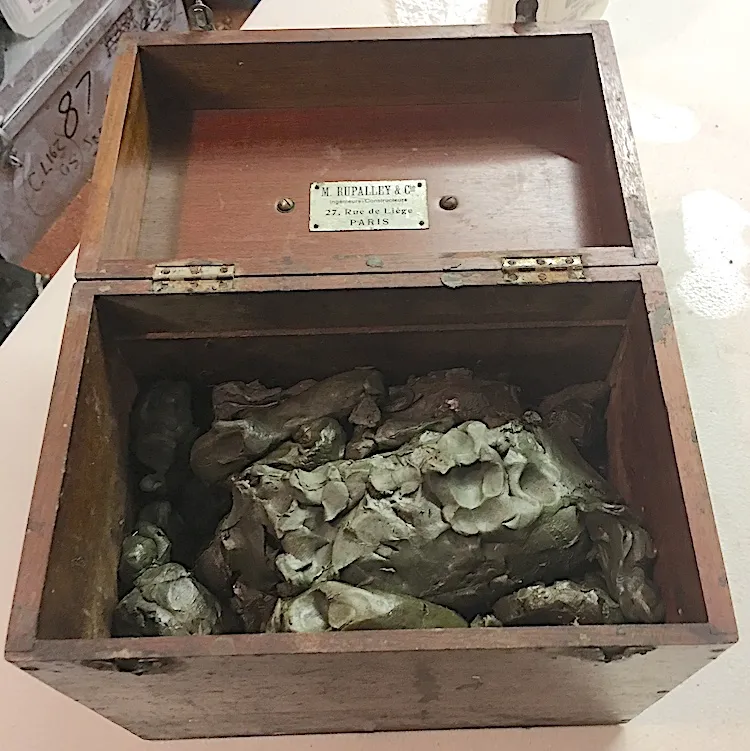
The artist would sell the modelled piece to the foundry (usually Etling and Les Neveux de J Lehmann foundry in the case of Chiparus bronzes and chryselephantines). They would pay the artist and often pay a commission on the amount they created. This I believe may be partly why so many Chiparus statues are unsigned; at this time it was not uncommon for statues to be made for retail outlets to sell – such as Primavera and Galleries Lafayette. The retailer would then put their own stickers on the statue wanting their buyers to believe the item was created by them. In the Shayo book Albert states that after interviewing Demetres widow that she stated “Demetre and I were not sure he got paid all the commissions he should have been paid”.
Sadly after his death some of the foundries gave his widow some of the bronzes he had made. They had no marble bases and she could not afford to buy the bases so the statues had to be melted down for the bronze value.
Back to all blogs