
A – B – C – D – E – F – G – H – I – J – K – L – M – N – O – P – R – S – T – U – V – W – Z
Dage, Louis (1878 – 1963)
Parisian ceramist active between 1920 – 1930, producing Art Deco ceramic items. Often worked in conjunction with Andre Villien, the metal artist – producing stunning ceramic and bronze clad items.
Dakon, Stefan – (1904 – 1992)
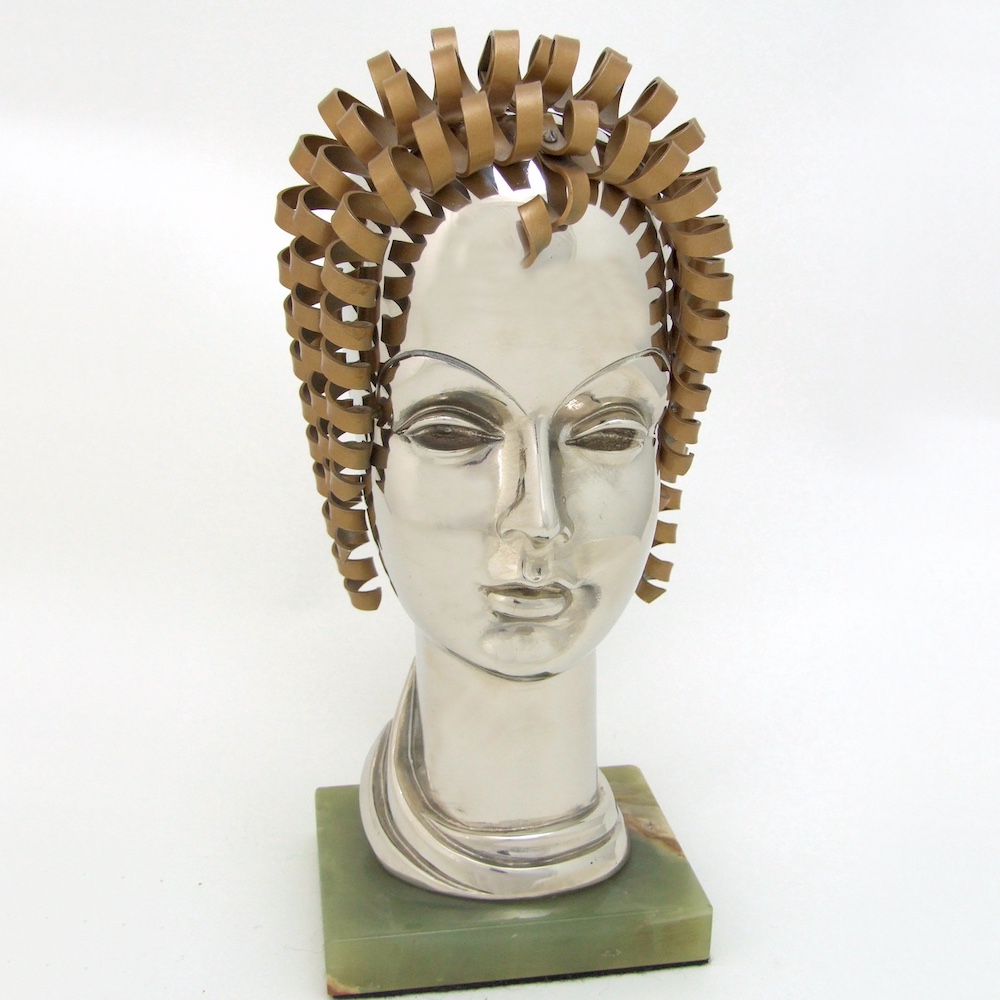
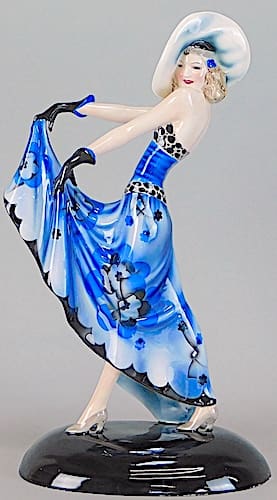
Stephan Dakon was born in Vienna 14th Nov 1904 and was a freelance sculptor and ceramist, famous mainly for his sculptural work in the production of deco female dancers.
His work was very similar to that of Lorenzl and at one time it was believed that Dakon and Lorenzl were one and the same artist, we now know otherwise. It is however apparent that they worked together at Goldscheider.
After finishing school, he attended a school for sculptors and then served an apprenticeship at the bronze foundry in the Vienna Arsenal. Whilst there he made the acquaintance of Josef Lorenzl who later became a fellow colleague at Goldscheider in Vienna. It was on Lorenzl’s recommendation that Dakon was employed by Goldscheider in 1924 as a freelance designer.
He took up military service in Finland and Norway during the second world war and was interned as a prisoner. On his return to Austria he took up where he had left off and did similar works for the American Goldscheider Corporation in Trenton, New Jersey and also worked for Adolf Prischl and William Goebel.

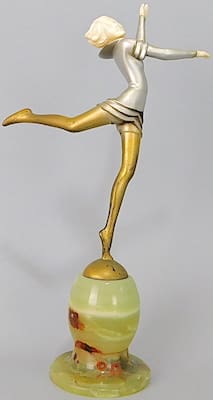
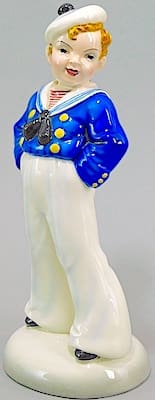
From 1945 he also worked for Keramos Wiener Kunstkeramik, who produced ceramics and porcelain items. Dakon’s work is now highly sought after by collectors world wide and he is considered to have been a prolific and versatile artist. His work is of exceptional quality and he is not only famous for his statuary work but he was undoubtedly one of the most important designers of ceramic wall masks and figurines.
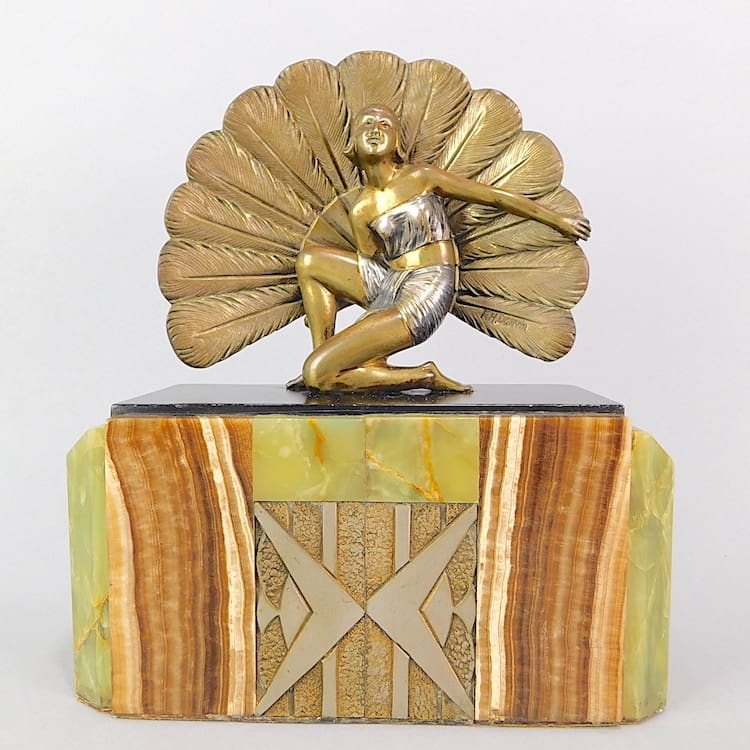
Danvin, F. H.
French sculptural Artist worked mainly in Bronze.
D’Argyl
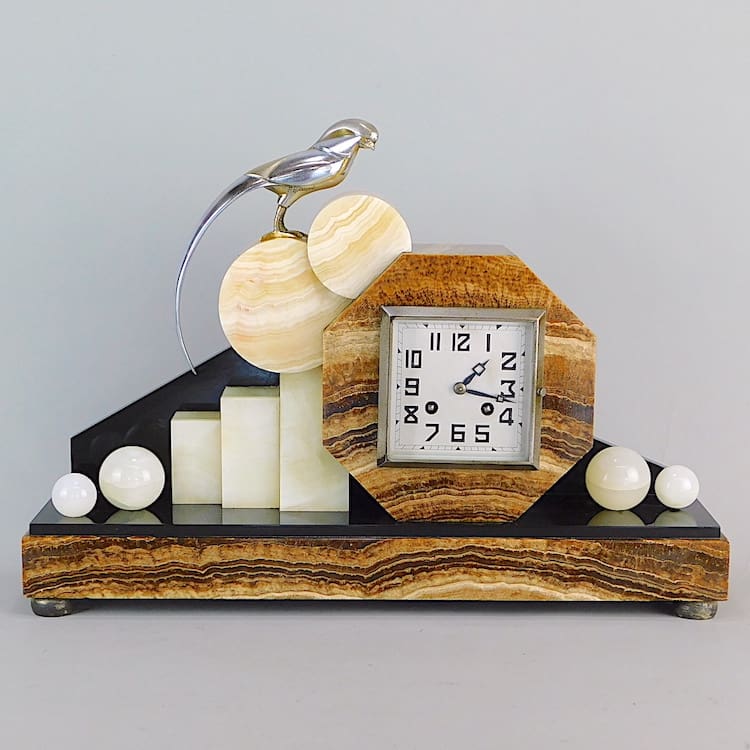
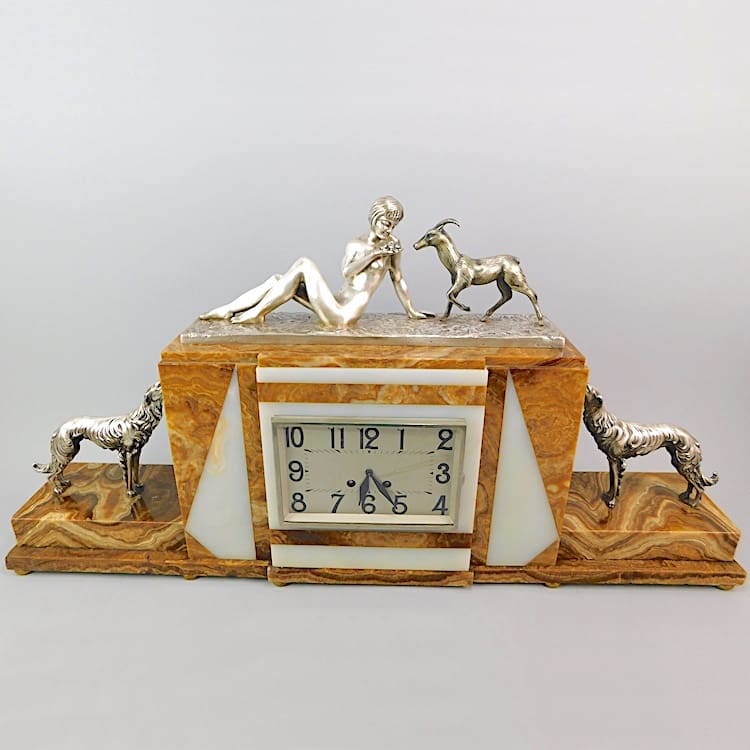
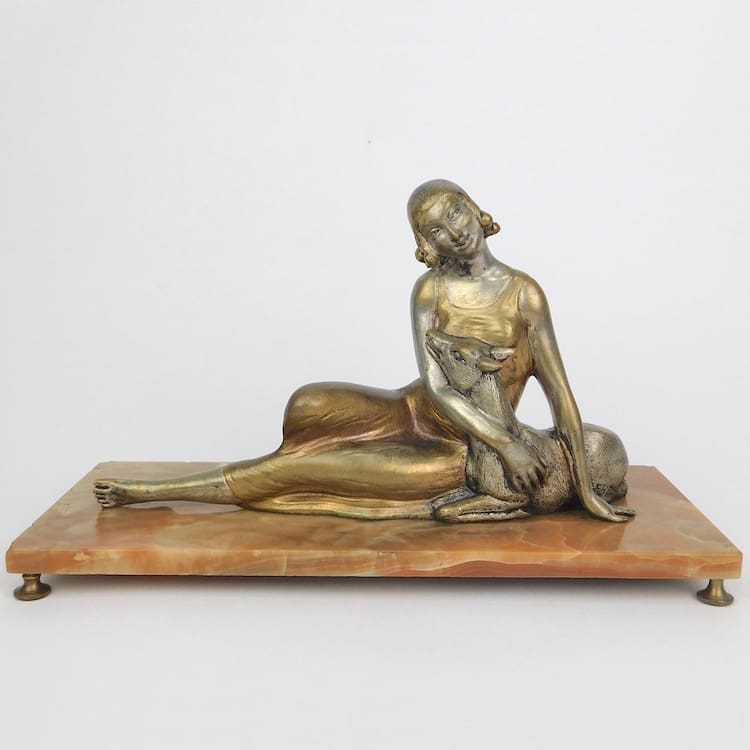
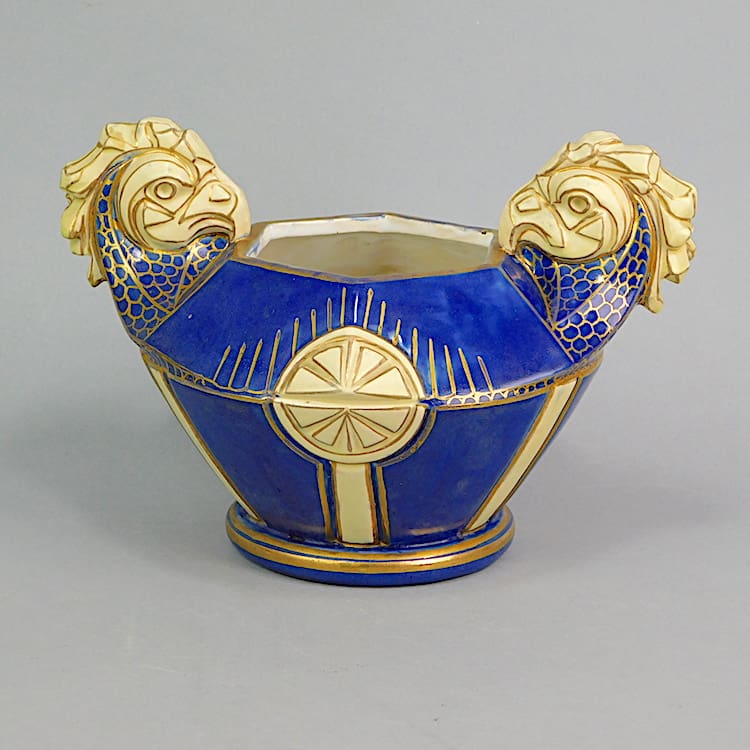
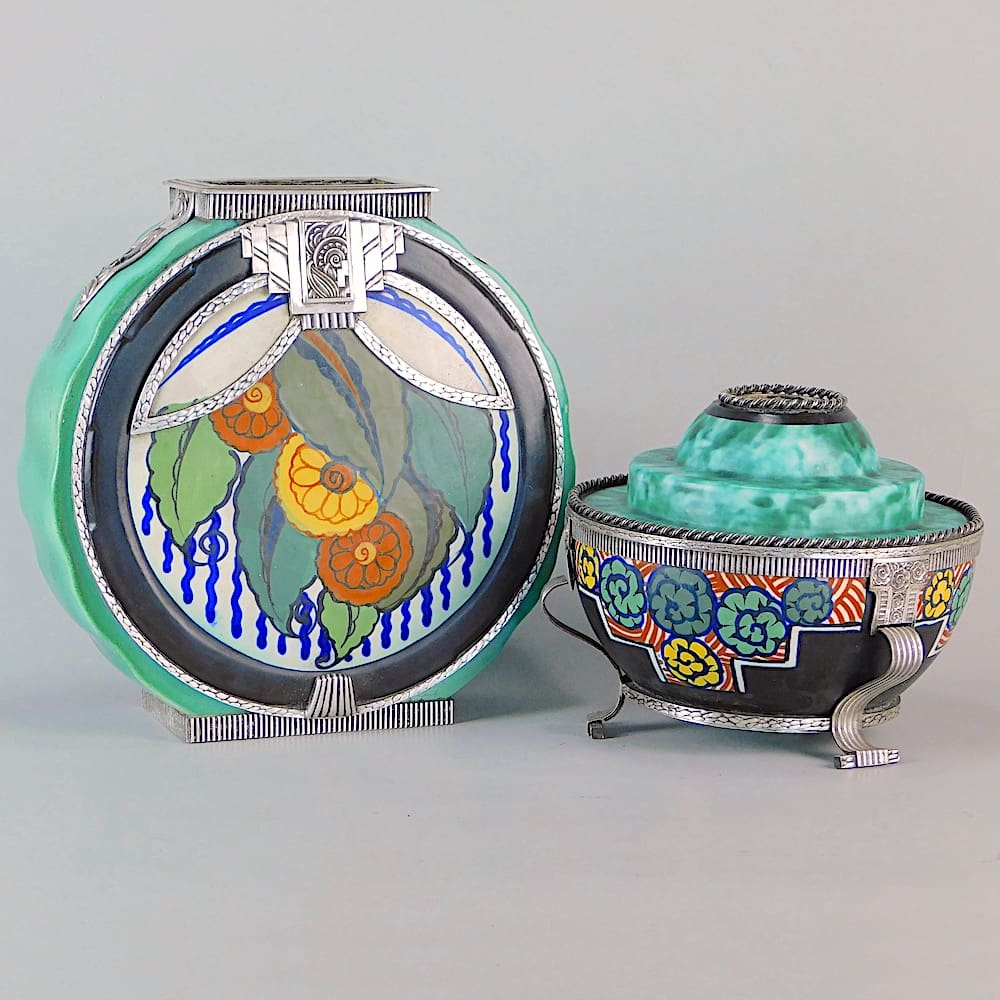
French ceramics company who produced in a heavy clay with stippled patina finish.
Often worked in conjunction with metal works such as Andre Villien to form a marriage of the two artists.
Worked in the deco years and and produced items for Primavera.
D’Aste Joseph
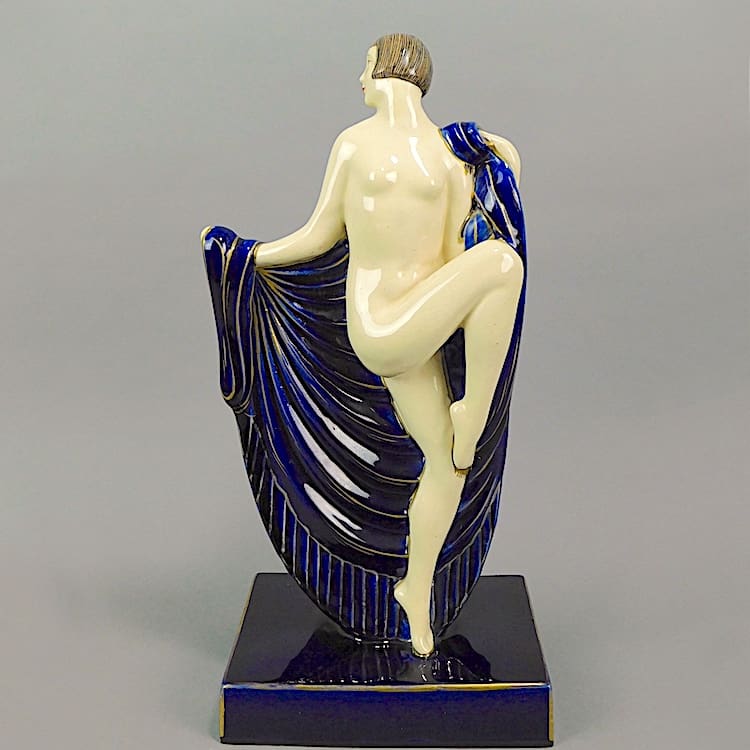
Italian Born artist who exhibited at Salons in Italy and France during the 1920’s. Worked mainly in portrait and figural sculptures.
D’Avesn, Pierre (1901 – 1984)
The pseudonym used by Pierre Gire. Born in 1901 in France. Top quality glass maker of the Art Deco period. He worked for Rene Lalique for ten years from the young age of 14. He is famous for designing the Lalique serpent vase and the Tourbillons vase which are now probably the most sought after and highly priced Lalique items.
In 1926 he left Lalique and created his own pieces which were produced by Cristallerie de Saint-Remy. In 1930 Daum asked him to work for his subsidiary company, Verrier D’Art Lorrain, in charge of their moulded glass section in Croismare France. He worked there until 1936. In 1937 he was the manager of Verlys glass until the war in 1940. From 1940 he worked with Cristallerie de Choisy-le-Roi (Sevres).
His name has to be treated with the same respect as Lalique and Sabino and his pieces are now highly sought after because of the quality and design. Also designed scent bottles for D’orsay.
Daum, Auguste (1953 – 1909)
A French man who formed a glass company famous for its glass decorating techniques which were similar to those used by their neighbouring company of Galle. Auguste, the founder of the company was later joined by his two sons in the business – Lois Auguste and Jean Antonin who carried on the company. The company is still working today.
Daum, Jean
Father of the famous Daum brothers was originally a solicitor not a glass maker. He took over a glassworks near Nancy, France, in 1878 as part payment of a debt. His son Auguste (who had been trained as a lawyer) joined him shortly afterwards, to help improve the business. More than a decade later, and some five years after their father had died, the younger brother Antonin (a newly trained engineer) joined him. It was their business and creative skills which made the Verrerie de Nancy a success. The company originally specialised in watch glasses, window glass, and glassware for taverns.
They exhibited their tableware at the Paris Exhibition of 1889, it was here that Auguste and Antoni were impressed and influenced by the art glass work of Emile Galle. They started with enamelled and engraving and from there they moved on to become one of the major forces in the art nouveau movement, seriously rivalling Galle. When Galle died in 1904 they became the leaders. At the beginning of 1900 Paul Daum ( son of the famous Auguste Daum ) started his own glass atelier under the name Leune ‘Societe Anonyme des Etablissements’. Between 1923 and 1926 Auguste-Claude Heiligstein started as art director at the atelier. The family firm ‘Daum Freres & Cie’ produced the glass models for the firm Leune. All the models where designed and decorated by Auguste-Claude Heiligstein even the pressed decorated ones. At the beginning of the 1930’s the firm closed.
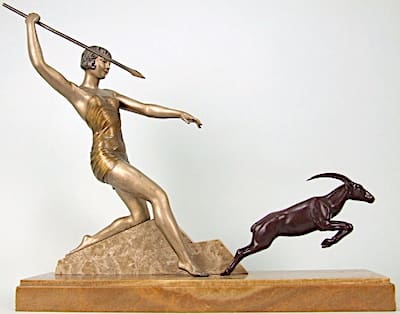
Dauvergne, J.
French artist worked mainly in spelter (white metal) during the 1920’s – 1930’s.
Famous for his Dianne and Ibex and The Hoop Lady.
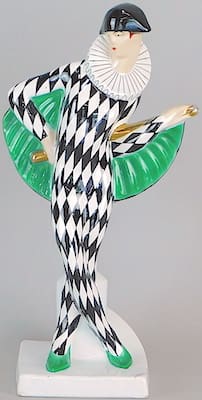
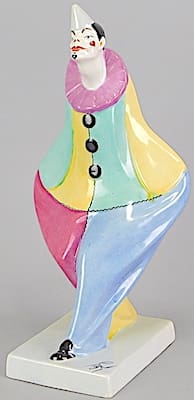
(DAX) Edouard Cazaux, (1889 – 1974)
Used the pseudonym ‘DAX’.
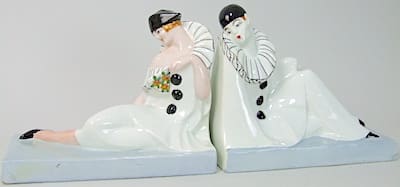
Began his career in Paris in 1907 in the family workshop and studied design at night school.
In 1912 after finishing three years military training at Mont-de-Marsan, he won a scholarship to the Ecole Nationale des Beaux-Arts and went on to study sculpture and ceramics.
A prolific producer of earthenware pieces of all sizes, by the time he reached his early 30’s he had become internationally recognised.
De Coene Freres
Belgian Furniture Company. Originally inspired by the ideas of the Arts and Crafts movement and Wiener Werkstatte. The De Coene brothers – Joseph and Adolphe set up their own workshop in Kortrijk in Belgium around 1908. The family run business soon evolved into an all encompassing interior business. They began with 15 employees and by 1922 there were 1500 workers. Twenty different disciplines were practiced under the one factory roof. Art Deco became a fact before it was even known to exist, reflected in the innovative designs of the De Coene factory. They imported exotic woods from The Congo in a large scale. The extravagant designs of the earlier years were replaced with more modernist designs which enhanced the visual pleasure of wood and unusual veneers.
Many top artists and designers worked with the De Coene company and Joseph was close friends with many of them, architects such as Michel Polak, Jean Baptiste Dewin Henry van de Velde and Jan-Albert de Bondt. During the invasion in May 1940 the factory was hit heavily by German bombs and later in 1944 by British bombs. After the liberation Joseph De Coene and other company heads were sentenced to imprisonment for economic collaboration with Germans in providing them with barracks and furniture in order to avoid excessive commandeering of their staff. Joseph was sentenced to 20 years hard labour and died a broken man in 1950. The De Coene company was returned to the De Coene family in 1952, when the company went into partnership with Knoll.
Delabrierre, Paul Edouard (1829 – 1912)
Born in Paris and died there in 1912. Animalier sculptor and artist, made his debut at the Salon 1848, exhibiting there regularly until 1882. He exhibited a wide range of animals including hunting dogs, race horses, game birds and wild animals, including bears, tigers, lions, antelope and camels. His works were famous for their characterisation, realism and exceptional quality. Of his larger statues the most famous was L’Equetation which was produced for the facia of the Louvre in Paris in 1875.
Delagrange, Leon Noel (Orleans 1872 – Croix d’Hins 1910)
A French artist who studied under Barrias, he exhibited at the salon of the society of artists from 1894 – 1907. He is also famous as an aviator and was president of the aero club France. He stopped working on statues in 1909 and he died in 1910 when he had an accident in his mono plane.
Delatte, Andre
Worked with Jarville, Nancy, France (1921 – c 1930).
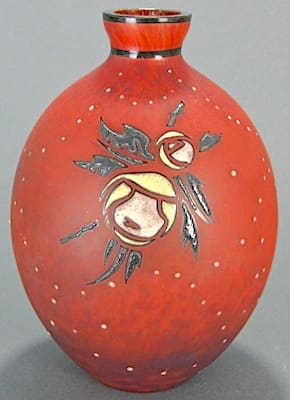
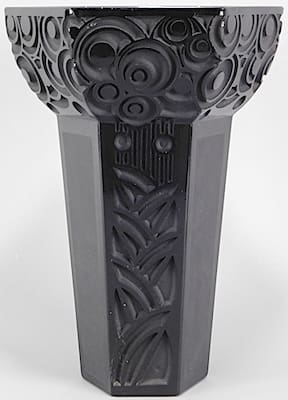
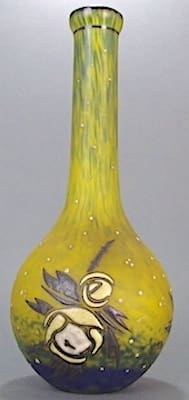
Famous for his top quality glass wares considered on par with the top deco glass makers like Daum, Lalique, Muller, Sabino and Leunne.
Specialising in thick, top quality glass items which were sand blasted, acid etched and usually heavily hand enamelled.
Signed pieces Dalatte and sometimes Jarvil.
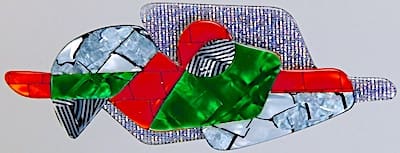
Delaunay, Sonia (1885 – 1979)
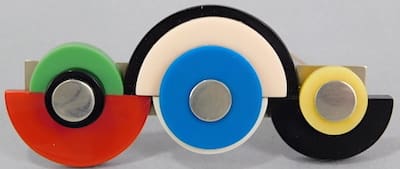
An abstract artist and key figure in the Parisian avant-garde. Famous for her geometric and bolt coloured modernist Art Deco designs. Alongside her husband, Robert Delaunay, she pioneered the movement Simultanism. Her exploration of the interaction between colours has created a sense of depth and movement throughout her oeuvre.
She was born Sonia Illinitchna Stern to a Jewish Ukrainian family. At the age of seven she went to live with her comparatively wealthy uncle Henri Terk and his wife, Anna, in St Petersburg, Russia. The Terk’s offered her a privileged and cultured upbringing in St Petersburg. Nevertheless, her childhood memories of Ukraine remained with her and she often referred back to the ‘pure’ colour and bright costumes of the Ukrainian peasant weddings.
Delaunay’s creativity expanded beyond painting to include many other outlets such as Casa Sonia, an interiors and fashion boutique that she set up 1918; The entire set and costume design of Tristan Tzara’s 1923 play Le Coeur a Gaz; An illustration for the cover of Vogue in 1926; Costumes for the films Le Vertige directed by Marcel L’Herbier and Le p’tit Parigot, directed by Rene Le Somptier; Furniture for the set of the 1929 film Parce que je t’aime, and her textiles label Tissus Delaunay,
De La Vallee, Georges
A sculptoral artist who worked in conjunction with the le verrier foundry. Produced the famous group Atlante statue which was signed in his pseudonym De Marco. He also sometimes signed Marco.
De LaTour
Amelia Cate De LaTour, born in Scotland and studied at the Bournmouth School of Art, the Central School of Art and the central School of Arts and Crafts. She settled in Bournemouth where she worked during the 1920’s as a painter and sculptor of mainly animal subjects. She exhibited at the Royal Academy and the Salon des Artistes Francais and many leading British Galleries.
De Marco
See De La Vallee, above.
Was a pseudonym used by Gorges De La Vallee who sometimes signed in his own name but also De Marco and Marco.
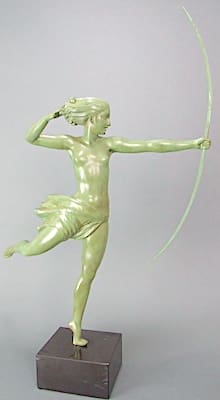
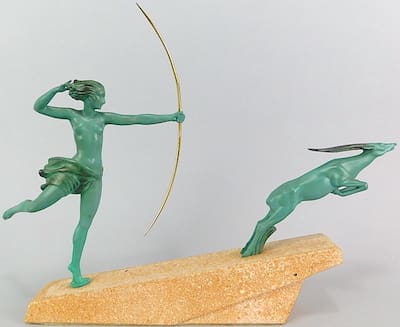
The famous Atlante made by the Le Verrier foundry is usually signed De Marco. It is also possible that the Diana from this group was designed by Marcel Bouraine and sold to the Le Verrier foundry as I own an original letter of proprietry signed by Bouraine and confirming the sale of a Diana statue to the Le Verrier atelier.
Debry, Sophie (1887 – 1968)
Sophie-Victoire Debry was a French sculptor and artist who exhibited at the Salon Paris in the 1920’s.
Very little information is available for Sophie, but she produced bronzes and animalier among other items and was also an artist.
Her bronze sculpture of The Boy with Cocks, sometime called ‘The Cockfight’ appears in the Bryan Catley book – Art Deco and Other Figures.
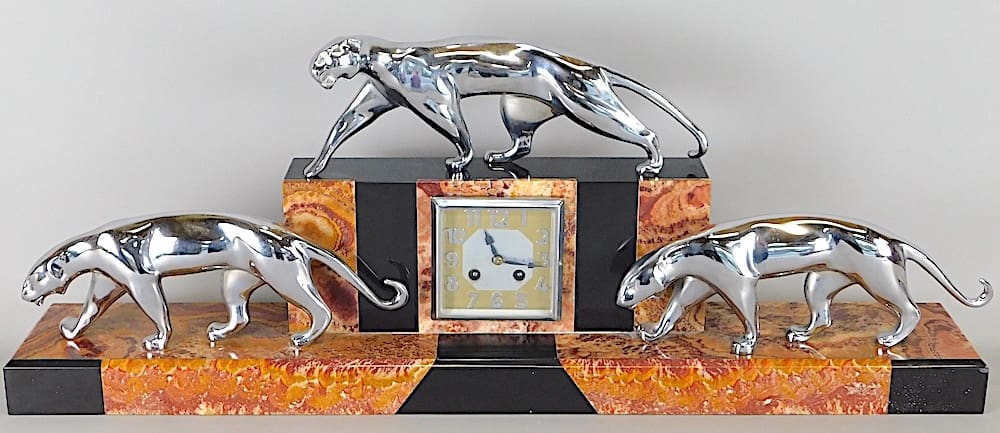
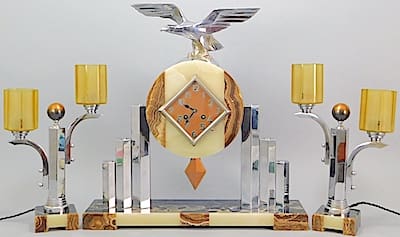
Decoux, Michel (1837 – 1924)
Belgian artist mostly designed stylised animals mainly in bronze, but some spelter pieces. Panthers being the most usual subjects were extremely streamlined and often silvered bronze.
He produced a few human statues but concentrated mainly on animal subjects during the early art deco period. His work was of exceptional quality and his statues were also used to decorate many art deco clocks.
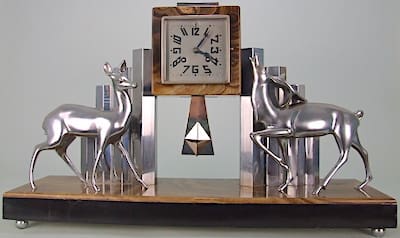
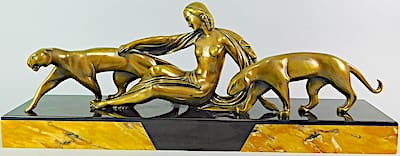
I personally love most Decoux pieces and I would put his work on par with the work of Lavroff – although he is not as well known.
If any one reading this has any more information about Decoux or indeed any of the other artists please share it with me and the viewers of my website.
Degue – Degue Art Glass
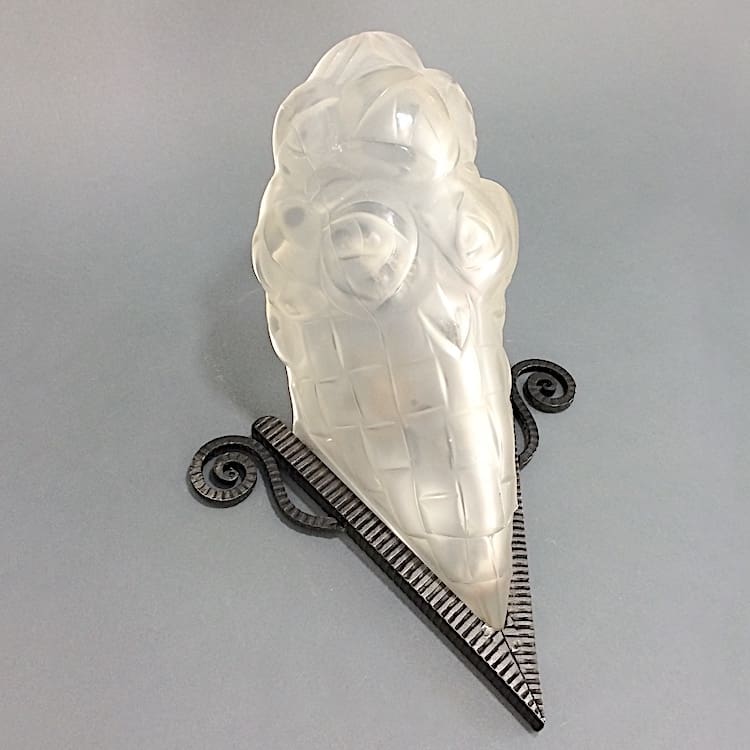
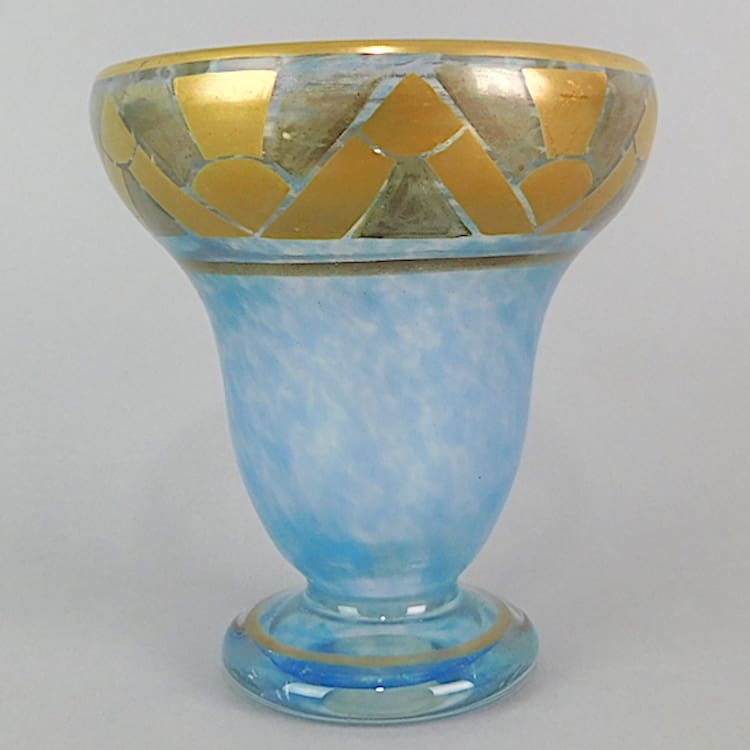
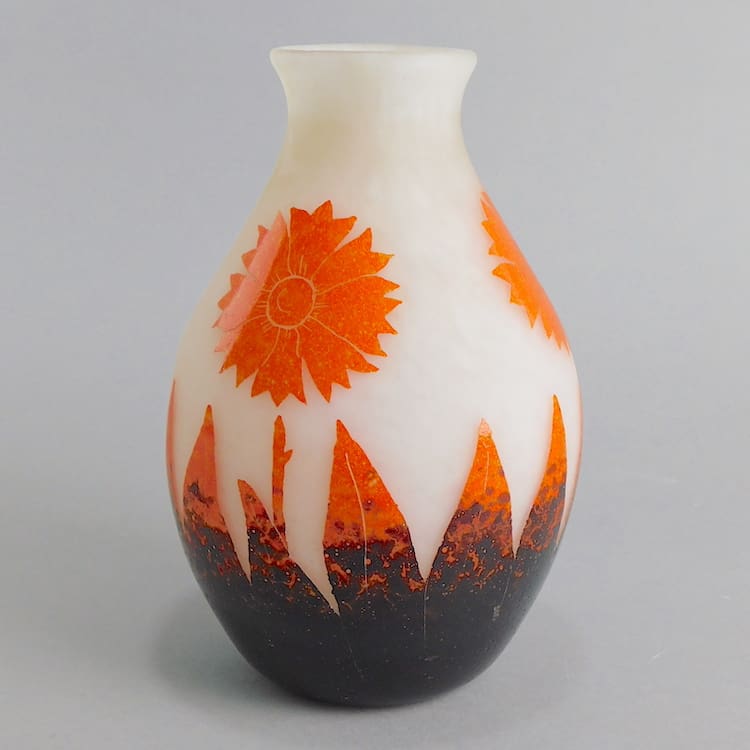
Founded by David Gueron, a Turkish Soldier and soldier of the French Foreign Legion. The company was originally called Cristalleries De Compiegne and produced various household glass items.
The name changed to Verrerie D’Art Degue in 1926, producing stunning Modernist glass ware items including vases, and many ceiling lamps and table lamps. Degue had a show room at 41 rue de Paris.
The work produced by the Degue company is now highly sought after worldwide and renowned for the excellent quality. Guéron employed the ceramist and designer Edouard Cazaux as his artistic director and head designer. In 1936 production stopped and the company finally closed down in 1939 due to the war.
Delabrierre, Paul Edouard (1829 – 1912)
French sculptural artist born in Paris specialising in animal sculptures. He produced hunting dogs, race horses, game birds and exotic zoo animals such as lions, tigers camels and bears. Most being sand cast in bronze. His most famous work is the large group entitled L’Equitation which he produced for the face of the Louvre in Paris in 1875.
Delamarre, Raymond (1890 – 1986)
Considered as one of the ‘new breed’ of French sculptor-medallists (along with Annette Landry, Albert Pommier, Georges Guiraud and many others). Considered as a master in his art. Even though accomplishing a very wide array of medals, one of his best known pieces is the Art Deco-style Compagnie Generale Transatlantique medal for the ship Ville D’Algers in 1935.
An apprentice of his own father, a highly regarded engraver and chiseller (stone sculptor). Worked with Rodin. Won the Grand Prix de Rome in 1919. His early work focused on creating monumental sculptures. Won the Gold Medal at the 1925 Exposition des Arts Decoratifs. Received the Chevalier of the Legion d’Honneur.
Delapchier, Louise
Born in France, exhibited at salons 1904 – late 1920’s.
Delaunay, Paul
Paul Delaunay, born 1883 in Paris, studied in France and emigrated to the USA. Became a member of the American Artist Professional League and Director of the Academy of Fine Arts in Birmingham, Alabama. Famous for sculpting monuments and memorials, genre figures and portraits.
Delannoy, Maurice
Born in Paris 1885, received several medals from the Salon during the 1920’s – 1930’s.
Delannoy, Pierre Francois Fernand
Born in Paris, exhibited at the Paris salons during 1920’s, and received ah honourable mention for his work.
Delhommeau, Charles
French sculpural artist, worked in conjunction with Max Le Verrier. Famous for his panther groups which were inspired by animals in Jardin Des Plantes – Paris. His panther groups were produced by the Le Verrier foundry and signed in his pseudonym Meriadec.
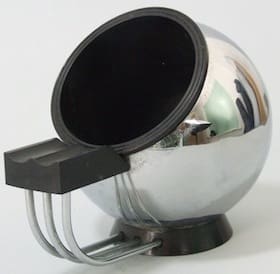
Demeyere
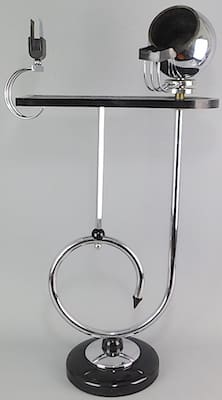
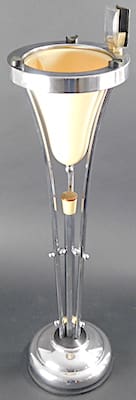
Belgian company founded in 1909 and working during the deco years and still working today.
During the early 1930’s they produced the fabulous tubular chrome and bakelite items such as the smokers stands, tables, umbrella stands, planters, and coat racks and stands. Many of which can be seen on my website and in the Design Museum in Gent, Belgium.
In November 2009 the Gent Design Museum staged an exhibition of the company’s work. The company is still running today and now produces metal table and cookware items.
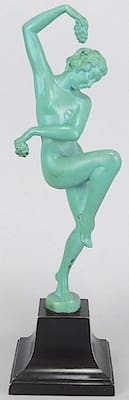
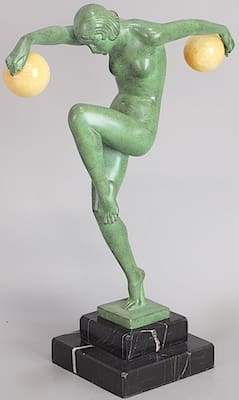
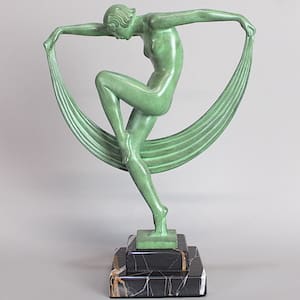
Denis
Denis was a pseudonym used by Marcel Bouraine. It would appear that it was not unusual for sculptors to use pseudonyms. Bouraine used the three pseudonyms – Derenne, Denis and Briand.
Works by Bouraine were produced mainly by the Le Verrier foundry in Paris. Famous for his Scarf Dancer and Ball Dancer.
Derby, Sophie
French artist exhibited at the Salon during the 1920’s.
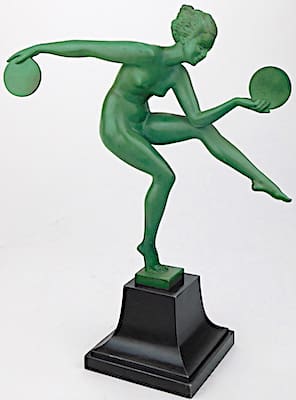
Derenne
Derenne was a pseudonym used by Marcel Bouraine. Pieces signed Derenne were produced by the Le Verrier foundry in Paris during the deco years.
It would appear that it was not unusual for sculptors to use pseudonyms. Bouraine used the three pseudonyms – Derenne, Denis and Briand.
Descomps, Jean
Worked and exhibited at the Paris Salons during the 1920’s and 1930’s.
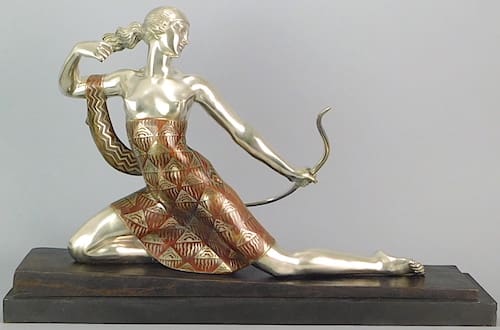
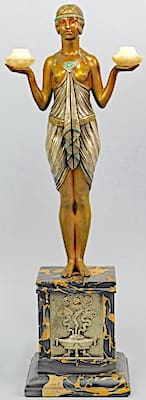
Descomps, Joseph (Joe). (Clermont-Ferrand 1869 – Paris – 1950)
French Sculptor, born Joseph Emmanuel Descomps – Cormier in Clermont-Ferrand on the 18th January 1869. Studied under Hiollin and exhibited in Paris at the Salon des Artists, he won medals in 1921, 1925 and 1928.
He also exhibited at the Salon d’Automne and the Tuileries. He specialised in figural statues of the art nouveau and deco period, mainly ladies.
Signed his name – Joe Descomps and sometimes signed Joseph Cormier but mainly on his ceramic studies.
He worked in many mediums, bronze, ceramic, bronze and ivory. Most of his bronzes were produced by the Etling et Cie and the barbienne foundries.
He exhibited the statue Femme au lotus in the vestibule at the Paris exhibition of 1925. Joe Descomps used at least 3 pseudonyms: Jean Descomps, J. D. Guirande and Cormier on his ceramic pieces.

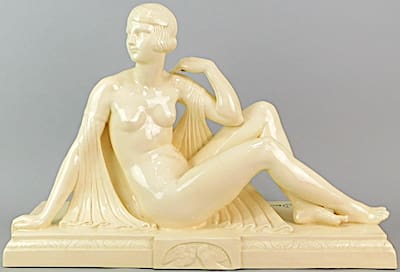
De Viggo
De Viggo was a pseudonym used by Ugo Cipriani. Cipriani would use several pseudonyms including Menneville and Roggia.
Dieupart, Henri Germain Étienne (1888 – 1980)
The Paris born sculptor was a pupil of Jean-Antoine Injalbert (1845-1933) and Paul Auban (1869-1945). Henri Dieupart is known for his artwork, sculptures in stone, bronze and other media, and with the creation of the artwork ‘Le Printemps’, depicting a naked woman located at square du Dr Drancher, rue Sorbier in Paris which was created in 1928.
He also made several monuments and from 1920 he worked with the glass makers Simonet Frères as a designer for their lamps and clocks and designed a number of prestigious vases for special exhibitions, such as the Salon des Artistes Décorateurs and the Exposition Internationale des Arts Décoratifs 1925 in Paris.
Their art deco glassware – made by Cristallerie de Choisy-le Roi regularly won prizes and the style of the vases is compared to the work of René Lalique or Marius Sabino.
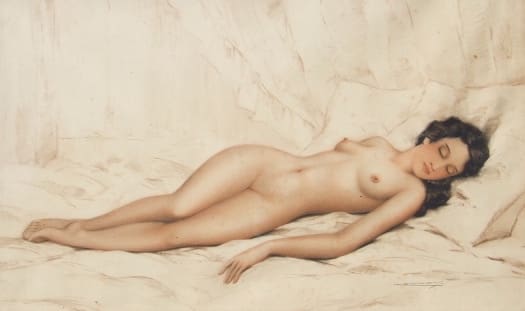
Diey, Yves (1892 – 1984)
Born in Paris in 1882 and worked during the early 20th century. He participated in the Salon des Artistes Francais and won a silver medal in 1942. Diey was famous as a painter of nudes and portraits of women, and also typical Spanish and Moroccan scenes. Although there is little biographical information on the artist, he is well known to French art dealers by virtue of the fact that he was extremely prolific and his works were generally of very high quality.
Diligent, Raphael (1884 – 1964)
Sculptural artist, mainly in bronze & mainly animalier statues. Some of his statues were produced by the Le Verrier Foundry in the early 1930’s.
Douglas, Jon
An English wall mask producer worked mainly in plaster. Many of his wall masks were designed as Hollywood movie stars.
Drouot Edouard (1859 – 1945)
A French sculptor, he was born in Sommevoire (Haute – Marne), on 3rd April 1859. Studied in Paris under Mathurin Moreau and Emile Thomas. He won a third class medal at the Salon of 1892 (where exhibited from 1889).
He also received an Honourable mention at the Exposition Universelle of 1900 for his work entitled L’Amateur, a life size marble submitted to the Paris Salon in 1893. He specialised in sports and hunting scenes, Eastern subjects, and mythological subjects such of pan and other nymph type statues. His pieces tend to lean towards the fluid lines of the Nouveau period and have lots of movement to them.
He is considered by many to have been a genius and his pieces are highly sought after by collectors and museums worldwide.
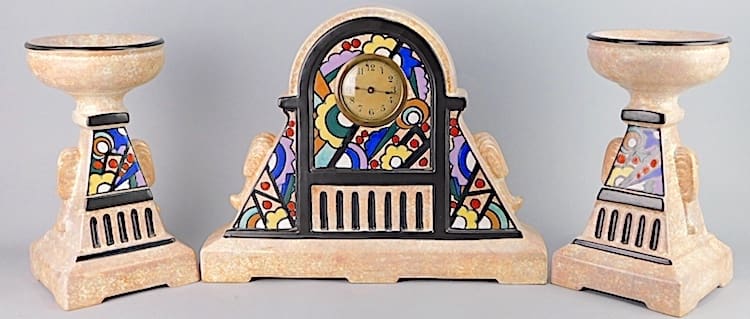
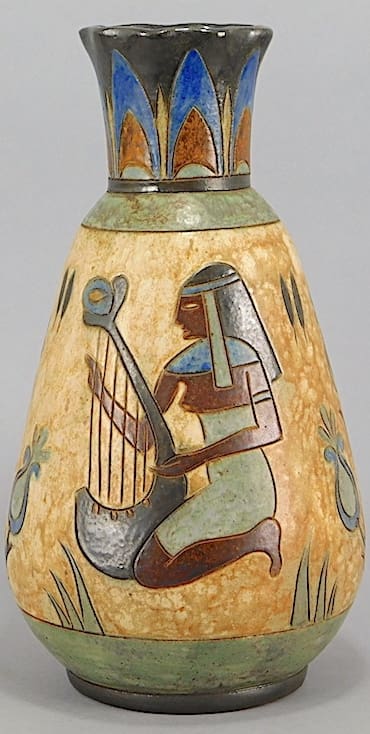
Dubois, Antoine (1869 – 1949)
Belgian ceramics artist. He was a Ceramist was from Mons Belgium and one of the founders of the Mons Pottery.
Most of his work is from the 1920s – 1930s.
He is known for his geometric lines and bold colours.
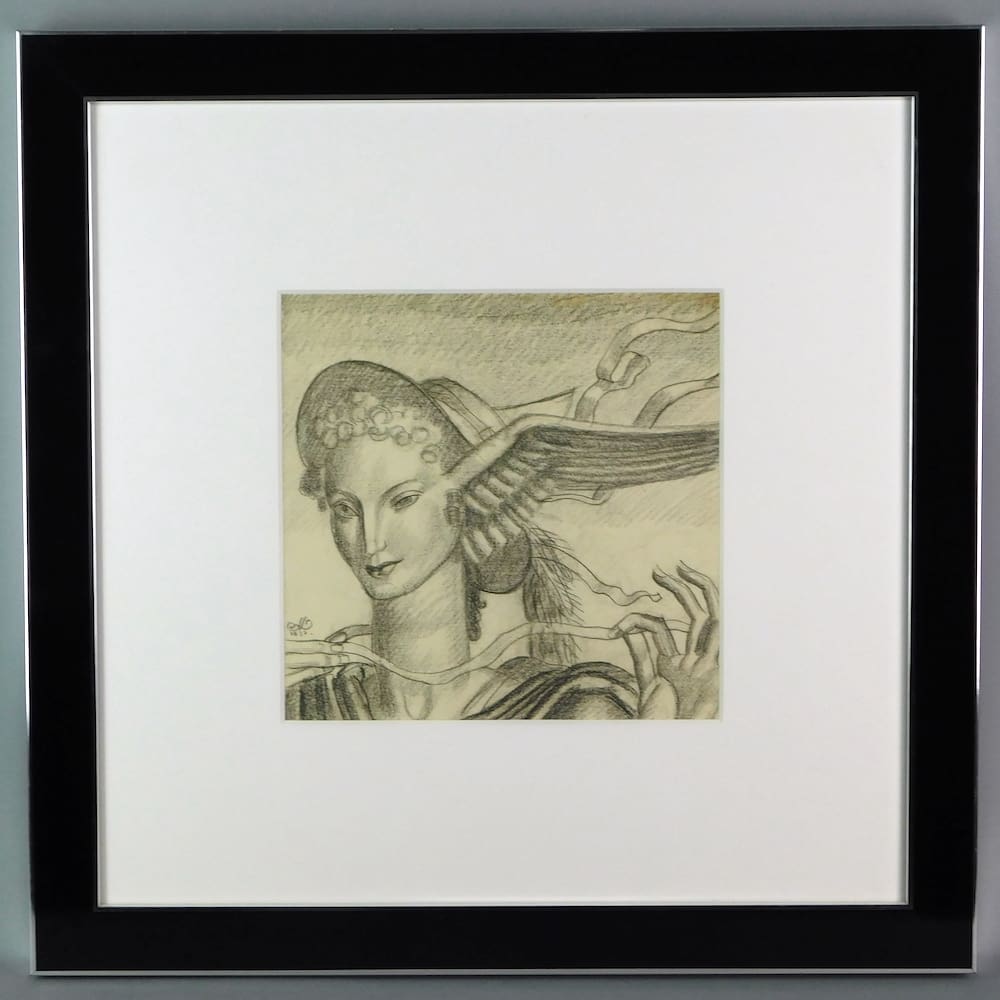
Dupas, Jean Théodore (1882 -1964)
Jean Dupas was a famous French painter and artist who worked during the art nouveau and deco years.
He worked for fashion magazines like Vogue and Harpers Bazaar and designed a catalogue for the fur company Max.
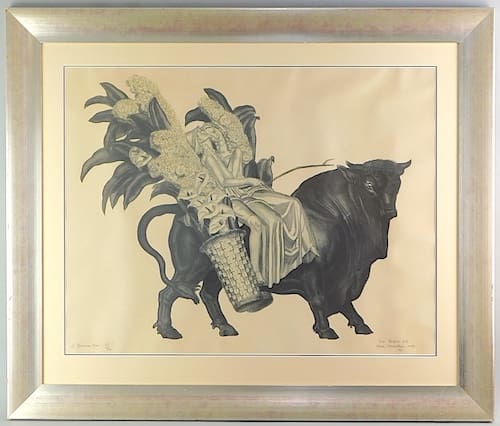
A student of Ecole des beaux arts in Bordeaux and Ecole superieure des beaux-arts Paris. He worked in the studio of Gabriel Ferrier.
Working in a Neo classical personal style he won many awards. He worked on many designs for Sevre ceramics company.
In 1925 he exhibited his famous painting – Les Perruchesto at the International exhibition of decorative arts in Paris.
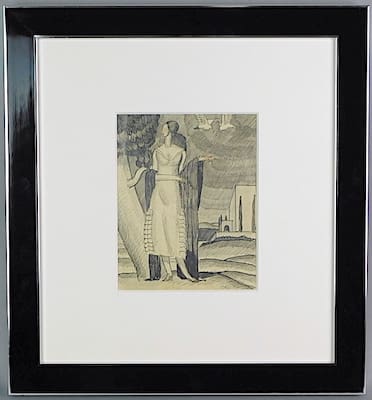
He created monuments in France and he collaborated in the decoration of many ocean liners such as the “Île-de-France” and the “Liberté” with Alfred Janniot and Jacques-Emile Ruhlmann.
For the Normandie large lounge, he painted 400 square meters of frosted glass paintings.
During the 1930s, Dupas was commissioned by Frank Pick to produce the artwork for a series of posters for the underground network of London Rail.
Dupas expressed his predilection for large-scale projects: “The greater is my work, the happier I am.” He became a member of the Academie des Beaux-Arts in 1941.
He died in Paris in 1964.
Duvernnet, Georges (1870 – 1955)
French artist who produced statues in spelter, bronze and bronze and ivory.