
A – B – C – D – E – F – G – H – I – J – K – L – M – N – O – P – R – S – T – U – V – W – Z

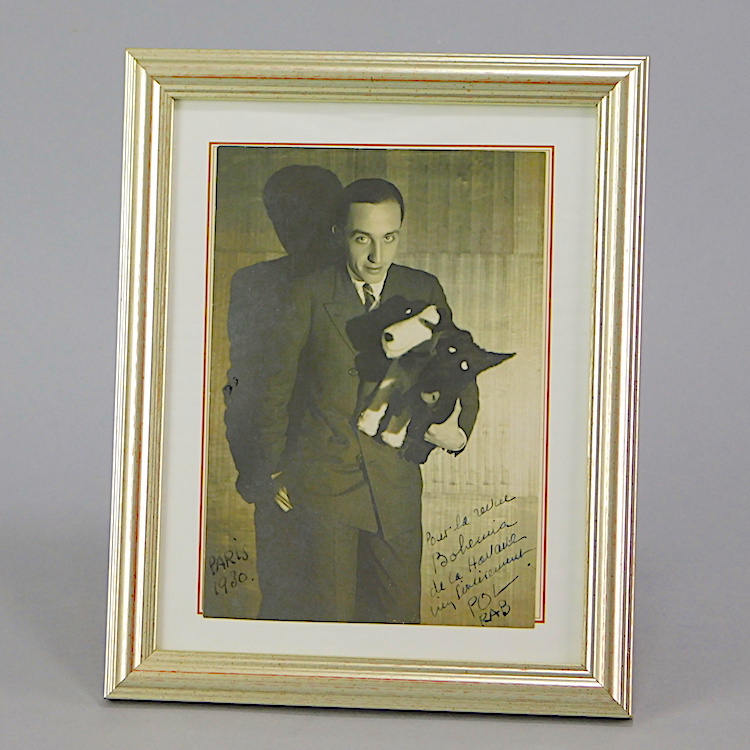
Rab, Pol (Paul Abraham) (1898 – 1933)
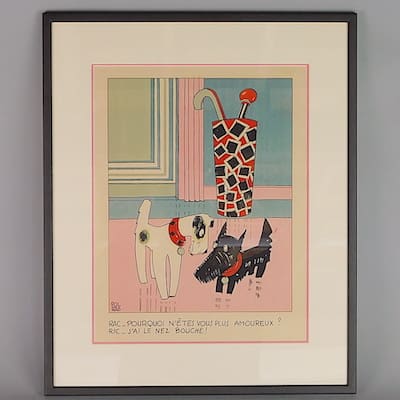
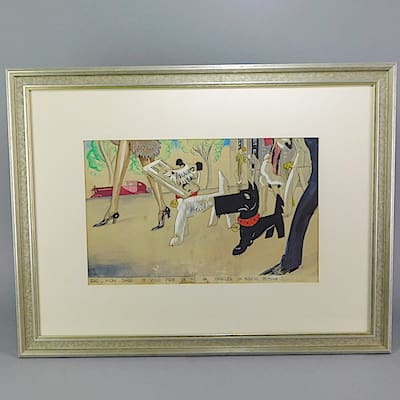
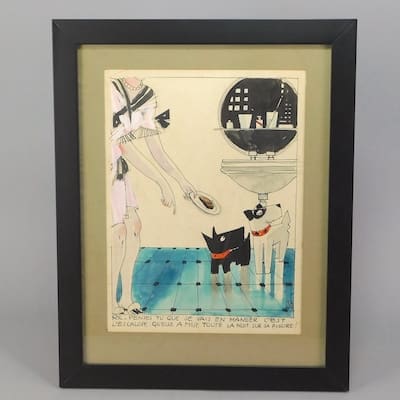
French artist and cartoonist. Before his untimely death at the age of 35 at Barbizon, he was elected president of the mois de 30 ans, an artistic society for artists under the age of thirty. He was an extremely talented artist and humorous illustrator who created the famous Ric and Rac terriers cartoon series.
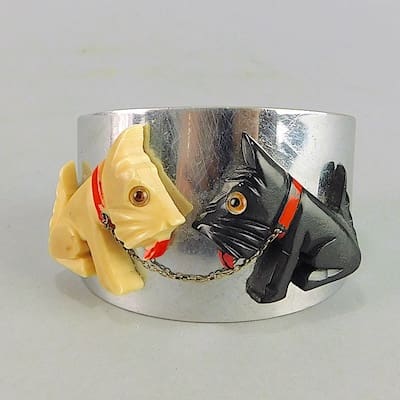
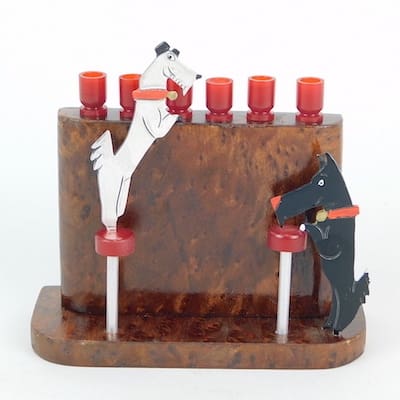
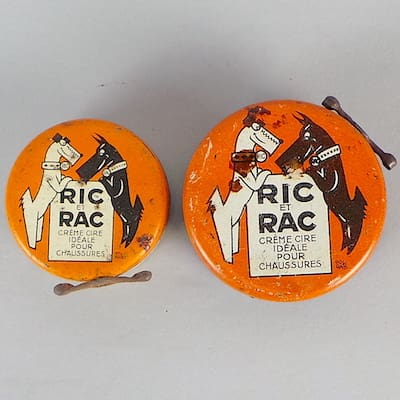
Many deco items were produced with the Ric and Rac theme – desk sets, cocktail sticks, cigarette cases, bookends, photo frames, brooches, ashtrays, advertising ornaments for Lux hoovers and even a boot polish.
Pol Rab also created Nenufar which was an African themed cartoon. Paul Brach in 1934, said of him that “all that he did, he did well and with verve. He was a great friend of Jean Cocteau.
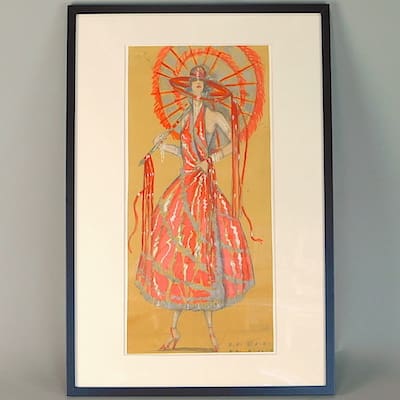
He also did designs for theatrical magazines and programmes, bars and restaurants menus which were always very comical and Ric and Rac was very saucy.
I have many brooches of Ric and Rac on my site, along with original period pochoir pictures. Even Lea Stein produced a brooch of Ric the terrier. The photograph of Pol (left), is an original signed photo with Ric and Rac.
Rabier, Benjamin (1864 – 1939)
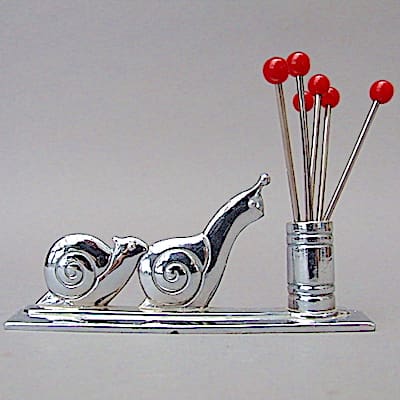
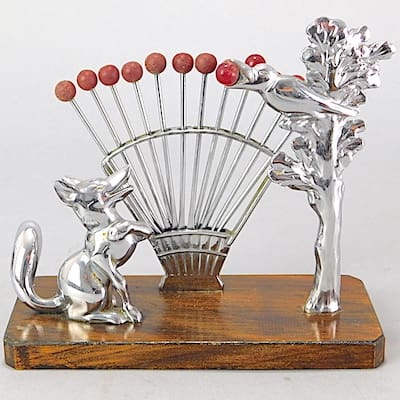
French sculptor, worked during the deco years and famous for his comical animal designs.
He created tableware including cocktail sets, knife rests, cruets, desk-sets and figural items mainly in spelter but also some ceramics.
Real Del Sarte, Maxime (1888 – 1954)
Born Paris may 2nd 1888 and he died there in 1954. Won the Grand Prix Nationale in 1921, specialised in monuments and memorials in the 1920’s. He won medals at the Salon des Artistes Francais in 1920 and 1927 and the Legion of Honneur in 1940. Also famous for a bust of Queen Victoria, and the monument of Joan of Arc at Rouen, and genre and lyrical groups like The Man and his Dream.
Renard, Marcel Claude (b. 1893)
Born in Lyon, 5th August 1893. Son and pupil of Leopold Renard and also with Rost and Boucher. He exhibited at the Salon des Artists Francais, and the Salon des Artistes Decorateurs and won 2nd and 1st class medals in 1925 and 1934 respectively. He specialised mainly in bronze medals, plaques and bas-reliefs.
Rey, Henri-Paul (1904 – 1981)
Henri-Paul Rey was born in Pesmes, France and was a sculptor who worked in stone and wood. He also created a large number of ceramic works. Rey studied at l’Ecole des Beaux-Arts in Besancon (1925-1927) under Georges Laithier and Leon Tirode, and studied under Bouchard, Injalbert, and de Villiers at l’Ecole National Superieure des Beaux-Arts (1927-1933) where he learned the valuable techniques that would characterise his original works. Rey knew how to impose his own style right away in his sculptures without years of experience or outside influences. Rey’s work, both bold and aesthetically pleasing, was already appreciated before the war. He exhibited a base relief wood sculpture in the 1937 Paris l’Exposition Internationale at the pavilion de Franche Comte and a similar ‘Tree of Peace’ in the 1939 Exposition in New York. Rey also exhibited regularly in the Salon des Artistes Francais de Paris where he received a gold medal (1937) silver medal (1933) and bronze medal (1932). He was also a member of the jury of the Salon des Arts Decoratifs. His works can be found in museums in France, United States, Canada, and Poland as well as other international institutions.
Rey was a second-generation Cubist. He created works based on music and dance, including some monumental woodcarvings. He worked from stone, but found carving from wood to be more synergistic to complement his emphasis on form and volume. He worked meticulously with thoughtful execution and exuded a certain powerful maternal tenderness in his rounded totems carved from tree trunks. His work expresses emotion and sensibility that is emphasised in the miracle of old wood, brought to life by art. Like many of the earlier Cubists, he incorporated African imagery in his spectacular sculptures. Although Rey’s work can be found internationally, his predilection remains in his home region where we can find monuments such as Saint Ferreol and Saint Ferjeux in the crypt of the Basilique of Monseigneur Dubourg, of Louis Pergaud in Marcheville or the Virgin of Buis in Besancon where the monumental sculpture (7 meters high) integrates religious art at such a splendid site, dominating the town! The magnificent Church of Pesmes, also rich with Rey’s works, also has Saint Hilaire sculpture. Rey is also noted for making busts and medallions of famous writers, painters, Ecclesiastes, politicians, and scientists including Louis Lumiere, Edouard Belin, Louis Guignard, President Jules Grevy, Pontelin, and Cardinal Binet. Rey was also awarded the international prize of Sculpture and was elected a member correspondent (and received a gold medal) of the Academy of Letters and Sciences and Arts of Besancon in 1971. His work was acquired by numerous museums including the Musee de Paris, Dijon, Besancon Poutailier, and Arles.
Rezl, Bohumi (b. 1899)
Born on 17th September 1899 in Czechoslovakia, arrived in Paris in 1926. He settled in Villenauxe (French department of Aube), and worked in the faience factory until 1951. He created ceramic and terracotta figures and clocks often signed B. Rezl. Some of his 1930’s items are on view in Museums in Brussels.
Riboulet, Eugene (1883 – 1972)
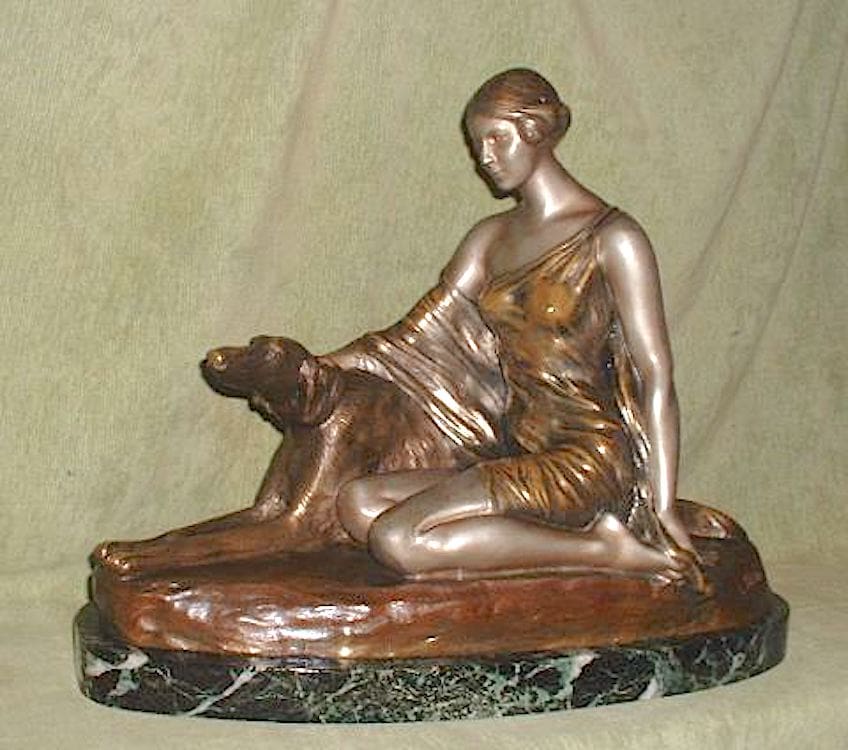
French Art Deco artist who produced artwork, and statuary pieces in bisque, metal and ceramics.
Riche, Louis (1877 – 1949)
Born 1877 in Paris France, died 1949. He studied under Gordet and Perrin, and exhibited at the Salon des Artistes Francais and the Salondis Independonts. He got a first class medal in 1924 and specialised in animalier and genre groups. Valence Museum exhibits his bronze of a cat waylaying a butterfly.
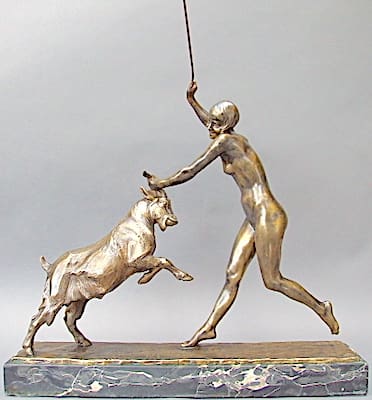
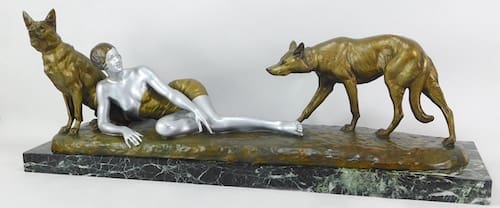
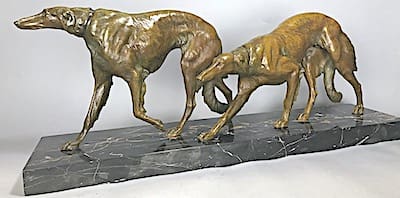
Right, G (1905 – 1999)
French sculptural artist working during the deco years producing pieces in bronze and bronze and ivory.
Rigual, Pedro Ramon Jose (1863 – 1917)
Born Barcelona, March 19th 1863 of french parents, Francois Rigual and Gertrude Miro. Died April 24th 1917 in Paris where he lived all his life.
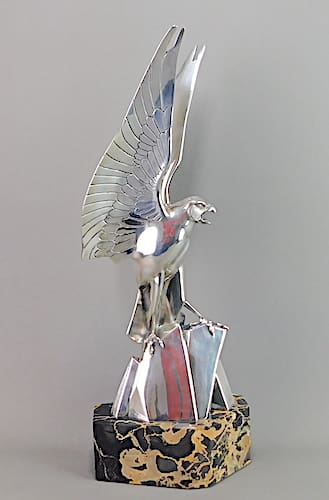
Rischmann, Henri
Henri Rischmann worked in France and produced mainly bronze statues of animal subjects.
Unfortunately little information is known about this artist.
Riviere, Guiraud (1881 – 1947)
Maurice Giraud Riviere, born in Toulouse France. became a member of the Salon where he exhibited his works during the 1920’s and 1930’s.
At the age of 15 he was a sailor and at 20 he became and actor. His statuary career started in Paris when he studied at the Paris Ecole Nationale beaux arts where he studied under Antonin Mercie.
He exhibited at the Salon of the SAF during the 1920s and 30s. He worked in many mediums, producing paintings and drawings for magazines at that time.
His bronzes and bronze and ivory pieces were produced by Etling et Cie, Les Nevaux e J. Lehmann and Adnre Fau.
His ceramic pieces were produced by Sevre and he also designed comical pieces for the Robj company.
He sold several pieces to the French State for the City of Paris in 1926. This included Enigma, one of his most famous pieces. Other famous pieces which were produced in various sizes were – thoughts, Stella, Nordica and Etoiles.
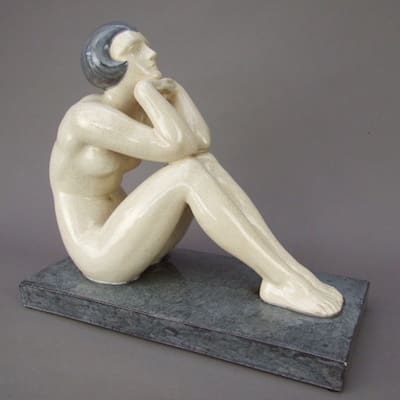
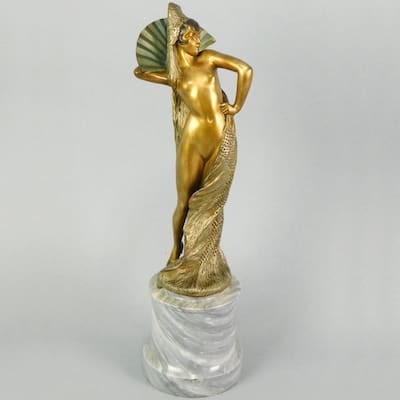
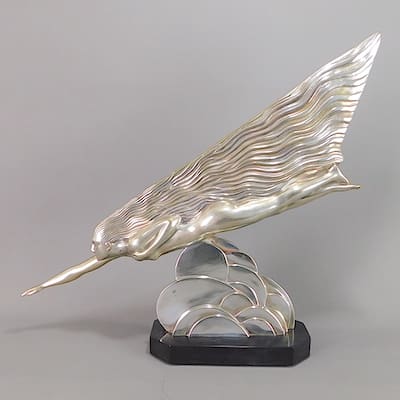
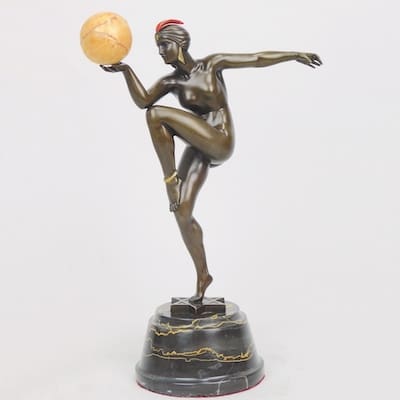
Rivoire, Raymond Leon (1884 – 1966)
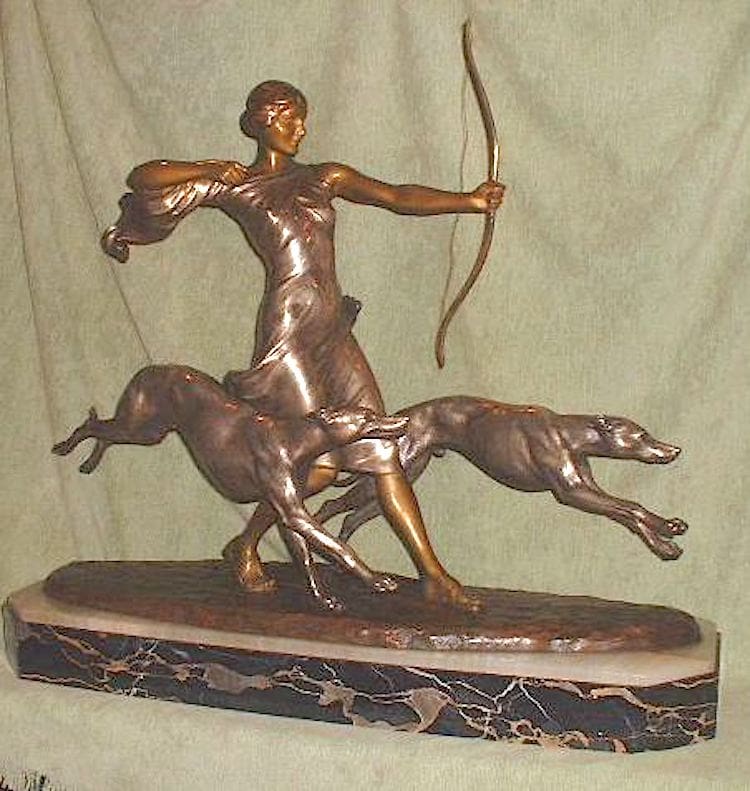
French Art Deco sculptural artist. His most famous statue was ‘Elegante au Levrier’ (see pictures). This same state was made in several sizes and a life size version could be seen in the Grand Salon of the Atlantique ocean liner. Most of his statues were produced by the Susse Freres foundry, Paris.
Rivoire was a student of Injalbert at the Beaux-Arts in Paris and exhibited at the Salon of French artists in 1905. He received a silver medal in 1921 and gold in 1929. He exhibited in France, London, Rome and Buenos Aires.
He also worked on the art competitions at the 1924 Summer Olympics and the 1928 Summer Olympics.
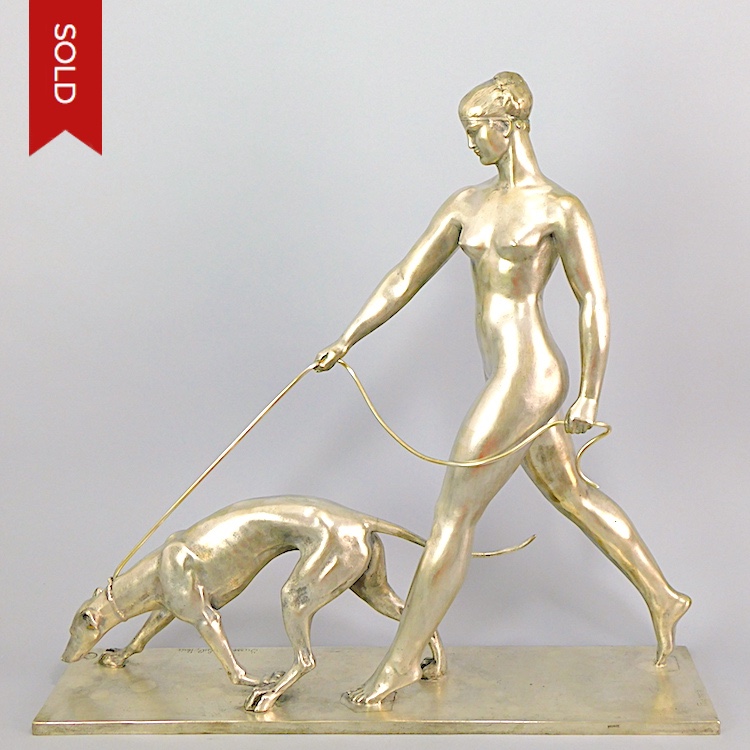
The gold medal won at the salon of 1929 lead to his most important commission and a milestone of the Art Deco era, the colossal marine group ‘The God Neptune drawn by a sea horse’, for the luxurious and stylish French ocean liner SS Normandie launched in 1932. This sculpture was itself a pendant to his work ‘The Goddess Artemis and her greyhound’ commissioned for an earlier French Art Deco ship SS Transatlantique launched in 1925 which was subsequently reproduced as scale editions in bronze in the late 1920s.
He made a bronze for the Normandie liner representing Neptune pulled by a marine horse destroyed in the fire of the ship in New York in 1942 during a refit, a second copy of which survives to the present day as a centrepiece of the fountain adjacent to the Reynaldo Hahn Square in the gardens of the Croisette in Cannes.
Another of his major works is Diana and the Greyhound, also known as Artemis. Like Normandy, a monumental copy of this statue was enthroned in the living room of the ocean liner L’Atlantique. Scattered memories of the work were found during the demolition that followed this fire.
He was appointed knight of the Legion of Honour in 1932 and decorated in 1933 by Jean Gautier of the National Conservatory of Arts and Crafts. At the end of his life, he was a boarder at Ris-Orangis, the artists’ retirement home founded by Dranem (Armand Ménard).

Robj
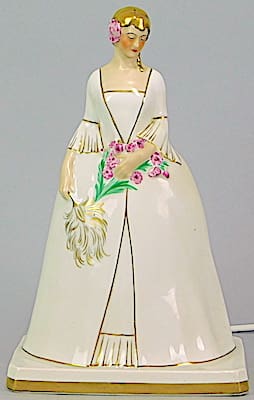
In 1908 Jean Born formed the company of Robj, its main interest was electrical items. In 1916 the company started to produce unusual ceramic items.
Jean died in a car accident in 1922 and the management of the company was taken over by a shareholder – Lucien Willmetz. With the help of many sculptors and technicians Willmetz was the person responsible for the promotion of Robjs unusual and innovative form.

The Robj pieces typified the 1920’s ‘style’ and trend and so were immediately successful. In 1928 the company started production of there most successful line – the liquer decanter bottles known as ‘Flacons Liquers’. Which were modelled as Guradsmen, Napolean, Monks, a black moma, teachers and ladies.
The following year the company then produced similar tobacco pots. Several other ceramics companies were used to produce the Robj pieces and these included – Manufacture nationale de Sèvres, Villeroy & Boch in Luxemburg, several factories in Limoges and a decoration workshop with a muffle furnace in Boulogne-sur-Seine.
Today the company of Villeroy & Boch are reproducing the deco Robj pieces but the quality is not the same as the original pieces.
Rochard, Irenee (1906 – 1984)
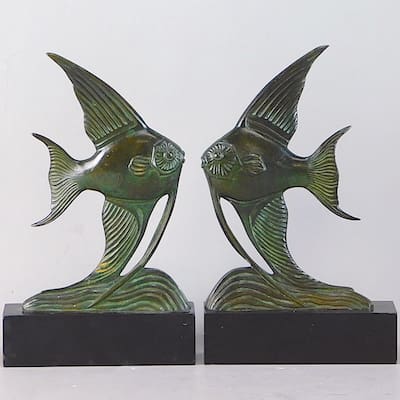
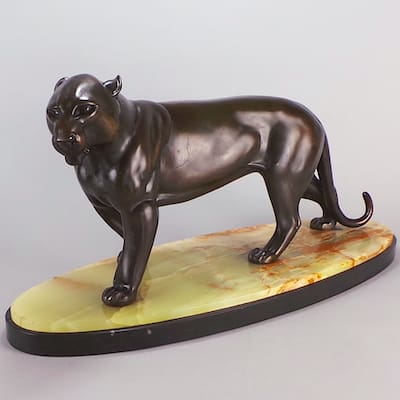
Born on January 16th 1906 in Villefranche-sur-Saone (Rhone) to a family of artists. His mother was a painter and his brother was an actor and singer. He died in Paris 1984. French Sculptural artist worked during the Deco years, famous for his wonderful animalier sculptures as he “wanted to pay tribute to animals”, although he did make a few female statues too. Worked mainly in spelter or spelter and ivory, but also made bronzes.
He was a student in the Beaux-Arts and Arts-Deco Schools from 1924 to 1928 and member of the French Artists Society from 1938 onwards. He received his first award when he was just 22 years old and had just left art school, for a full sized Panther statue. He won numerous Prizes and Distinctions from the French Artists Society in the 1930’s and ’40s, including a bronze medal in 1941.
Also some connection with Menneville. (See Menneville for more details). His work was exceptional and is now becoming highly sought after.
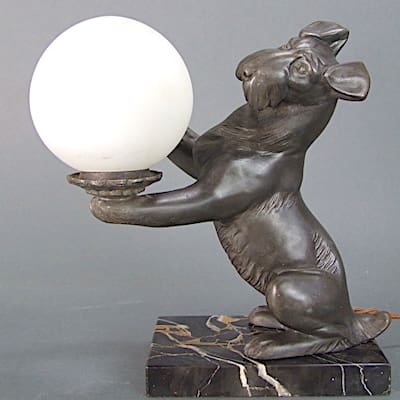
Roggia
See Menneville
Rosenthal, Rena
There is not much information about Rena Rosenthal. Many very stylised bronzes are marked RR with the first R in reverse which is the symbol for her pieces. She was not in fact an artist but a shop retailer, who ran a stylish shop in the Waldorf Astoria Building in New York during the 1940s and 50s. She specialised in gift type designer items by Austrian artists like Hagenuer and had certain items created solely for he, putting her name to them. Some of the artists whose items she used were Bosse, and Baller and also Hagenauer made some items exclusively for her. Some of these pieces are marked with both RR and Hagenauer.
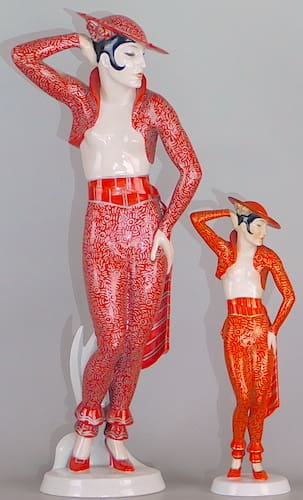
Rosenthal, Philip (1855 – 1937)
Opened in Selb, Germany in 1869, by Philip Rosenthal, opened an art section in 1910 and employed over 80 designers, decorators and sculptors, including Gustaf Oppel, Karl Himmeltoss, Constantine Holzer-Defante, Ferdinand Liebermann, Franz Caasmann, Theo Karner, Philip Rosenthal and his son Philip (1916 – ).
Won numerous medals and honours, notably the Gold Medal for its stunning quality porcelain at the Paris World Fair at the beginning of the 20th Century.
Continued making exciting and quality ceramic items until being taken over in 1997 by Hutschenreuther AG, but is still producing quality ceramics under the name Hutschenreuther (Rosenthal Group), in Selb and Speichersdorf.
Roux, Constance (1865 – 1929)
Born in Marseilles and studied under Cavelier and Barrias. Produced busts and historical portraits of Frenchmen. He was awarded numerous medals and awards and exhibited at the Salon des Artistes Francais.
Royal Dux
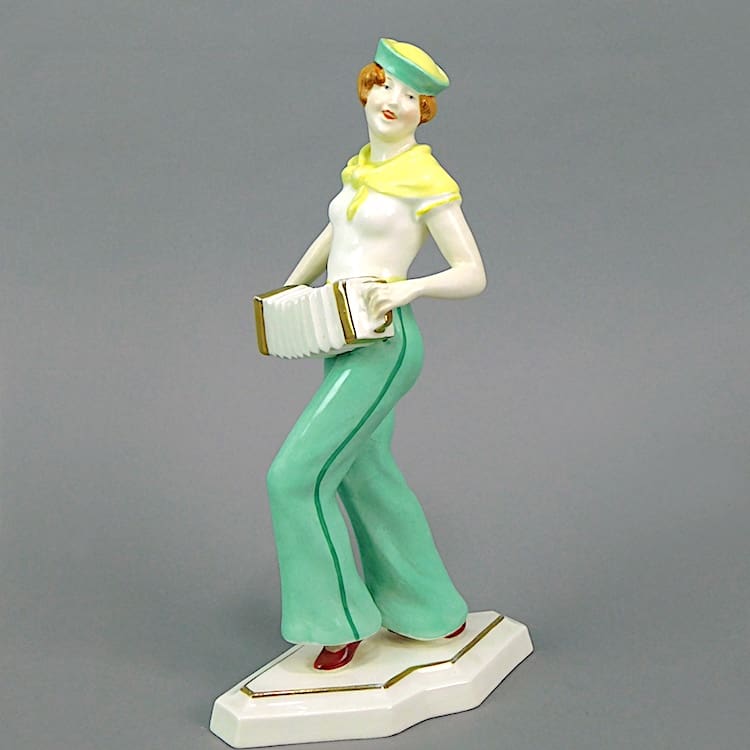
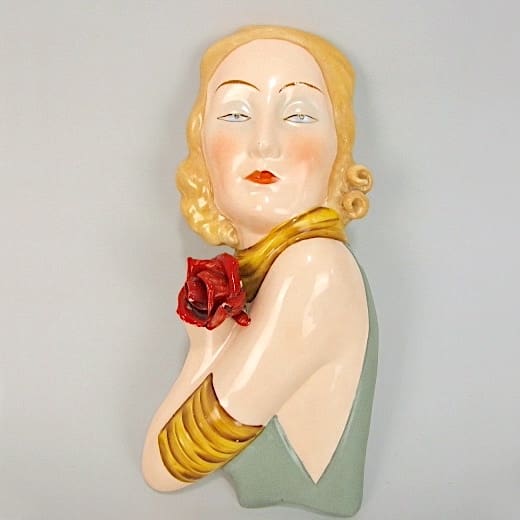
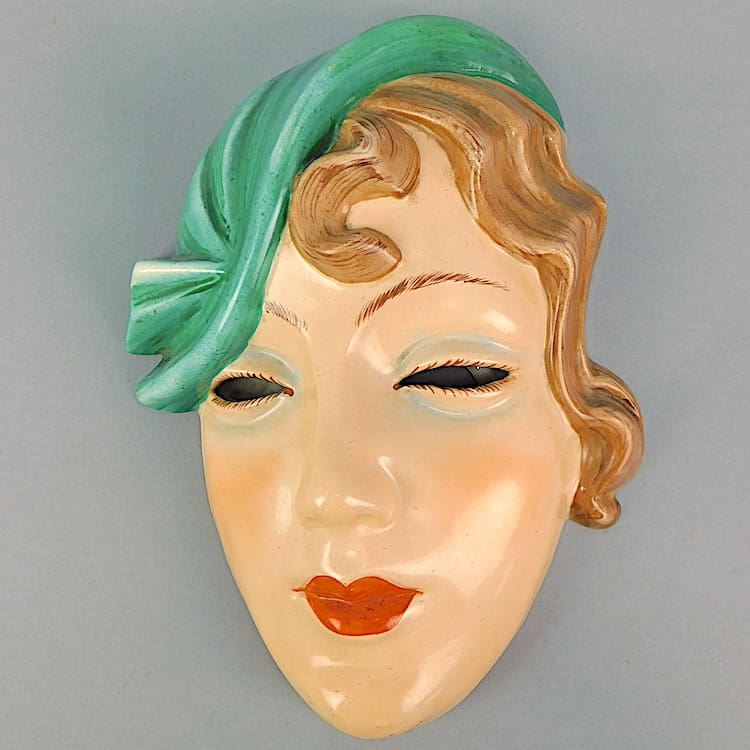
Bohemian Porcelaine company formed in 1853 and came to prominence in the early 1900s when they began producing Art Nouveau statues. The factory remains open today.
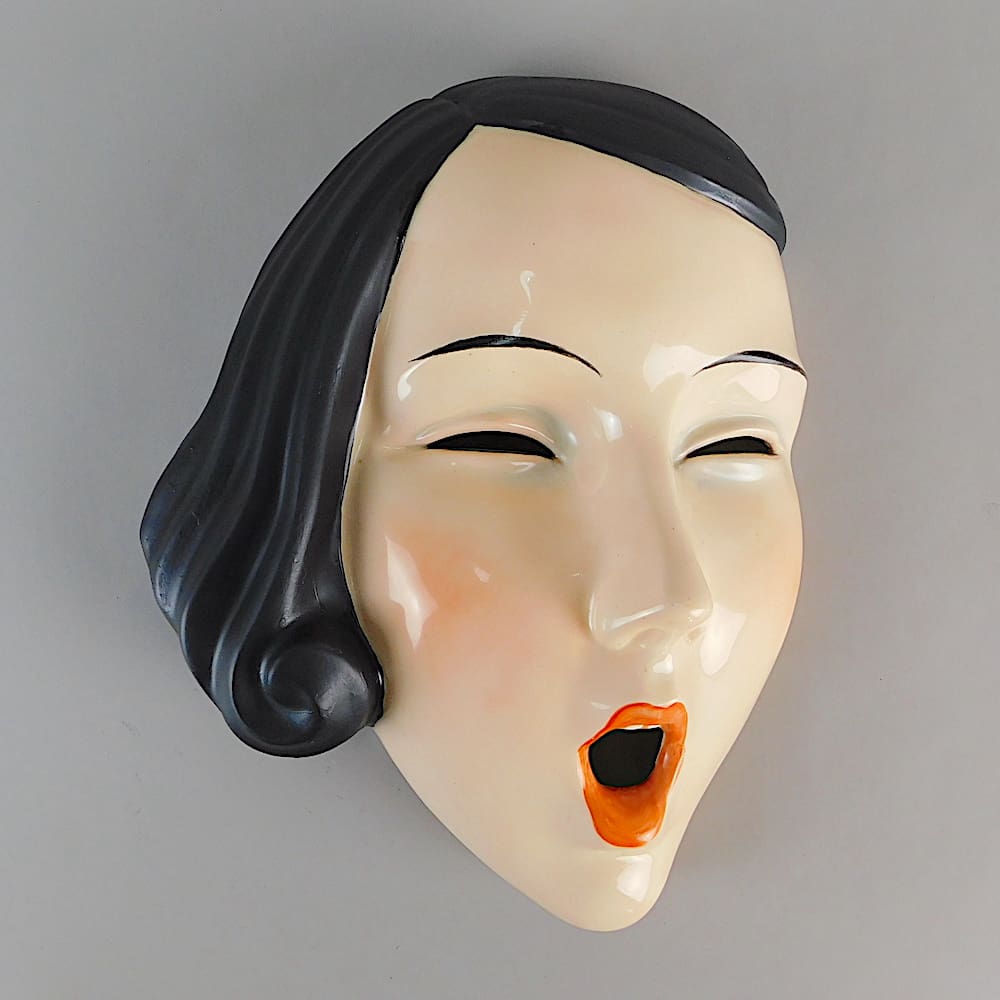
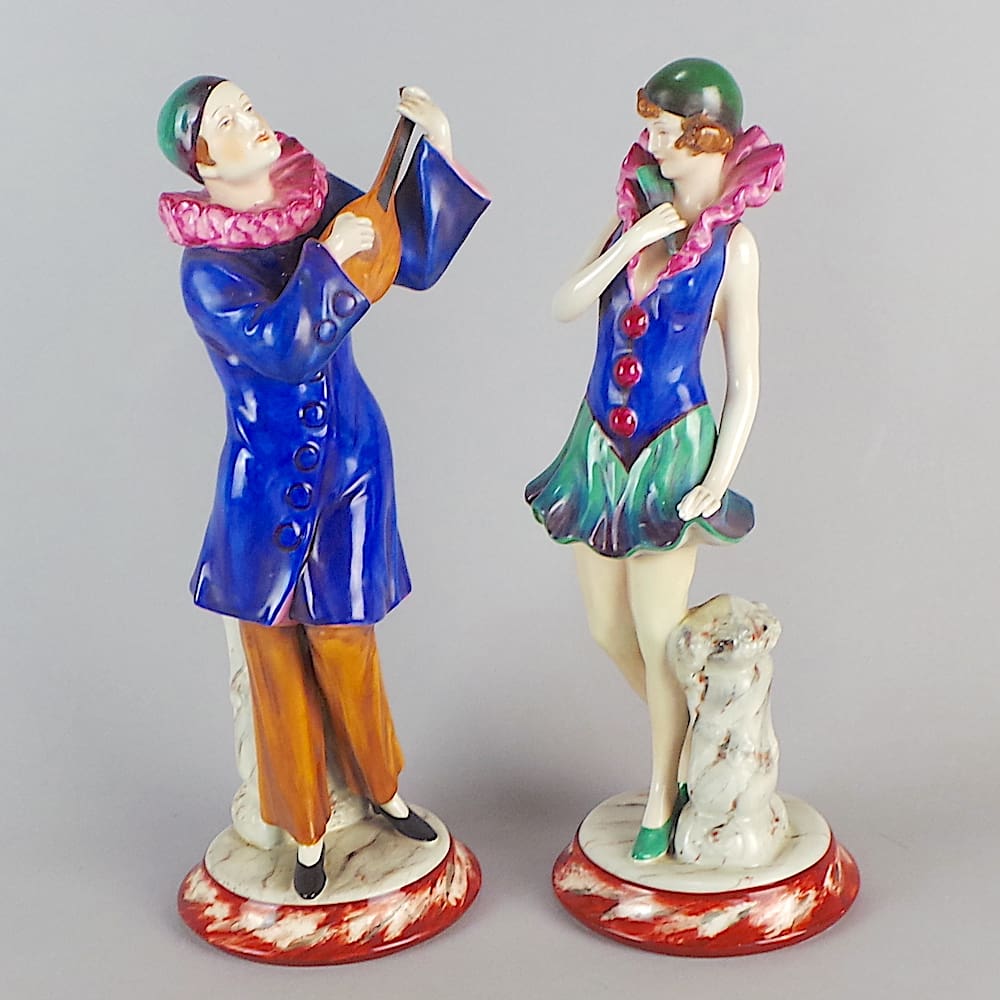
Rozet, Fanny (1881 – 9th March 1958)
Born in Paris on June 13th 1881. She she was a French sculptor and produced items in bronze and ceramic.
Fanny Rozet was a member of the Union of Women Painters and Sculptors. That union had to ask for women’s access to the École des beaux-arts (school of fine arts) de Paris, which was reserved only for male artists at the time.
She was the first female sculptor to be accepted into the School in 1896. There she became a student of the sculptor Laurent Marqueste. Marqueste served as a witness to the marriage of Fanny and Albert Philippe in 1916.
Her entrance in the competition for the award of the Prix de Rome in 1905 as a woman did not go beyond a “preparatory examination”.
From 1904, the artist exhibited at the Salon des Artistes Français in Paris. That same year, she received an honourable mention and in 1923 another honourable mention. In 1924 she received a bronze medal, and in 1926, a silver medal for the applied arts.
Fanrose, possibly a pseudonym used by Fanny Rozet