
A – B – C – D – E – F – G – H – I – J – K – L – M – N – O – P – R – S – T – U – V – W – Z

Camus – Jean Marie (1877 – 1955)
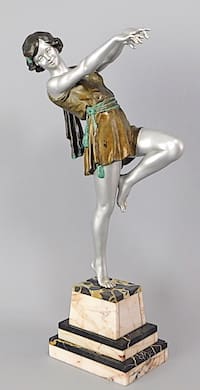
French sculptor and painter who exhibited at the Salon in Paris and worked in various medium – bronze, marble and terracotta. Born in Hermand-Ferand in 1877 and studied under Barrias and made his debut at the Salon in 1900. He won a gold medal in 1931 and was made a Chevalier de la Legion d’honneur.
Carlier, Emile Joseph Nestor (1849 – 1927)
Born in Cambrai, France and died in Paris 1927.
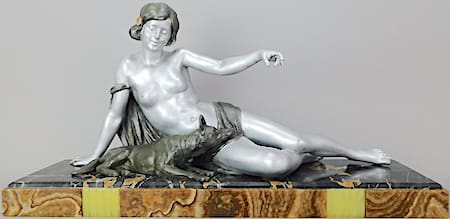
He studied at local art schools and moved to Paris where he was a pupil of Jouffroy, Cavelier and Chapu at the Ecole des Beaux Arts.
Famous for his busts, animals and genre groups. He received many medals for his work and held the rank of Officier in the Legion of Honour.
Carltonware
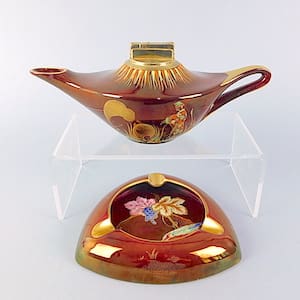
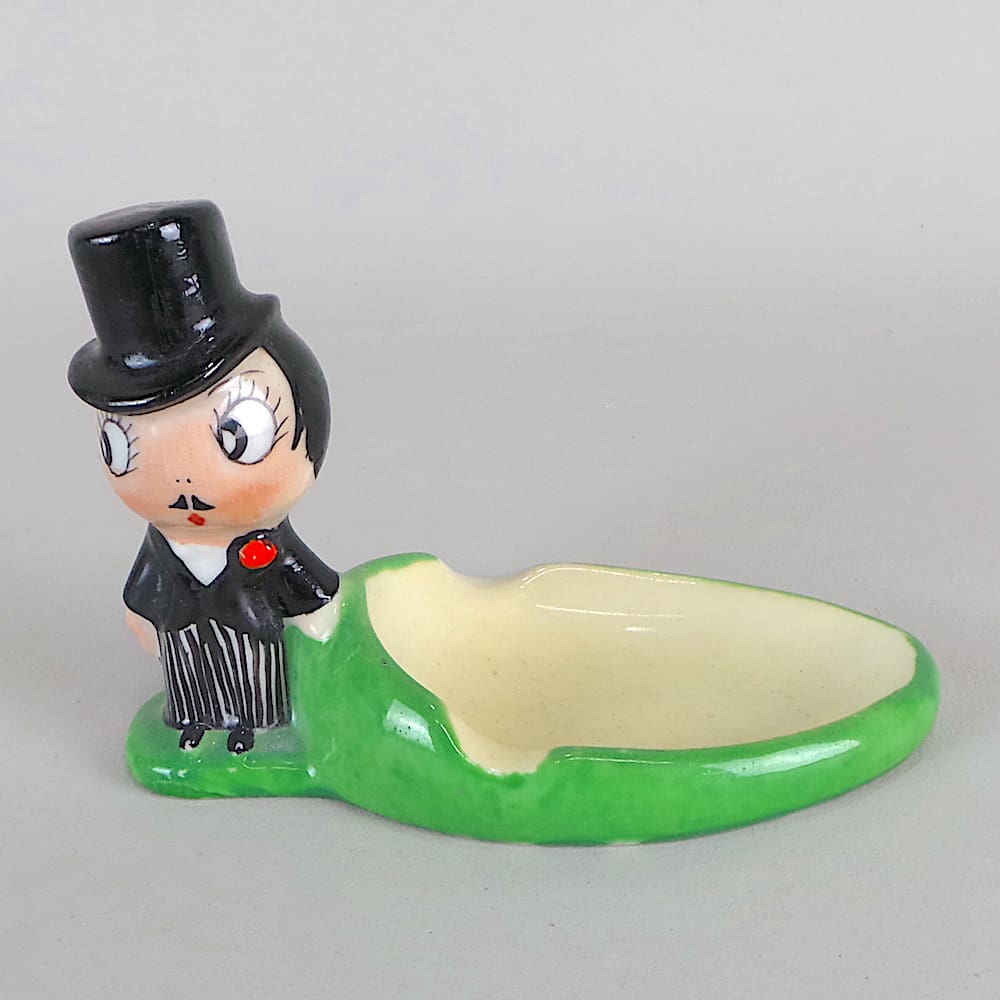
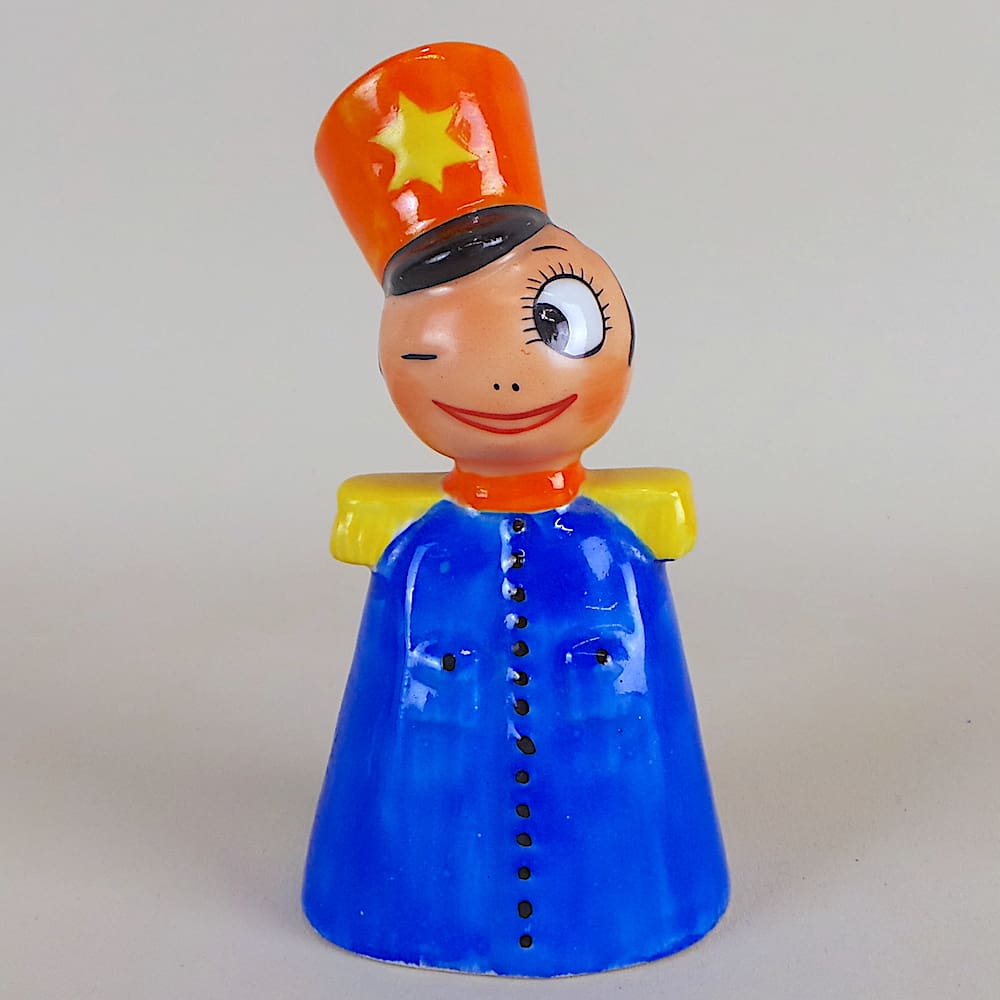
English ceramics manufacturing company from the 1920s who produced tableware, wall plaques and other ceramic items, including in Oriental and Egyptian patterns.
Carlton Ware Trademark came into being in 1928. During the 1930s it introduced tableware with embossed floral patterns such as foxglove, anemone and pixie designs. Dishes, salad bowls, cruet sets and vases continued into the 1960s.
The high lustre “Royale” range was introduced in 1949 and continued into the 1970s. The company was sold to Arthur Woods and went into receivership in 1989.

Carrier-Belleuse, Albert
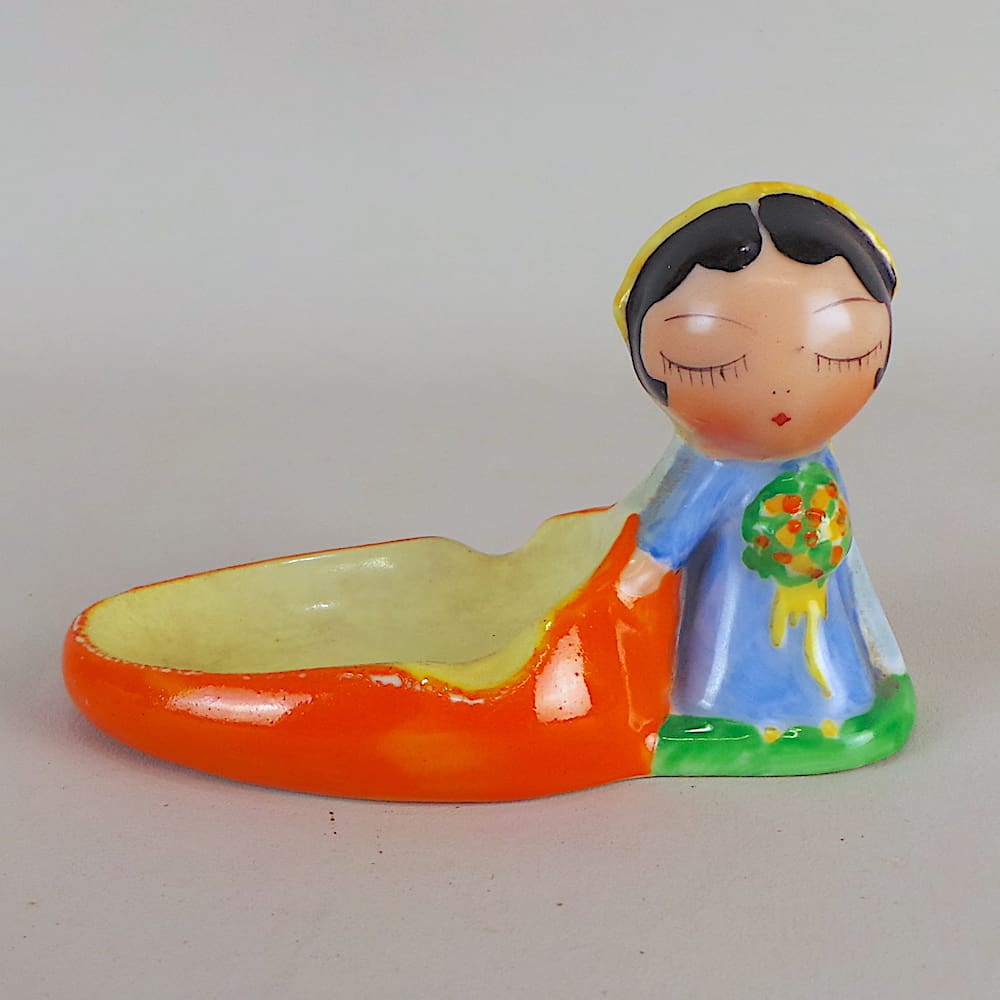
Born in 1927, he received many honours for his exceptional work. Famous for ‘Nature revealing herself’, died 1887, in his later years was the director of Sevres factory in France. Was responsible for the ceiling in the Louvre, Paris. Considered as a real Master of his art.
Cartier, Eugene (1861 – 1943)
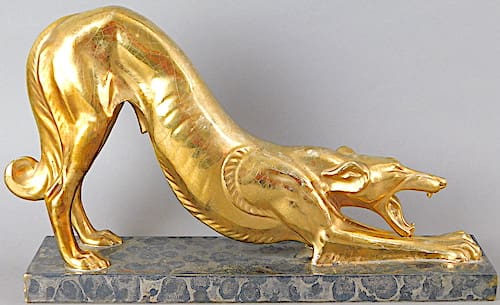
French artist and sculptor who received Salon medal of honour 1926. Worked in bronze, mainly animalier – and oil on board.
Cartier, Thomas Francois
Born in Marseille, France 1879. First exhibited at the salons in 1908. Later to receive many awards.
Carvin, Auguste, (1868 – 1949)
French artist born in Paris who exhibited at the Salon, Paris from 1896. Specialised in sculpture, monuments and several large works in various municipal buildings, schools and hospitals.
Predominantly an animalier sculptor. It seems there were two Carvin animalier artists working at around the same time, one was Lois and the other Auguste.

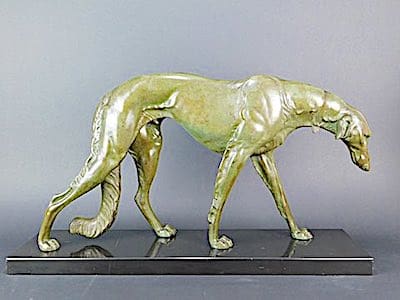
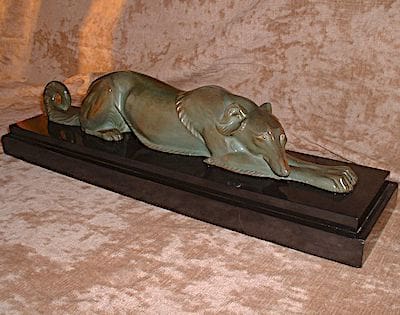
The work of Lois Carvin was more naturalistic as he was earlier than Auguste Carvin who’s work was very art deco and stylised. He studied under Gardet and Fremiet and exhibited at the Paris Salon from 1894 – 1933. His latter work concentrated on genre compositions.
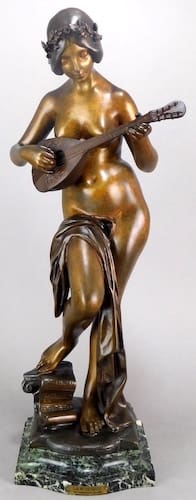
Causse, Cadet Julien
Born at Bourges, worked 1890 – 1914, studied in Paris under Falguiere and exhibited at The Salon des Artists Francais in the 1890s, obtaining honourable mentions in 1892 and 1900 and a third class medal in 1893.
He also took part in the exposition Universelle of 1900 and specialised in small figures. Pictures of his work can be found in the Berman book of Bronzes by Schiffer books.
Charles, Charles
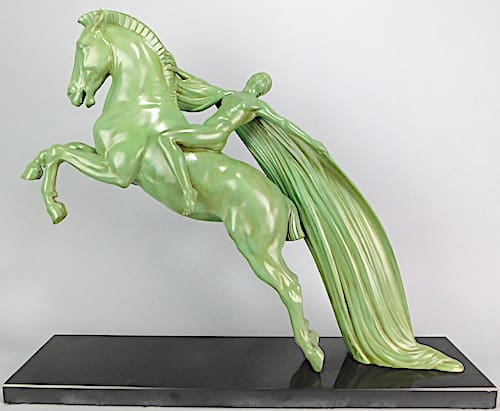
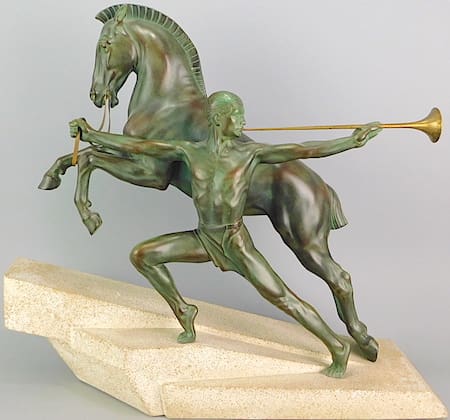
Art Deco Sculptural artist, worked with the Le Verrier foundry in the 1920’s and 1930’s.
Unfortunately little information can be found on Charles to this day.
He is best known for his Diana on horseback (shown right) and Bayadere. Both of these items items were produced by the Le Verrier foundry.
Charol – Dorothea (Odessa Russia 1895 – London 1963)
Produced bronze and bronze and ivory pieces along with many ceramic statues. Her work was produced by the Volkstedt porcelain factory in Thuringia and also by Rosenthal.
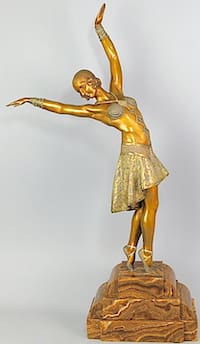
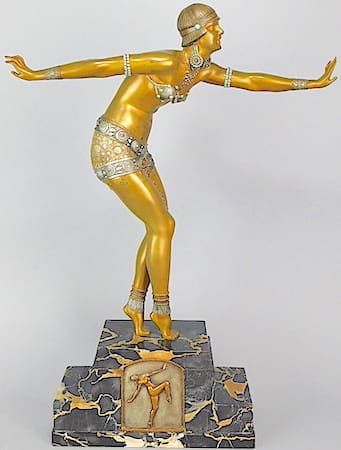
Chiparus, Demetre Haralamb (1886 – 1947)
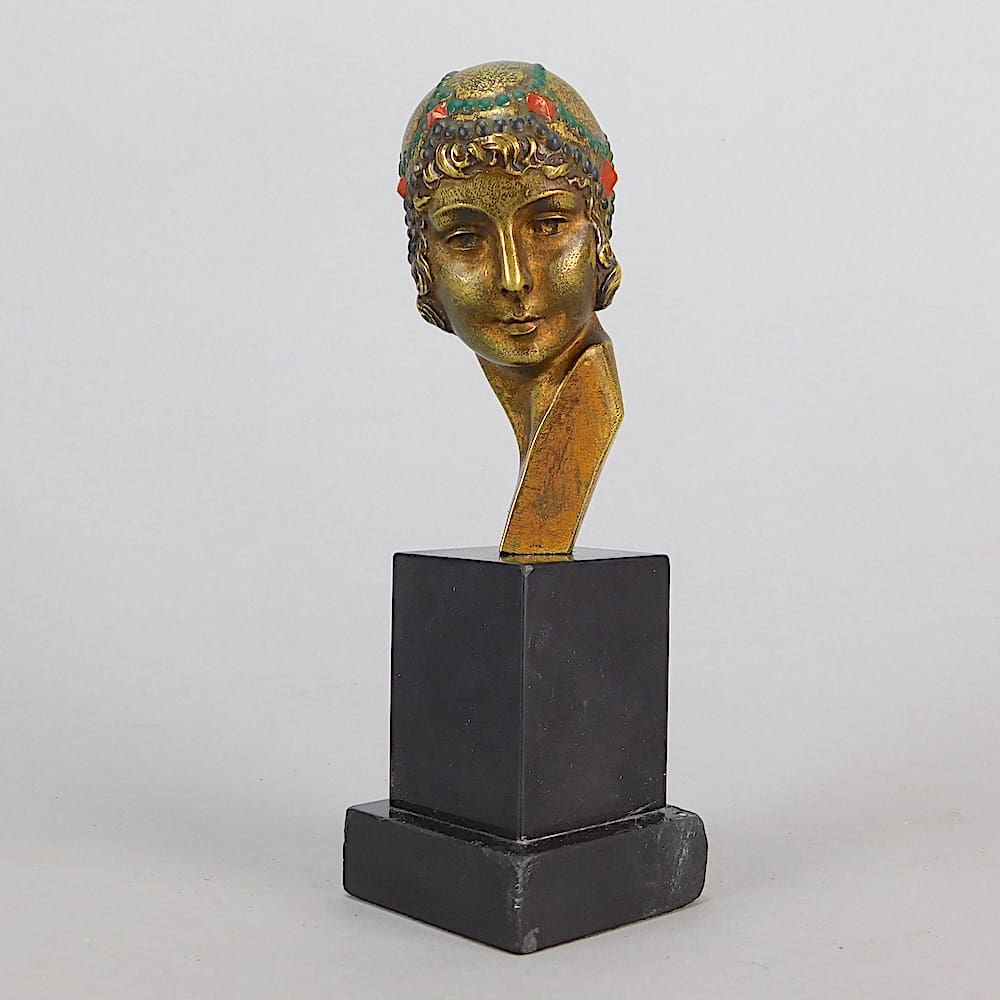
Statues created by Chiparus are some of the most famous and most desirable of the Art Deco sculptural items. Born in Dorohoi Romania he was the son of Haralamb and Saveta Chiparus. He took his fathers name as his middle name in memory of his father and often signed his name as D H Chiparus. He had one Brother who died under mysterious circumstances.
In 1909 he went to Italy, where he attended the classes of an Italian sculptor Raffaello Romanelli, he then went on to Paris when he was 20 years old and studied under Mercie and Boucher and exhibited at the Salon des Artistes Francais from 1914 to 1928.
His earlier statues were created in a more naturalistic style and many were of children. He produced statues in bronze and ivory, bronze, spelter and terracotta and even plaster. He also produced ceramic boxes and night/perfume lamps and also paintings.
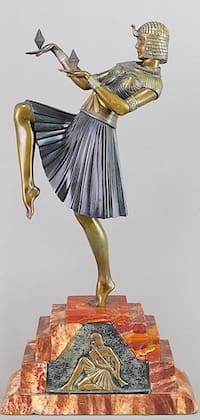
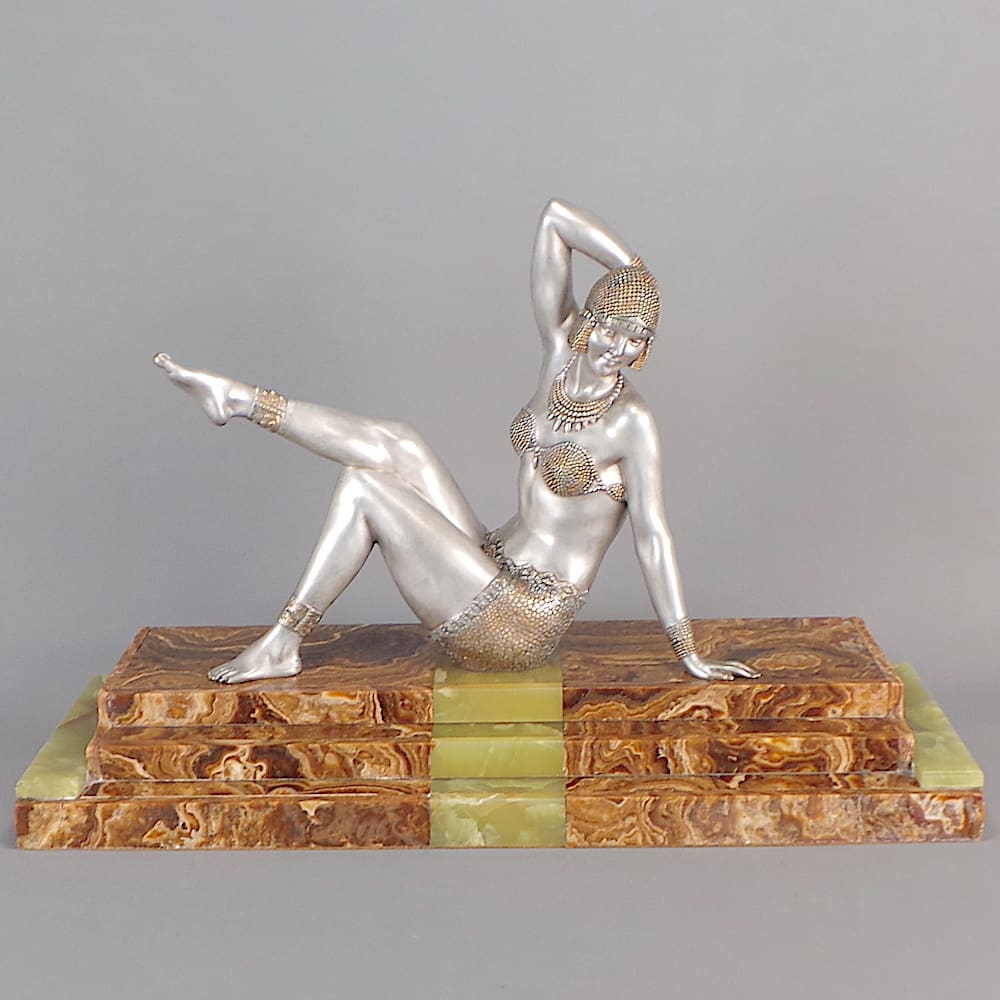
At the beginning of the 1920s his style changed to a more stylised Art Deco theme and he modelled statues depicting the Ballet Russes, Moulin Rouge and the Folies Berger. French theatre and early motion pictures were among his more notable subjects.
His was influenced by an interest in Egypt, after Pharaoh Tutankhamen’s tomb was excavated and other exotic Counties of the world as travel was now more available due to ocean liners and and air flight.
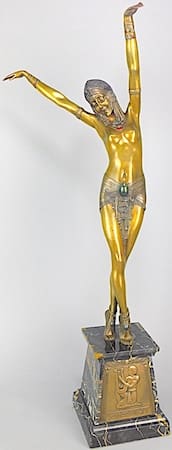
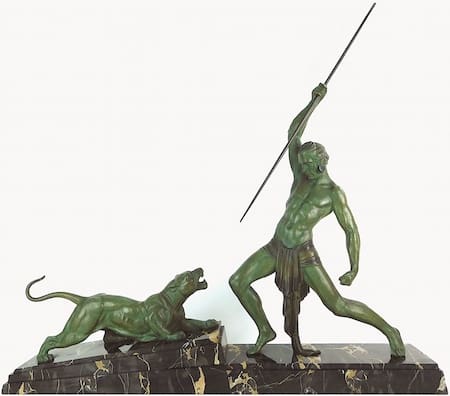
He worked mainly with the Edmond Etling and Cie Foundry in Paris administrated by Julien Dreyfus. Les Neveux de J. Lehmann was the second foundry who also worked with Demetre Chiparus and produced the sculptures cast from his models.
Demetre Chiparus designed the most stylised and extravagant bases on which to present his sculptures, the bases made from an assortment of marbles and onyx many with a theatrical stage theme.
It would seem that he produced the statue in plaster line and then would sell it to the foundry. He would then be paid a commission for the amount produced, it would appear he may never have got paid for all his commissions. This could be part of the reason that some statues are unsigned. He worked on 12 pieces at a time and then would offer them to the foundry. They never refused any of his statues.

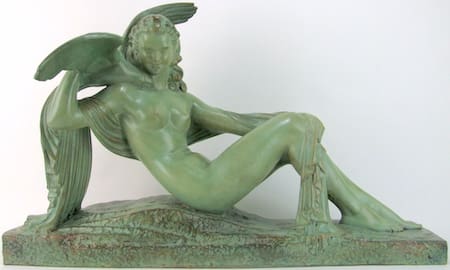
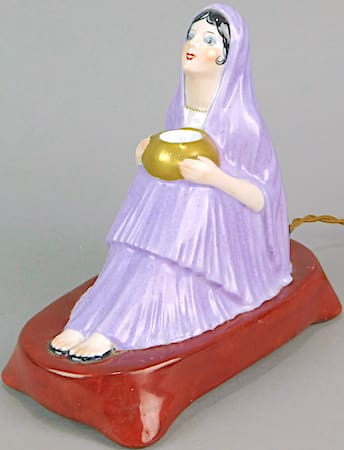
His pieces were sold worldwide as far as America, India and even to the Maharaja of Jaipor. I believe he used the pseudonyms Audine on a few of his bronze pieces and Larcourt and Darcles on some of the spelter pieces.
Chiparus statues are now highly sought after and fetch high prices by collectors worldwide. I can highly recommend the two books, Chiparus – The Master of Art Deco by my friend Alberto Shayo for anyone seeking further information and photographs of his works.
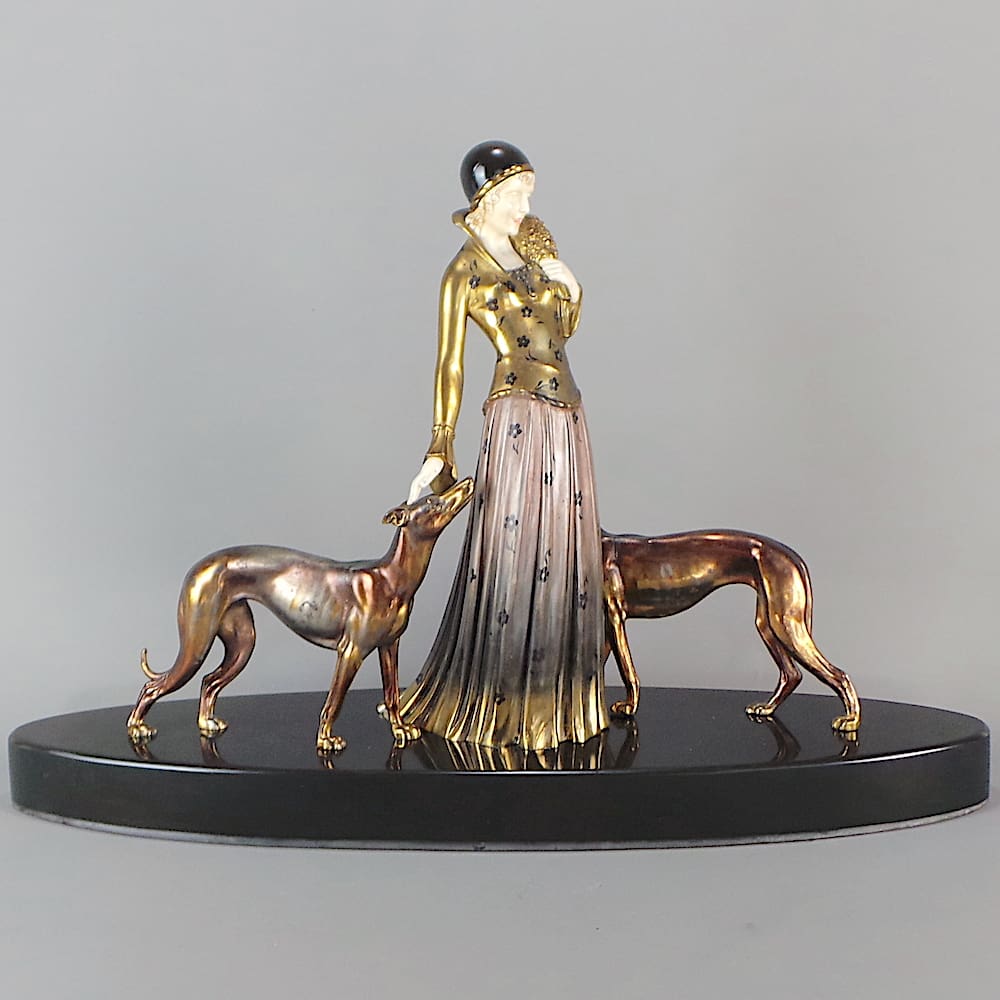
Christ, Fritze (1866 – 1906)
German bronze statuary artist. Ahead of his time as most of his statues were very Nouveau themed. Created his famous Astrape goddess of thunder and lightning statue. He studied under Widmann at the Munich Academy of art he exhibited his statues in Paris, Munich, Copenhagen and Chicago at the turn off the century.
Cian, Fernand (1889 – 1954)
Fernando Ciancianaini – French-Italian sculptor born Carrara, Italy and exhibited in Paris 1911 – 1928. Worked in bronze, marble and terracotta.
Cipriani, Ugo (1897 – 1960)
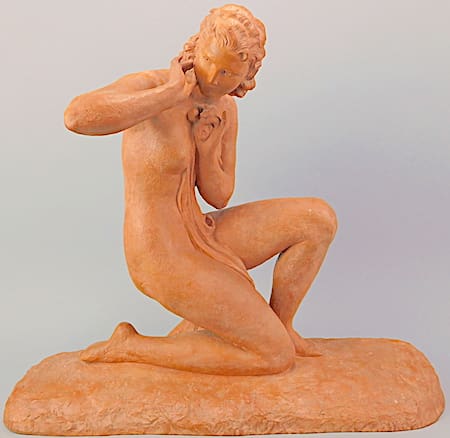
Prolific sculptor born in Florencia, Italy on 13th August 1897, died in Paris in June 1960. Studied at the famous Accademia di Belle Arti di Firenze. He followed in his Fathers footsteps as he too was a sculptor. One of Ugo Cipriani’s most famous works is a statue of the patriot Oberdan in the Oberdan’s square in Florencia dated 1919.
He left Italy for France around 1935-1937 to escape from Mussolini’s fascist government and became a political refugee in Paris where he kept on working his craft until his death. Produced many fine art deco statuary items in various mediums including spelter, spelter and ivorine, bronze and terracotta.
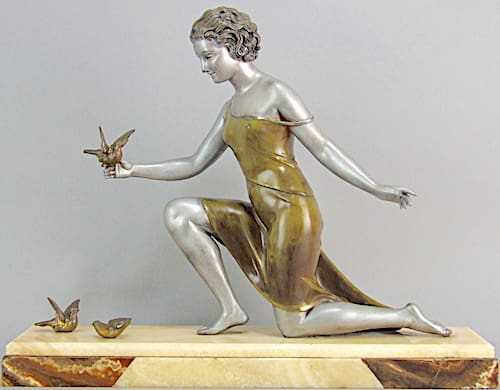
There seems to be a connection between Menneville and Cipriani. In discussions with Lydia Cipriani his daughter I have been informed that her half brothers Mothers name was Madelaine Bouchetot de Menneville. I believe it is too much of a coincidence that the Menneville statues are very much in the style of Cipriani’s work. Also I have had signed Menneville pieces that Lydia believes are the work of her Father. I know for a fact that many of the works of Cipriani, Menneville (and Rochard) were produced by the Silvin foundry in Paris during the early 1930’s. Therefore I conclude it is highly likely that Menneville was a pseudonym used by Ugo Cipriani on his spelter and spelter and Ivorine pieces. His bronzes and terracottas were usually signed Cipriani and many were unsigned. I also believe he used the pseudonyms – De Viggo, Merval and Roggia. I thank Ugo Cipriani’s daughter, Lydia and son Gabriel for this important information.
Clara, Juan.
Spanish sculptor worked and exhibited in the Paris Salons.
Clarice Cliff (1899 – 1972)
British Ceramics artist and designer worked for A. J. Wilkinson and studied at Burslem School of Art. Was one of 3 British ceramic artists that include Susie Cooper and Charlotte Rhead.
She married Coley Shorter in 1940.
She was given a free hand on pieces to cover imperfections and defects for a design called Bizarre and Fantasque – These pieces are now highly sought and valued world wide.
Clerc, Sylvestre
French artist born 1912. Exhibited Paris during 1920’s.
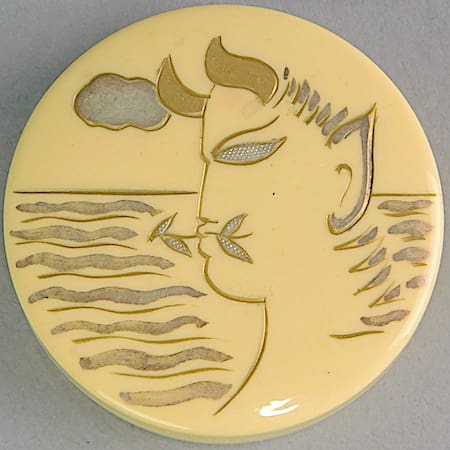
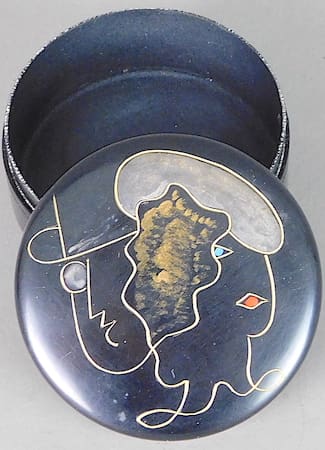
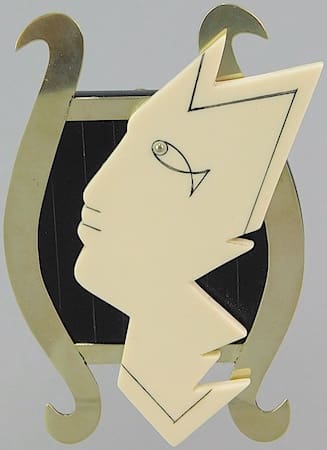
Cocteau, Jean Maurice Eugene (1889 – 1963)
Born 5th July 1889 in Vyelines France and died 11th Oct 1963 (aged 74) in Millet-la-foret, Essone France.
Jean Cocteau was one of the most multi talented artists of the 20th century. He was an artist, set designer, actor, novelist, poet and playwright. He worked with Sergei Diaghilev and did designs for the Ballet Russe.
His designs were all rich with symbolism and surreal imagery. He is now regarded as one of the most important avant-garde directors in cinema.
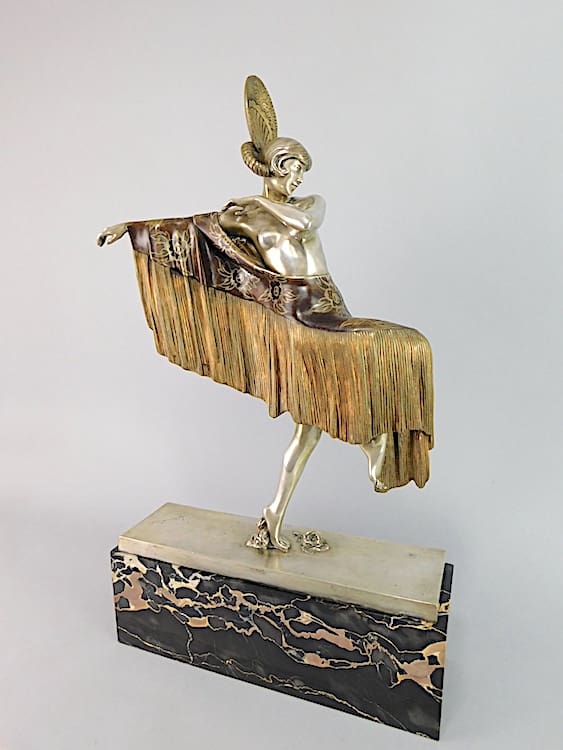
Colinet, Claire Jeanne Roberte (1880 – 1950)
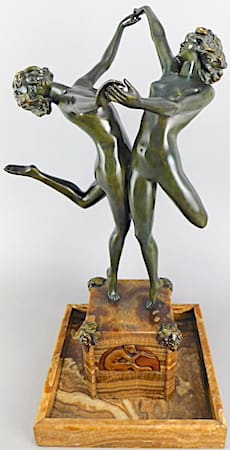
Belgian born female statuary artist worked during the Art Nouveau and Art Deco years in France. Born in Brussels and later moved to and worked in France, her career spanned over 40 years. She died in Asnieres-sur-Seine, France in 1950 aged around 69 – 70. She studied under Jef Lambeaux and exhibited at the Salon of the Society des Artistes Francais in 1913. From 1937 to 1940, she exhibited at the Salon des Independents in Paris and joined the Union of Women Painters and Sculptors. She was one of the few female statuary artists of her time.
Famous for her Ankara, Theban and Egyptian dancers – these statues are very powerful, strong subjects and often very theatrical. Most of her bronzes were made by the Etling et Cie. Goldscheider Les Never de J. Lehmann and Barbedienne foundries. She worked mainly in bronze and ivory. Colinet’s sculpture has become highly desirable to collectors and, increasingly, is selling for exorbitant sums. At a Christie’s sale in 2007, her Ankara Dancer sold for a hammer price of $285,984. Her statues are now highly sought after worldwide.
Compton Pottery
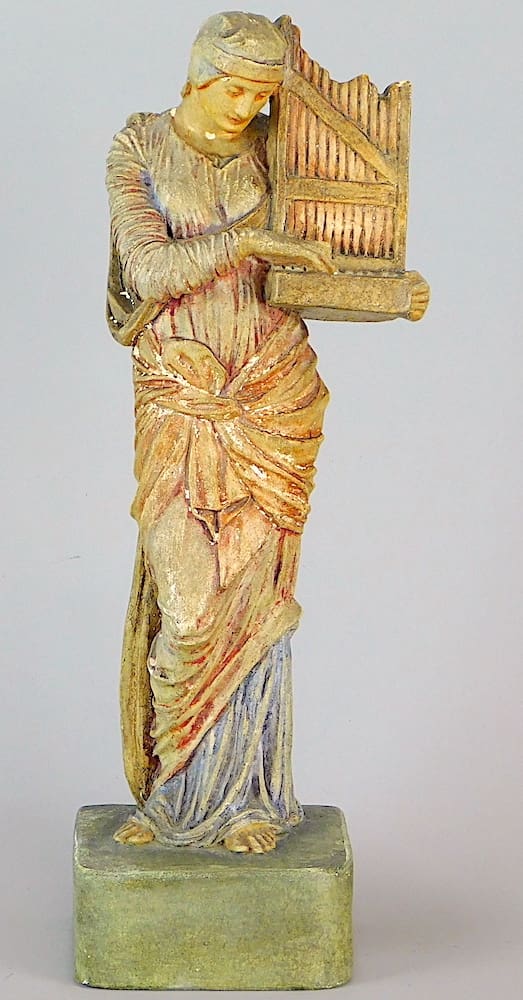
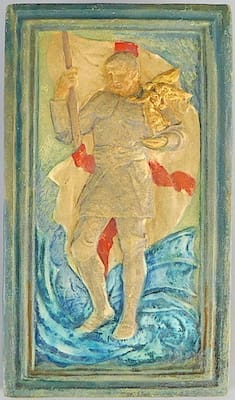
The Compton Pottery Guild started at the end of the 19th century with evening classes which were run by Mary Watts the wife of the renown Victorian artist G.F. Watts, herself a very accomplished artist she encouraged local people to come together under her guidance to make terracotta panels decorated with Celtic symbolism for the new cemetery chapel which the Watt’s had given as a gift to the village.
It was such a success that it led to a small pottery business which was run as a guild system with the workers having a financial interest in the business. The pottery flourished through the early 20th century making gravestones, sundials, large unglazed pots and other garden ornaments, many being sold through Liberty’s of London.
Smaller hand coloured unglazed items were also made. Compton designs have a strong mixture of Celtic and Art Nouveau styles making them easily recognised pieces. The firm closed in 1951.
Colin, Paul Hubert (1892 – 1985)
Born June 27, 1892 in Nancy, died June 18, 1985 in Nogent-sur-Marne. Colin was a French painter, draughtsman, designer, scenographer and poster artist, one of the most innovative and influential during the art deco period. A pupil of Eugene Vallin and Victor, Colin asserts himself after the First World War as the head of the modern School of the lithographed poster, through new reproductive techniques using gravure and serigraphy.
He created more than 1,400 posters, theatre sets and costumes. Revealed in 1925 by his poster for The Negro magazine, he helps to launch the career of Josephine Baker. He worked for nearly forty years for the performing Arts and the world of entertainment and was also one of Josephine Bakers lovers during the 1920s.
His style, at first very marked by both Art Deco and the new objectivity, quickly becomes very personal and difficult to bring into a simple category: the synthetic accuracy of his portraits, the force of evocation of his posters for the Great causes make it a master of the visual communication whose work remains exemplary today. His album The Black Tumult (1927), magnifying Josephine Baker and the jazz musicians of the Negro magazine, is undoubtedly a masterpiece. He is the founder and director of a drawing School (1929-1970) on the Boulevard Malesherbes in Paris.

Conde, Geo
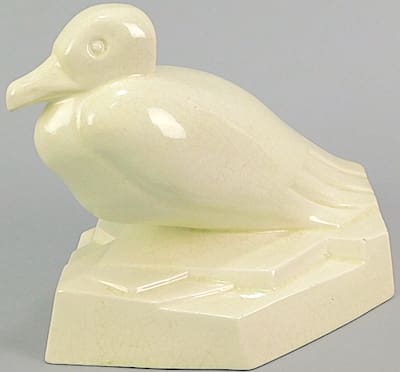
Georges Jean Conde, born 25 June 1891, famous sculptor and ceramics artist who worked for the St. Clement ceramics company in Lorraine, along with Lemenceau during the 1920’s.
Conde items are now highly sought after and he is now considered on par with Pompon, Adnet, Puiforcat and Sandoz, and is particularly famous for his stylised craquelier pieces.
Cortendorf
A ceramics company famous for wall masks and statues.
Costa, Joaquin
Born in Italy and exhibited there and in France in the early 1920’s. Worked 1905-1935.
Cotswold School (1893 – mid 1930’s)
A loose association of English furniture makers, located first at Pinbury and then at Sapperton in the Cotswolds, Gloucestershire led by Ernest Gimson and the Barnsley brothers (Sydney and Ernest). They attempted to unite the traditional rural craftsmanship with the handcrafting principles advocated by the Arts & Crafts movement.
CROUZAT, Georges – (1904 – 1976)
French medallist, pupil of Landowski and Dropsy. Studied at Ecole nationale superieure des Beaux Arts in Paris.