
A – B – C – D – E – F – G – H – I – J – K – L – M – N – O – P – R – S – T – U – V – W – Z

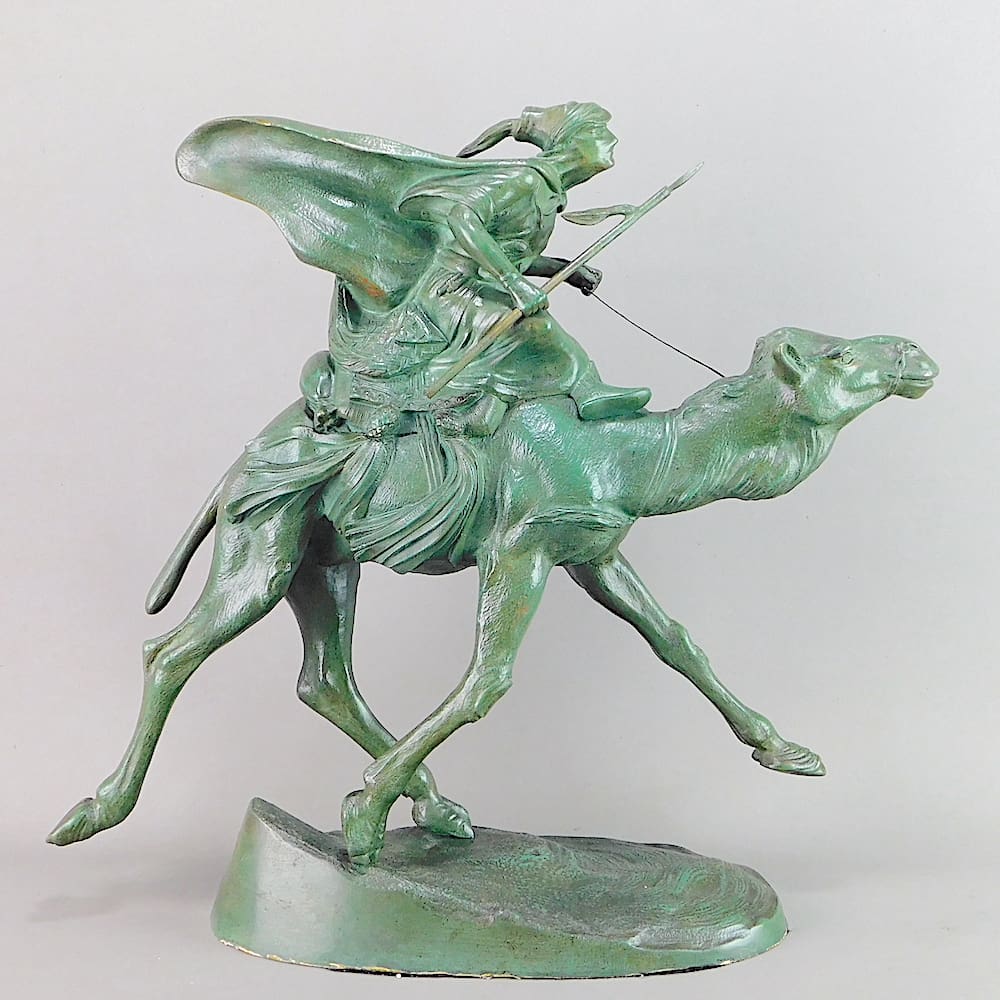
Faure, Antoine Ferdinand
Born in Marseilles in mid 19th century, he studied at the Marseilles School of fine arts and was later a pupil of Cavalier at the Ecole des Beaux arts Paris.
Exhibited at the Salon from 1882 to the end of the century and specialised in genre subjects and classical bronzes, including Childhood of Bacchus. He won a third class medal and a traveling scholarship in 1893.
His larger works were sculpted in marble and he was employed as a restorer of the sculpture in the Court of Honour at the Palace of Versailles in 1888. Many of his works were designed as decorative pieces for the Museum of Egyptian Antiquities in Cairo, inaugurated in 1897.
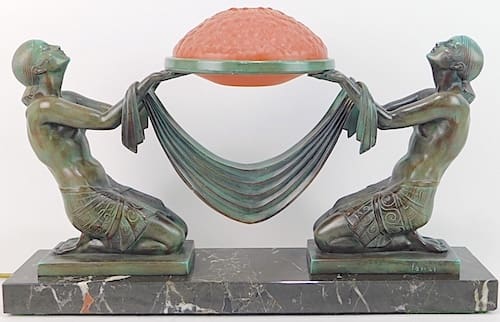
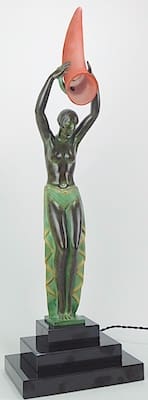
Fayral
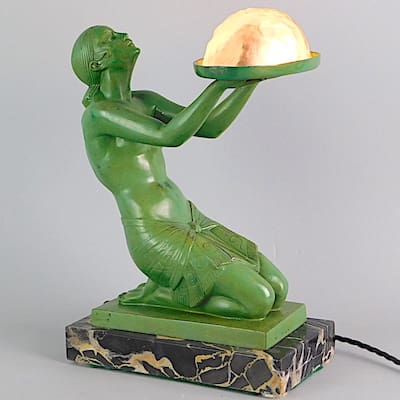
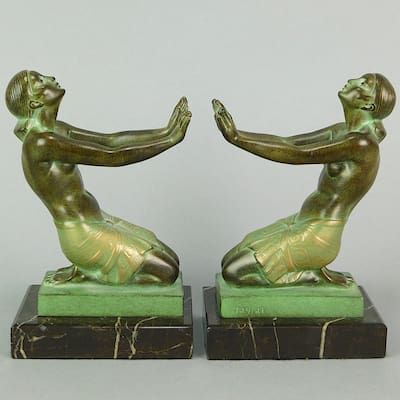
Fayral was a pseudonym used by Pierre Le Faguays. Fayral and Guerbe were both the family names for his Mother and his Wife.
Le Faguays was born in Nantes, France and became famous for the originality he gave his dancers, many of which were inspired by the statues of Tanagra.
He gained a medal of honour for his work in 1927. He was a best friend of Max Le Verrier and the Le Verrier foundry made most – if not all of his pieces.
His wife’s name was Raymonde Guerbe Le Faguays and she signed her sculpture Guerbe. I now own the transfer of ownership documents from both Guerbe and Le Faguays where they signed over the ownership of their sculptures to Le Verrier.
He signed his non-bronze pieces Fayral and she signed her non-bronze pieces Guerbe.
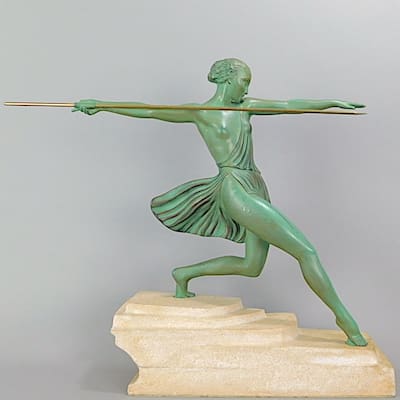
Felten, Major
Also known as Felton, was Richard Felten and American artist and illustrator born in 1904, he produced many stunning art deco posters between 1930 – 1950.
Focht, Frederic (1879 – 1937)
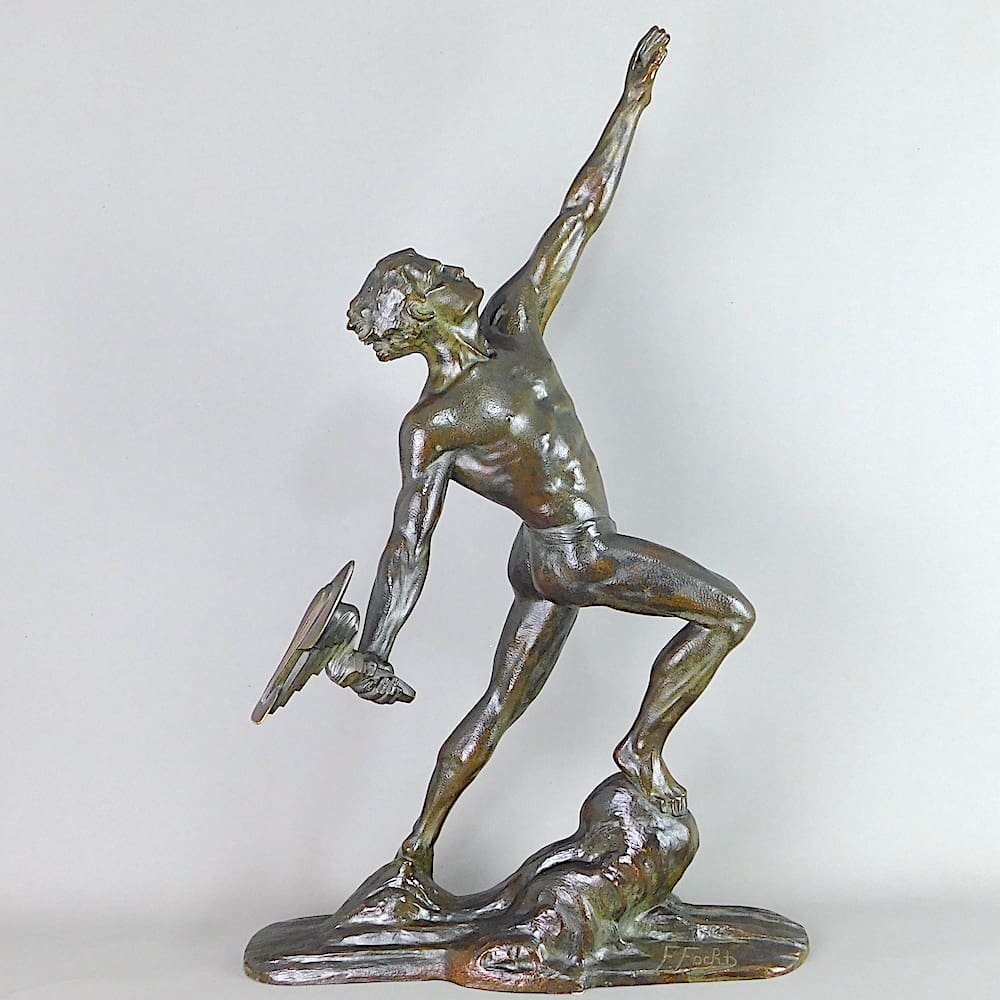
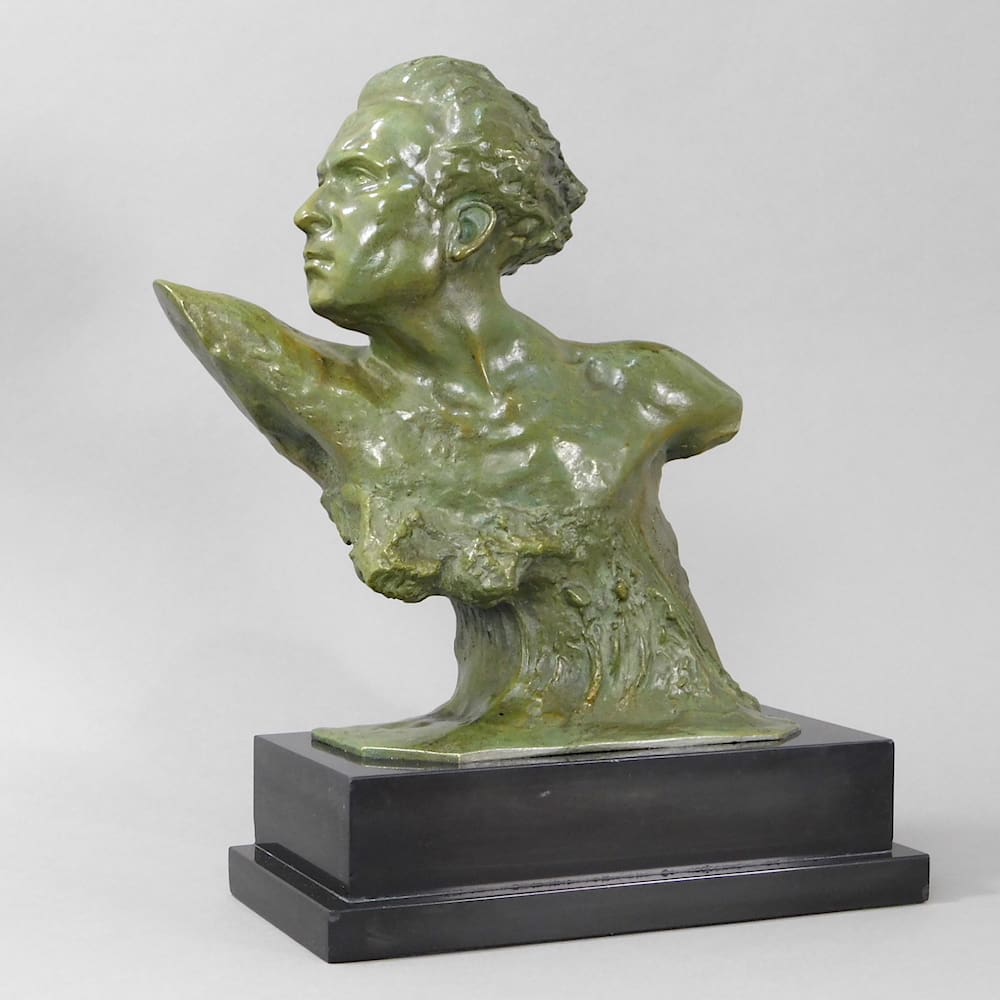
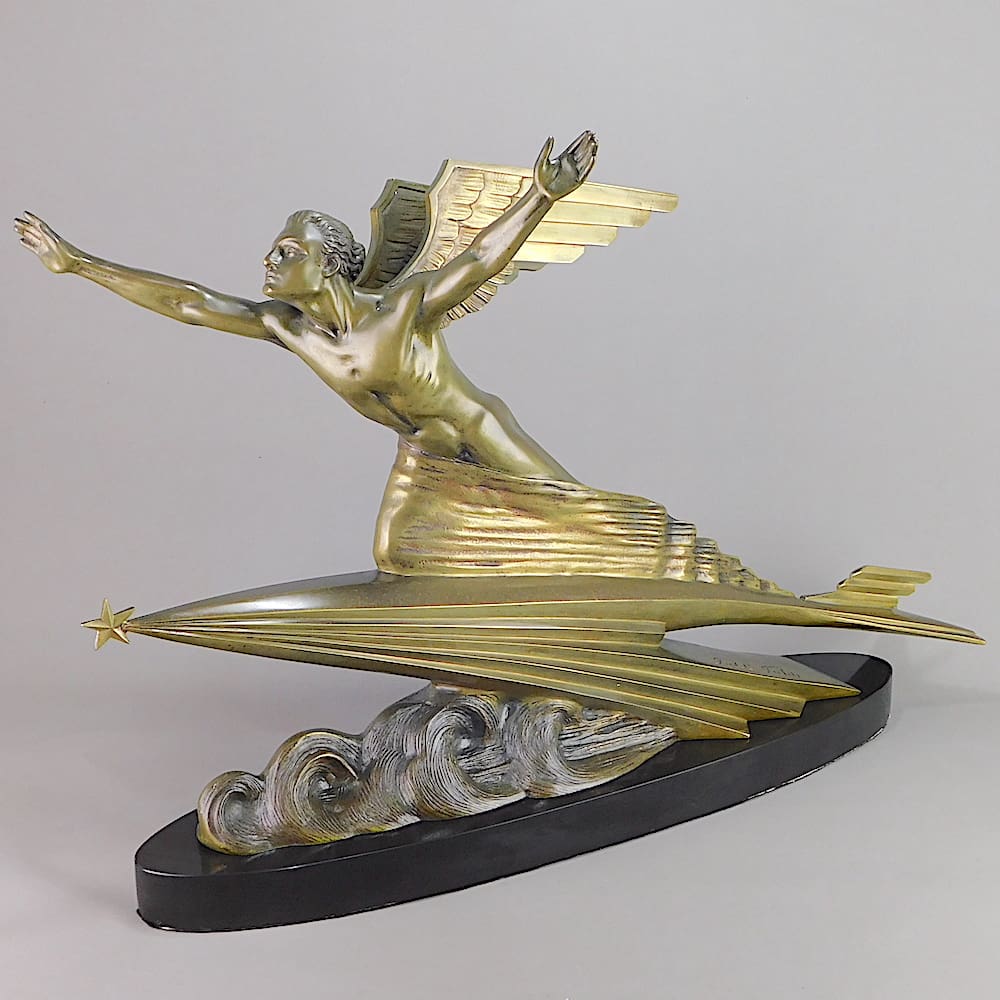
French art deco sculptor worked mainly in bronze. He studied under the celebrated sculptor Falguiere. His remarkable talent was recognised early in his career, exhibiting at the Salon des Artistes Français and winning the coveted Medal of Honour in 1900 at the age of only 21.
Focht made some of the most striking bronzes of the 1920s and 1930s most with a flying theme and some with airplanes and some with space rockets. Also producing bronze sports panels of cyclists and swimmers. His work is now highly sought after worldwide due to the high quality of his creations. He was also an opera singer.
Follot, Paul (1877 – 1941)
French textiles, furniture and interior designer. Regarded by many as one of the pioneers of top art deco style. Director of the Pomone studio part of the Au Bon Marche store in 1923. Later joined Waring and Gillow in Paris in 1928. In 1931 became a freelance decorator and designer. His work is highly sought after world wide and commands high prices.
Fontinelle, Louis (1886 – 1964)
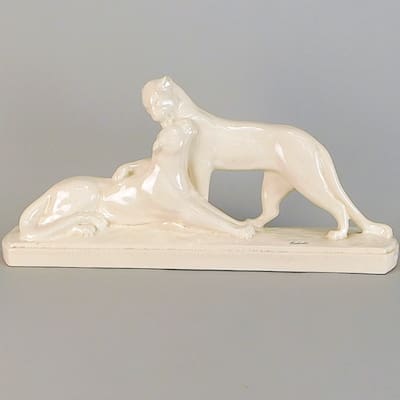
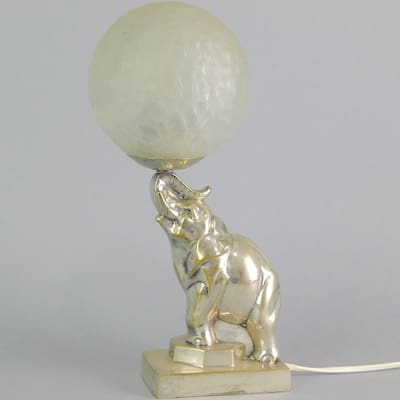
French artist and sculptor who produced spelter, bronze, ceramic and craquelier pieces during the art deco period.
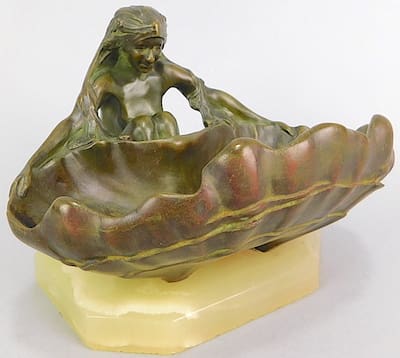
Foretay, Alfred Jean
Born January 1861 in Morges, Switzerland.
He studied under Falguiere, exhibiting portraits, busts and statues at various Salons.
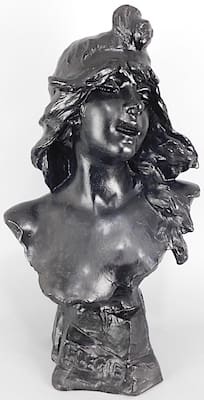
Won an honourable mention in 1891 along with a 3rd class medal in 1904. Produced mainly Nouveau style statues in bronze or spelter.
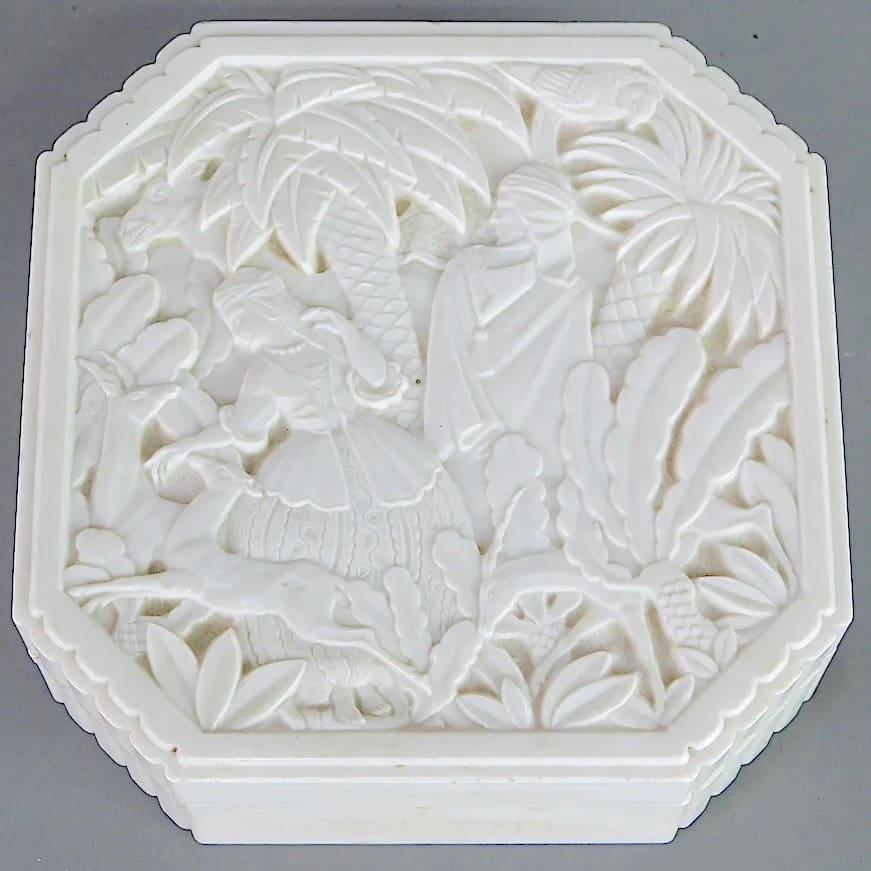
Fornells, Edouard (1887 – 1942)
Barcelona born designer who moved to Paris in 1909 and worked with Rene Lalique from 1911. In 1913 Fornells set up his own studio where he began experimenting with cellulose acetate plastics. In addition to supplying plastic boxes to Lalique, he worked closely with the perfume and cosmetics industry, creating plastic packaging for well-known companies such as Roger et Gallet, Worth, and Parfumerie d’Orsay.
He designed bottles in glass and also many bakelite items, mainly for perfume companies. Lalique was responsible for many of the Fornells box designs and I believe they worked in conjunction with each other.
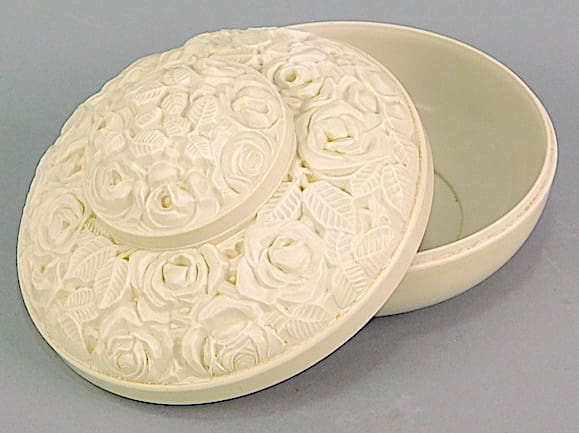
One of the first plastics manufactured was cellulose nitrate (also known as Celluloid), which was discovered in 1856 and refined in 1877. Made from chemically treated cotton, the material could be easily moulded into a wide range of shapes, from billiard balls to false teeth, and could replicate tortoiseshell, ivory, or horn. It was also used in flexible transparent sheets for photographic negatives and movie film. Its disadvantages included yellowing, cracking, and inflammability. Experimentation led to the invention of a nonflammable cotton-based synthetic plastic called cellulose acetate in the early twentieth century.
Marketed under a variety of brand names, including Sicoid, it was tough, had a rich gloss, high transparency, and a good feel, making it desirable for precious handheld objects such as boxes, dressing table sets compacts etc. Famous for his stylised foliage patterns. His items were displayed at the top Salons and the Decorative Arts Exhibition of 1925. His items are now highly sought after by collectors worldwide.
Fraisse, Edouard (1880 – 1945)
Born in Beaune France the 14th of May 1880 died in Paris 13rd of September 1945. Pupil of Coutan, Chaplain and Vernon. Since 1904 he exhibited at the Salon of the Societe des Artistes Francais. In 1908 Fraisse competed for the Prix de Rome for which he received a second prize award. In 1929 he was made Chevalier of the Legion of Honor. In 1937 he received a gold medal.
Francisque
20th century sculptor working in bronze during the 1920’s, based in Marseille.
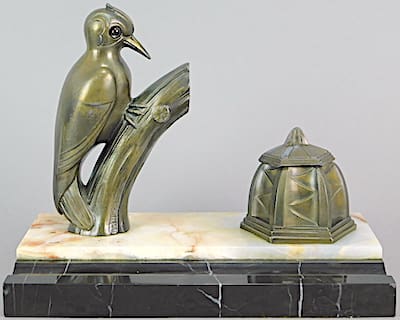
Franjou (1832 – 1927)
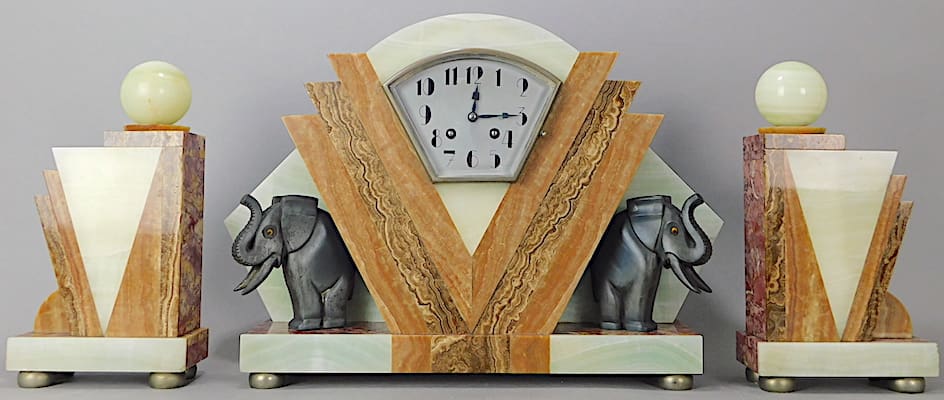
I do not have any information on Franjou but it is my opinion that there was a connection between Franjou and Moreau. I believe that Franjou was probably a pseudonym used by Moreau. I have had statues and figural items which are the same statue and have been signed in either name. It was not unusual for sculptors to use pseudonyms. Most of the items tend to be comical animal subjects often with celluloid cross-eyes but also produced many comical animalier statues which were used as bookends, desk tidies and lamps.
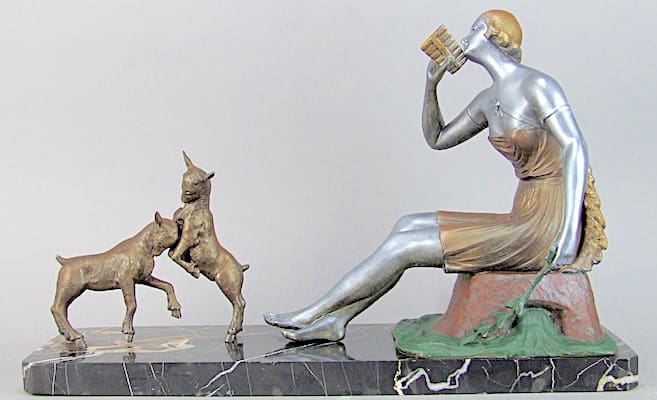
Fugere, Henry (1872 – 1944)
French statuary artist he was born in St. Mande on 7th September 1872 and died in 1944.
Studied in Paris with Barrias, Cavelier, Puech.
He exhibited portraits and statues at the Salon des artistes Francais during the 1920’s.