A – B – C – D – E – F – G – H – I – J – K – L – M – N – O – P – R – S – T – U – V – W – Z

Gaillard, Eugene
French sculptural artist and architect known mainly for his art nouveau statues. Worked with the Le Verrier foundry producing Equilibre, a cat balancing on a globe lamp.
Galle, Emile (1846 – 1904)
The other famous French glass artist. Opened a small glass factory in Nancy France in 1874. He is probably the most famous of the glass artists and was famous for cameo glass, acid etching and enamelling. His company continued on after his death until 1935.
Galle was the principal force in a group of French Art Nouveau artists and designers working in and around Nancy. On his initiative in c1890 they formed a school. Members included the Daum brothers and Louis Majorelle. He is well known for his hand made high quality furniture and exquisite glassware.
Galle, Jean Joseph (b.1884)
Born in Rennes, he studied under Coutan and exhibited at the Salon des Artistes Francais. He produced a number of monuments and statues and specialised in portrait busts and medallions.
Gallo, Ignacio (1887 – 1956)
Born in Valladolid, Spain in the 19th century.
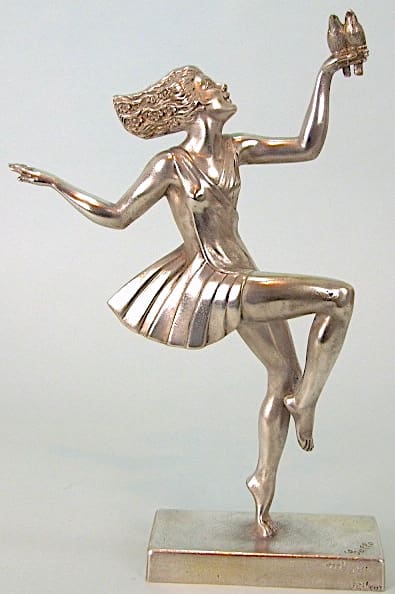
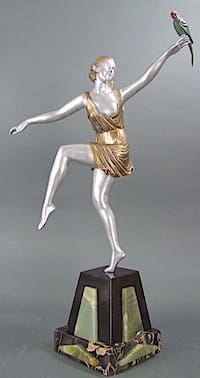
He worked mainly in bronze from 1910 to 1935 specialising in statuettes of bathers, dancers, nudes and pagan goddesses.
I believe his main foundry was Marcel Guillemard.
Gancheff – Ganu
Bulgarian born who exhibited at the Paris Salon of Socite des artistes Francais in 1930. He worked in bronze and bronze and ivory, I believe his statues were produced by the Goldscheider foundry.
Garcia
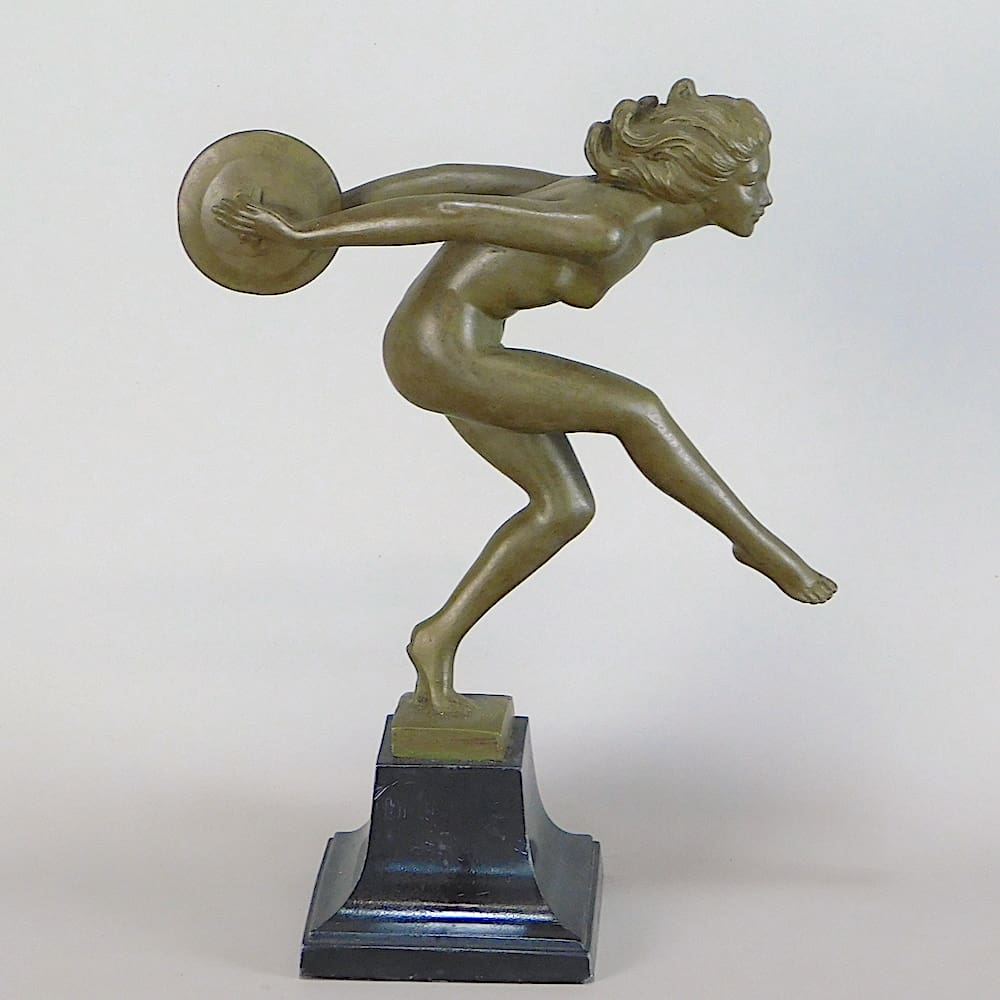
Garcia was a pseudonym used by G.H. Laurent. Laurent pieces were mainly animals produced predominantly in bronze.
Gerdago – Gottstein, Gerda (1906 – 2004)
Born Gerda Gottstein in Vienna. She studied art in Berlin and later in Paris and worked for Oskar Strnad who was an architect and film set designer. Gerdago was a pseudonym made of the letters of her real name.
In the 1930s she was a costume designer for theatrical performances and films. She was jewish and her parents were gassed in Auschwith in 1944, she escaped as she had married a non jew. Her Art Deco sculptural items were made by the Austrian company of Arthur Rubinstein.
Mystery regarding whether the statues were made by her or by the Austrian artists Karl Perl and Theodore Ullmann who worked for the Rubinstein company. These two artist were also known to have worked with Gerdago.
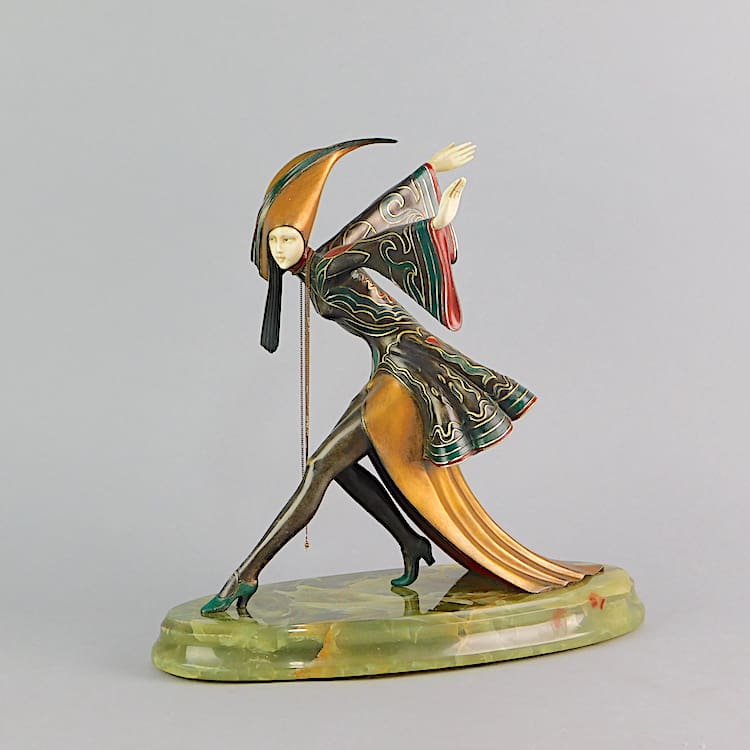
Most of her pieces were produced in bronze and ivory and wore futuristic and extravagant costumes in bright enamel colouring. She was 97 when she died. Her work is now highly sought after and commands high prices.
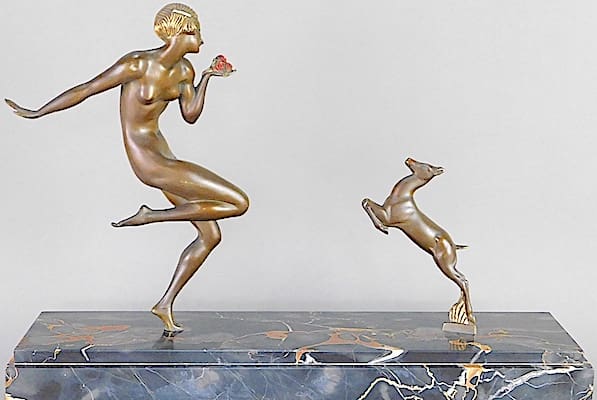
Gauthier, Joseph
Born Carcassone early 20th century, exhibited sculpture items in the Paris salons during the 1920’s.
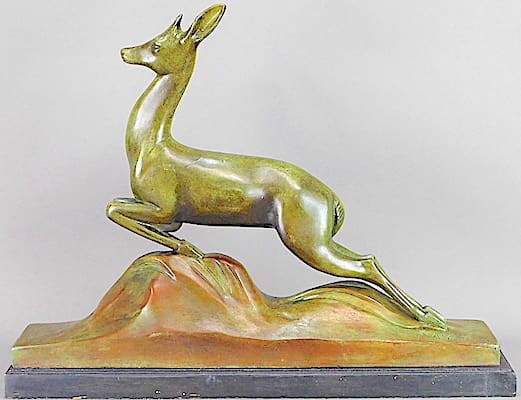
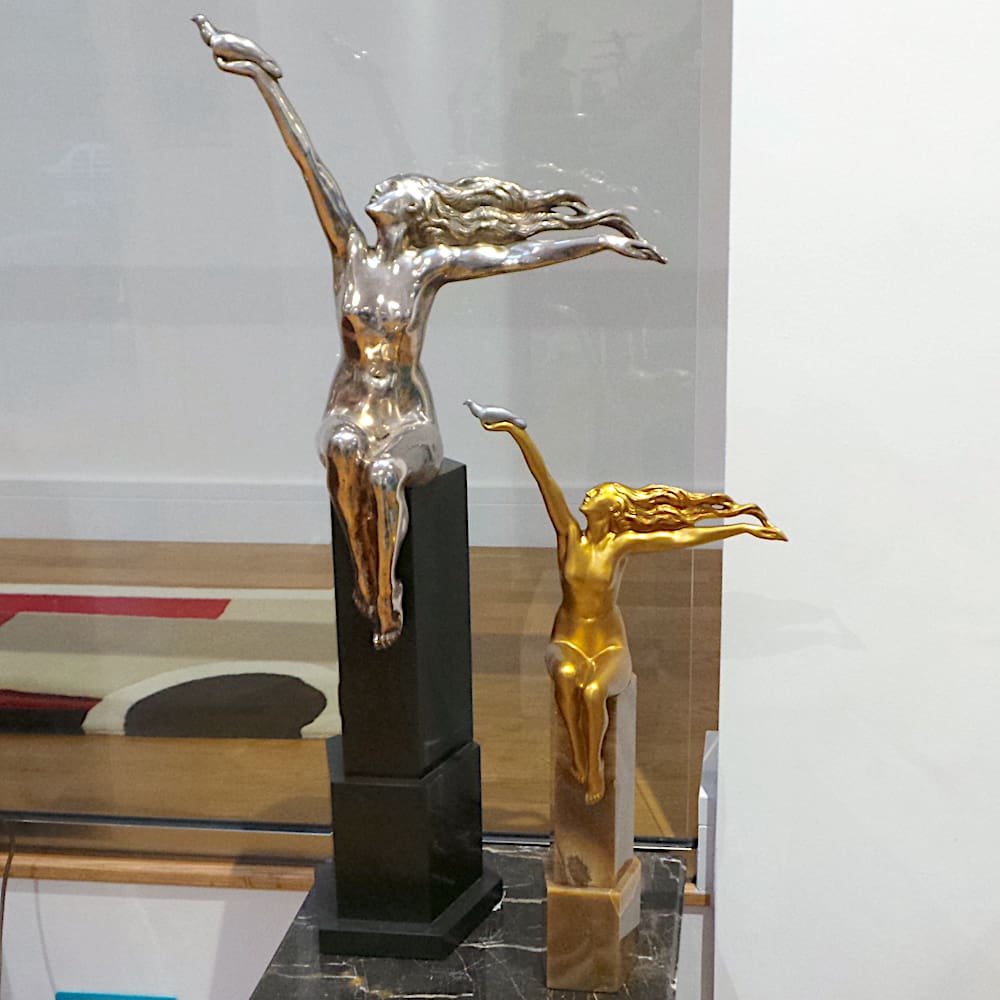
Gennarelli, Amadee
Born in Naples in 1891. Many believe his name to have been Amadeo but it was not, it was Amadee. I have gained this information from some Interior design magazines that I have dating from the 1920’s.
It would appear that he did not go to an Art School but was an apprentice of Francesco Jerace – it was during this time that he gained his notoriety.
He produced many bronzes and terracotta’s some of which were retailed through Alfred Dunhill 15 Rue de la Paix Paris. Dunhill also had branches in London and New York.
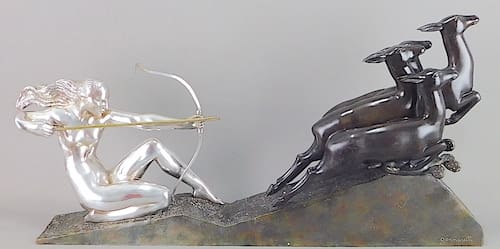
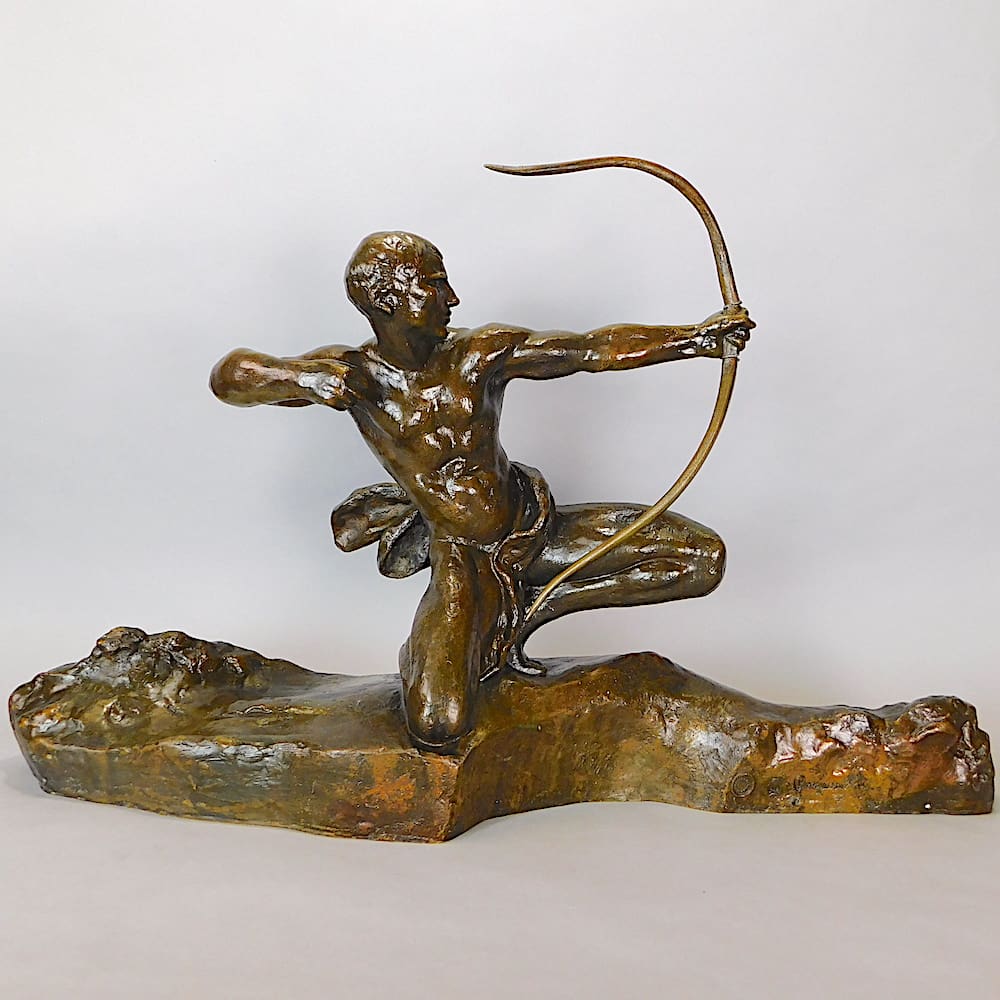
Many of Gennerrelli’s terracotta’s were made using the lost wax method and limited to only 10 copies of each.
His work is highly collectible today and admired for the quality of workmanship.
Gilbert, Alfred (1854 – 1934)
Born in London in 1854. Most famous work is Eros in London’s Trafalgar Square. He died in 1934. Having been made bankrupt in 1903 and resigned from the Royal Academy moving to Brussels where he sculpted various commercially successful Art Deco female statues until 1926. He was readmitted to the Royal Academy in 1932 and received a knighthood in the same year.
Gilbert, Andre
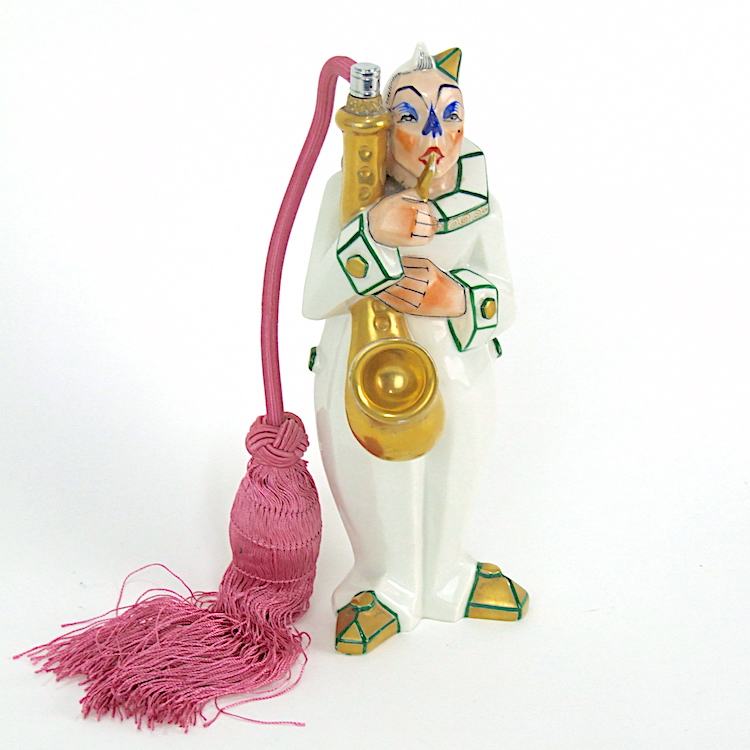
A French artist working mainly in bronze and bronze and ivory. Born in Pontoise – he created statues that were produced by L.N. de J. Lehmann and by the Etling foundry. Most subjects were of Pierrot’s and Columbines.
Godard, Armand (1883 – 1948)
French impressionist and modernist sculptor worked during the 1920s and 1930s deco years. Working in various materials including spelter, bronze, chryselaphantine (bronze and ivory) and ceramics. Most of the ceramics were produced by the French company Aladin. Most of his bronzes were produced by the Edmond Etling foundry in Paris.
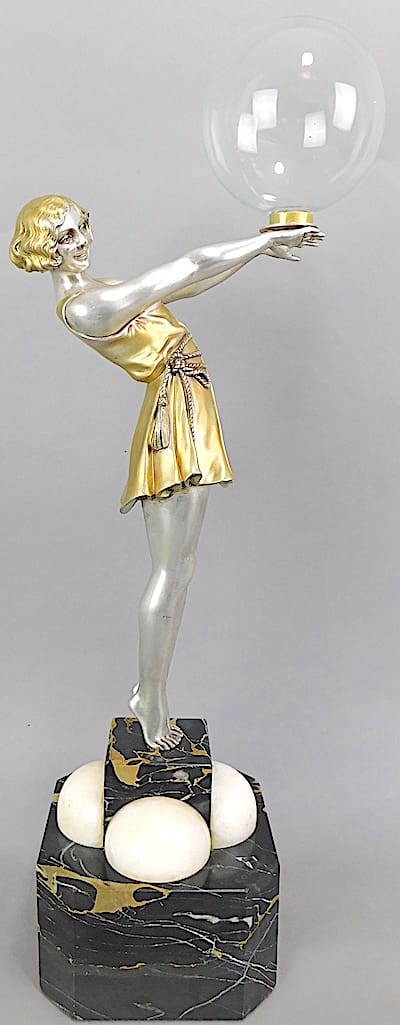
There is very little information available on this artist but one of his most famous pieces is the Bubble Dancer based on the actress Georgia Graves who performed with a bubble at the Folies Bergère in the 1920’s. His items are highly sought after worldwide due to the high quality of his work.
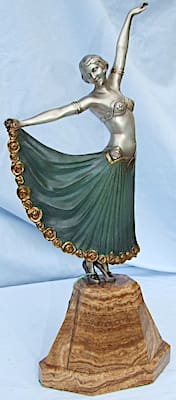
He favoured female dancing poses and many of his sculptures were based on the exotic females of the times.
In 1937 he exhibited a large plaster sculptor at the International Exhibition in Paris.
Goebel
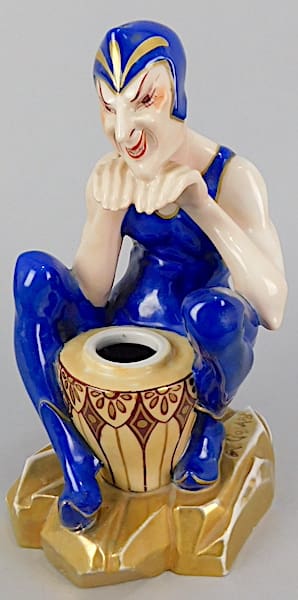
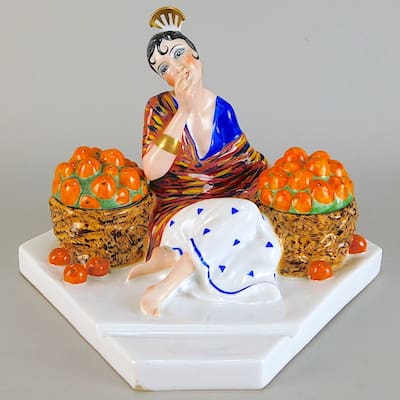
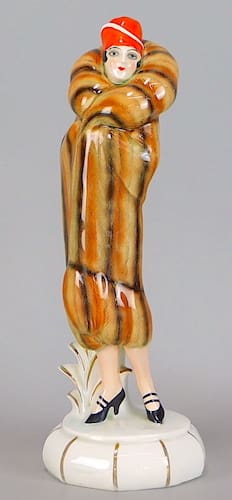
The firm of Goebel opened in 1871 in Thuringia, Germany a town well known for its wonderful porcelain and ceramics. Franz Detleff Goebel and his son, William, began by making slate pencils and children’s marbles, eventually he went on to produce ceramics. In the early years the company concentrated mostly on dinnerware and figurines. Later on the company was taken over by Franz’s son William who had a good eye for marketing and fashion. He expanded the product line and changed the company name to W.Goebel Porzellanfabrik. William sent his young son Max Louis to America. Although he returned with many new ideas the company was badly hit by the first world war and the stock market crash and nearly went out of business.
By 1935 the firm was saved by the discovery of the artwork of a Franciscan Sister, Maria Innocentia Hummel, a gifted, academy-trained artist. Her art work of children was being printed in the form of post cards and was proving to be very popular. Goebel produced these children figures as small figurines and they sold very well and are still highly collected today.
Since the Second World War, the firm has expanded and increased production, and is now in its sixth generation of family management. The company now consists of seven firms and has over 1800 employees worldwide.
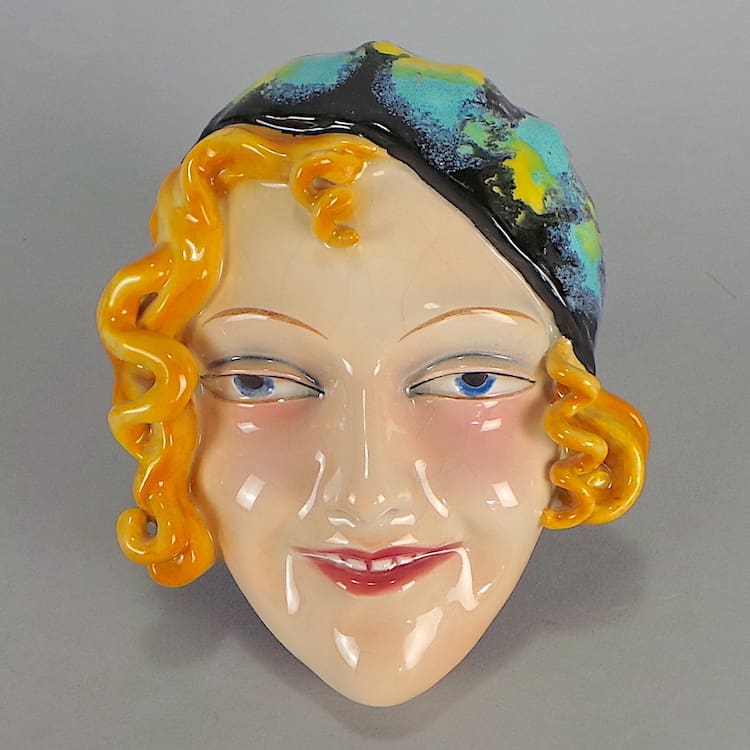
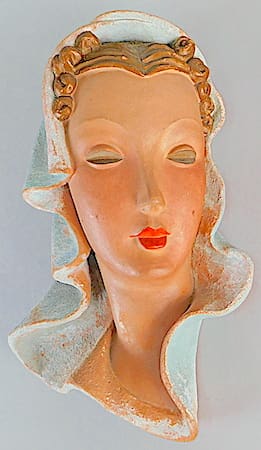
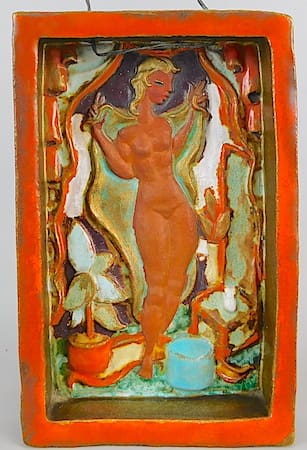
Goebel-Bieber
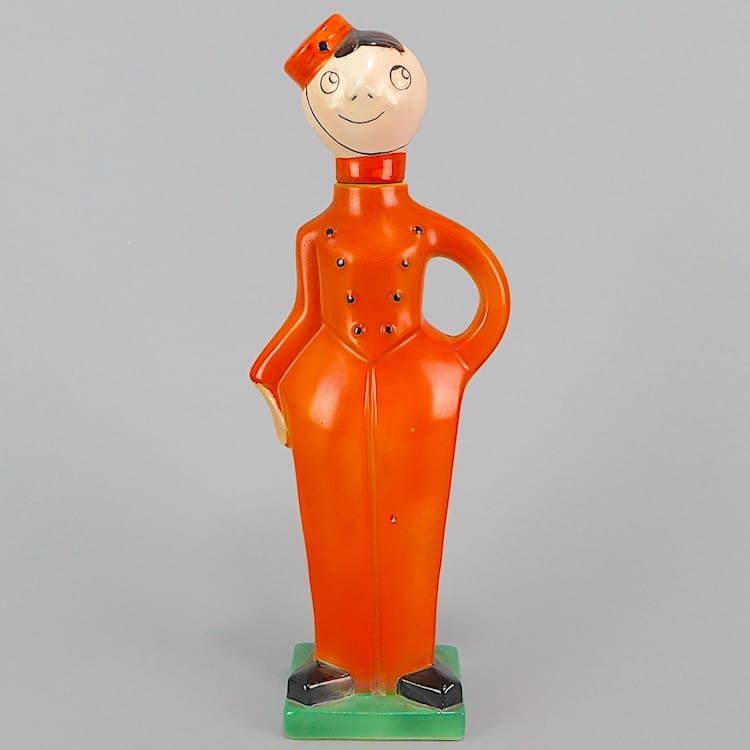
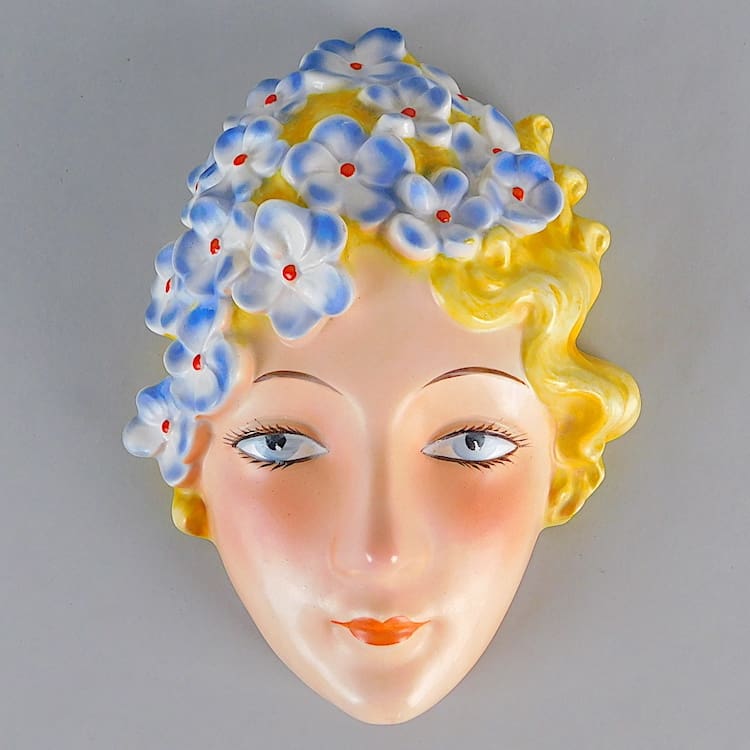
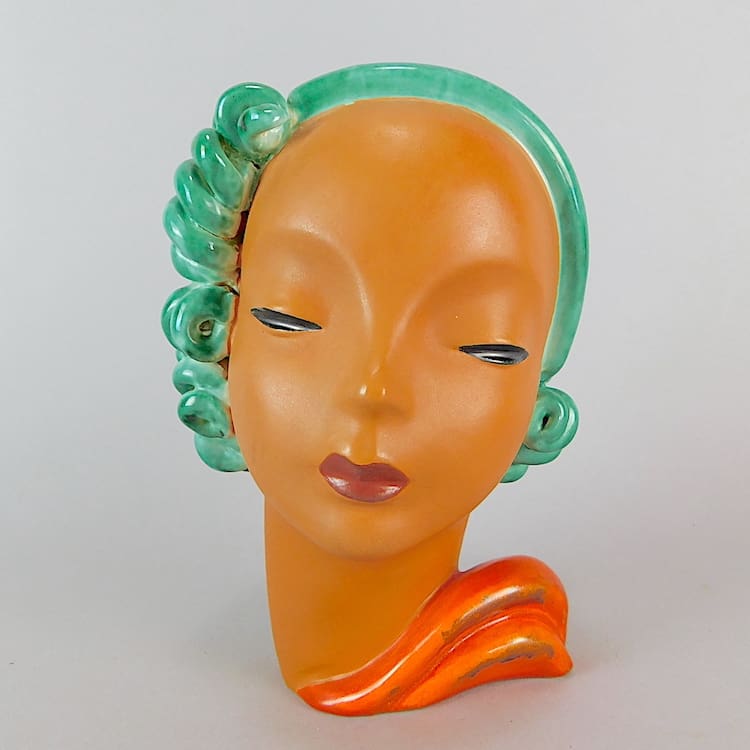
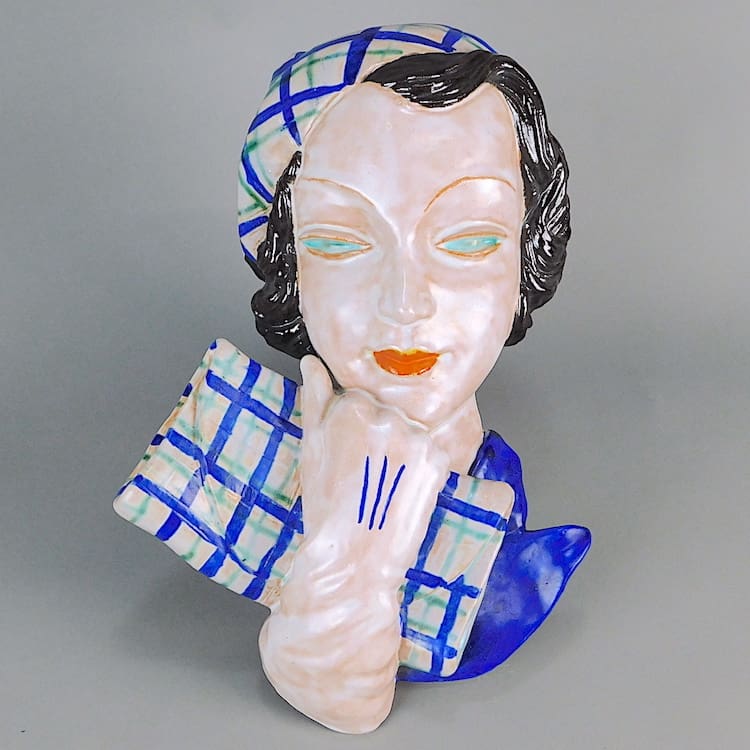
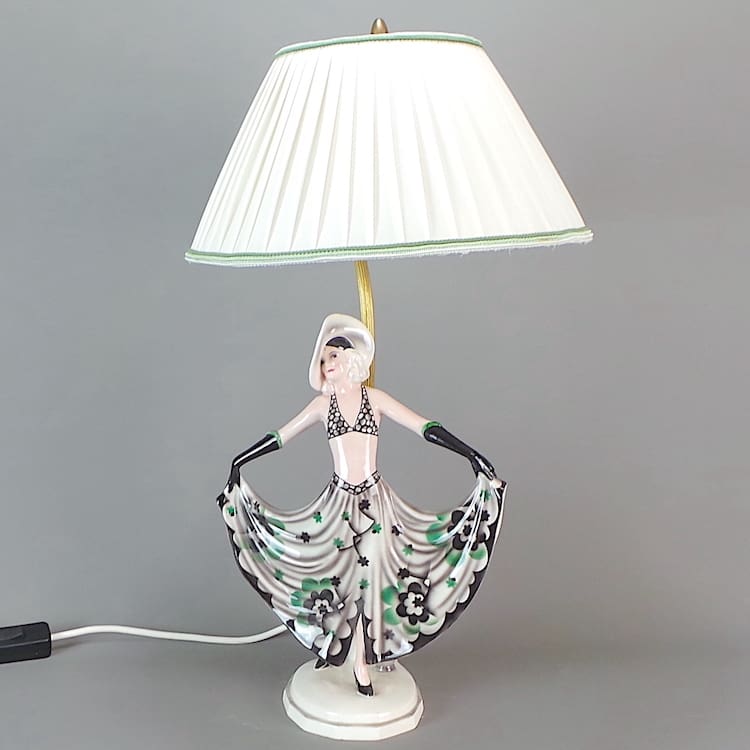
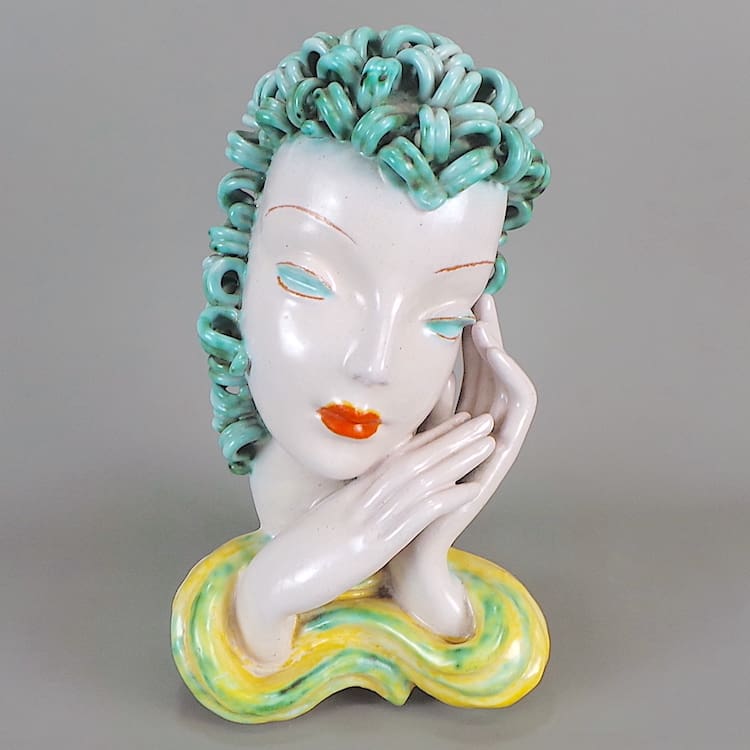
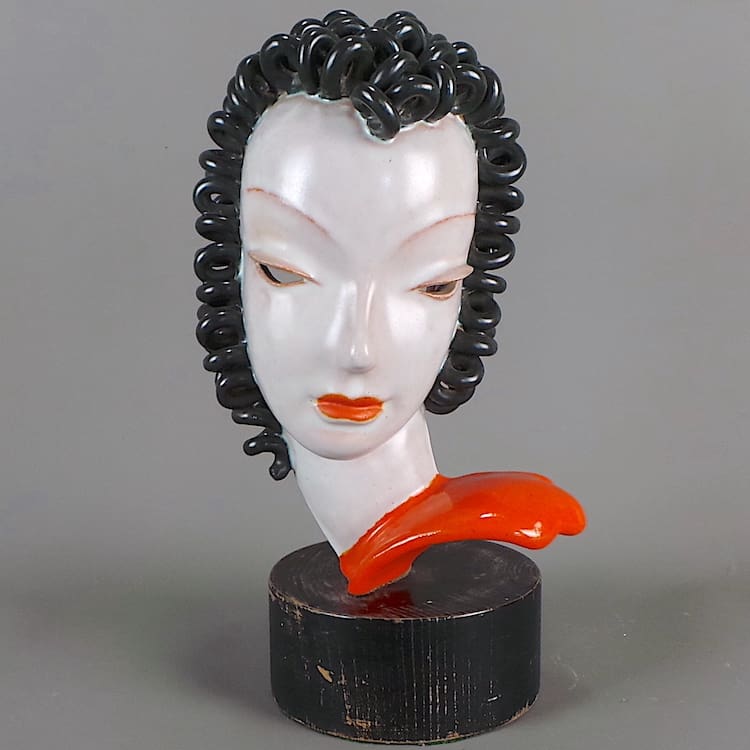
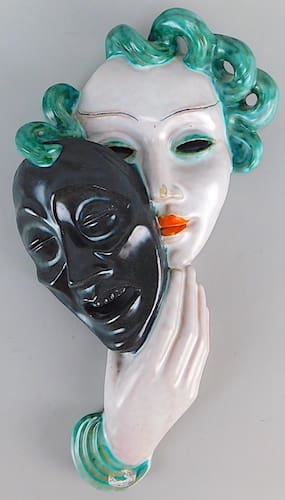
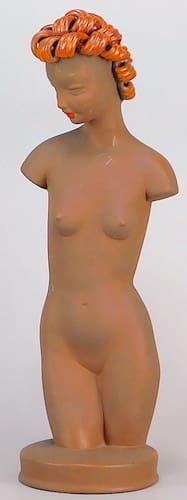
Ceramics company formed by Kurt Goebel and his first wife Erna Bieber. Produced statues and wall masks.
Goldscheider, Frederic
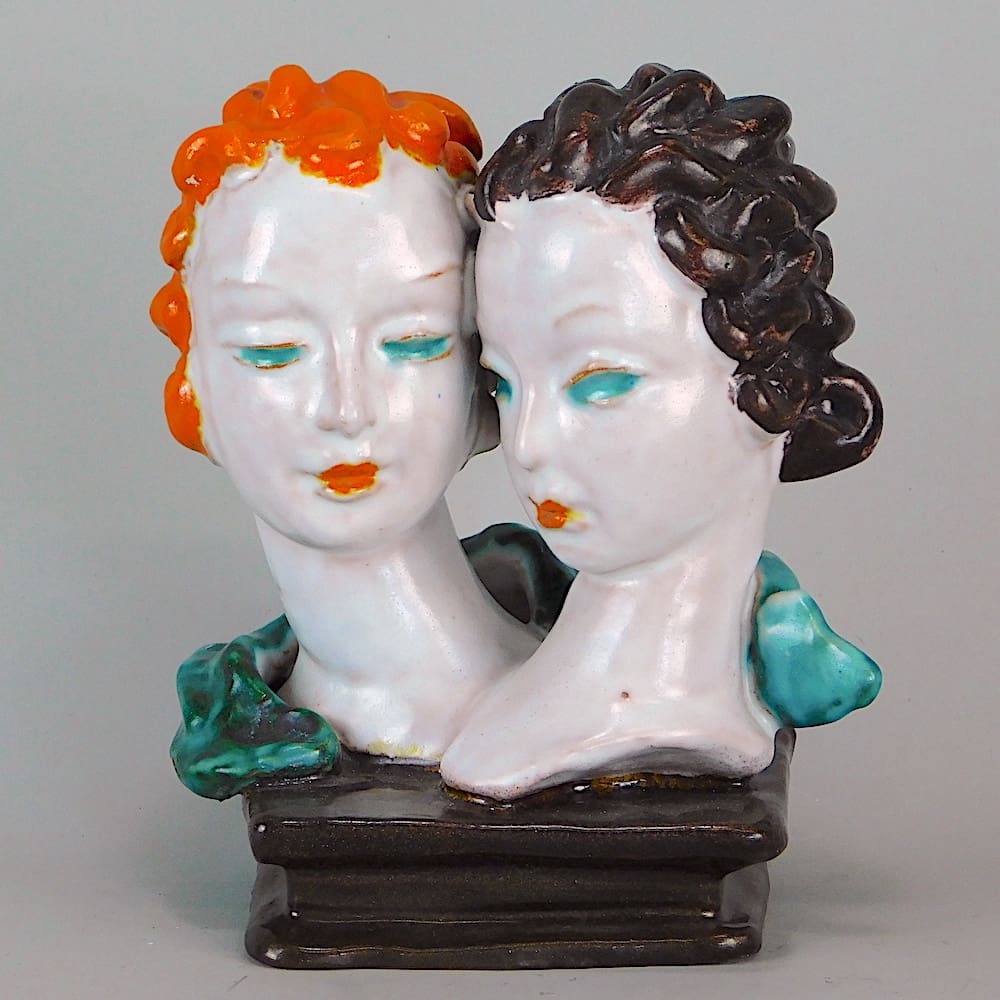
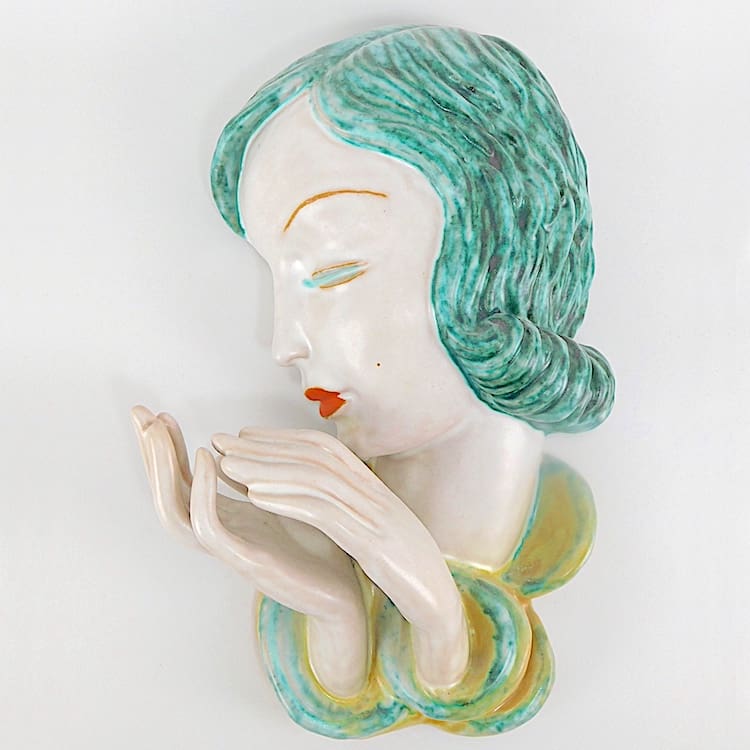
Moved from the Bohemian City of Pilsen to Vienna and in 1885 opened the famous Goldscheider factory there. Here he made a name for himself as a ceramist working in several mediums including terracotta, ceramics and bronze. He had subsidiary companies in Florence, Paris and Leipzig.
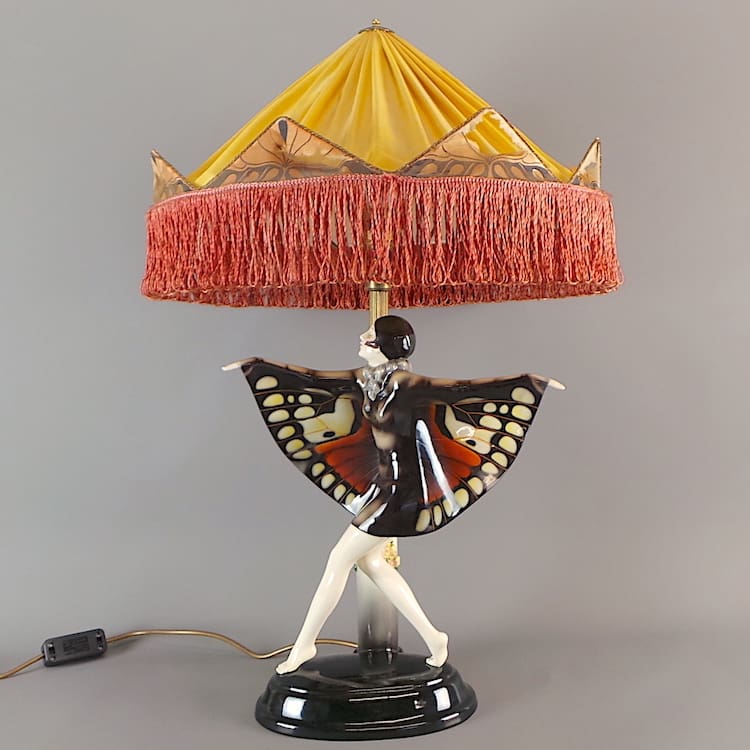
For over half a century Goldscheider created masterpieces of historical revivalism, Art Nouveau (Jugendstil) and Art Deco. He employed many famous and independent artists to create designs for him – these were to include, Josef Lorenzl, Stefan Dakon, Ida Meisinger, Prischl and the two perhaps best known Austrian ceramic artists Michael Powolny and Vally Wieselthier.
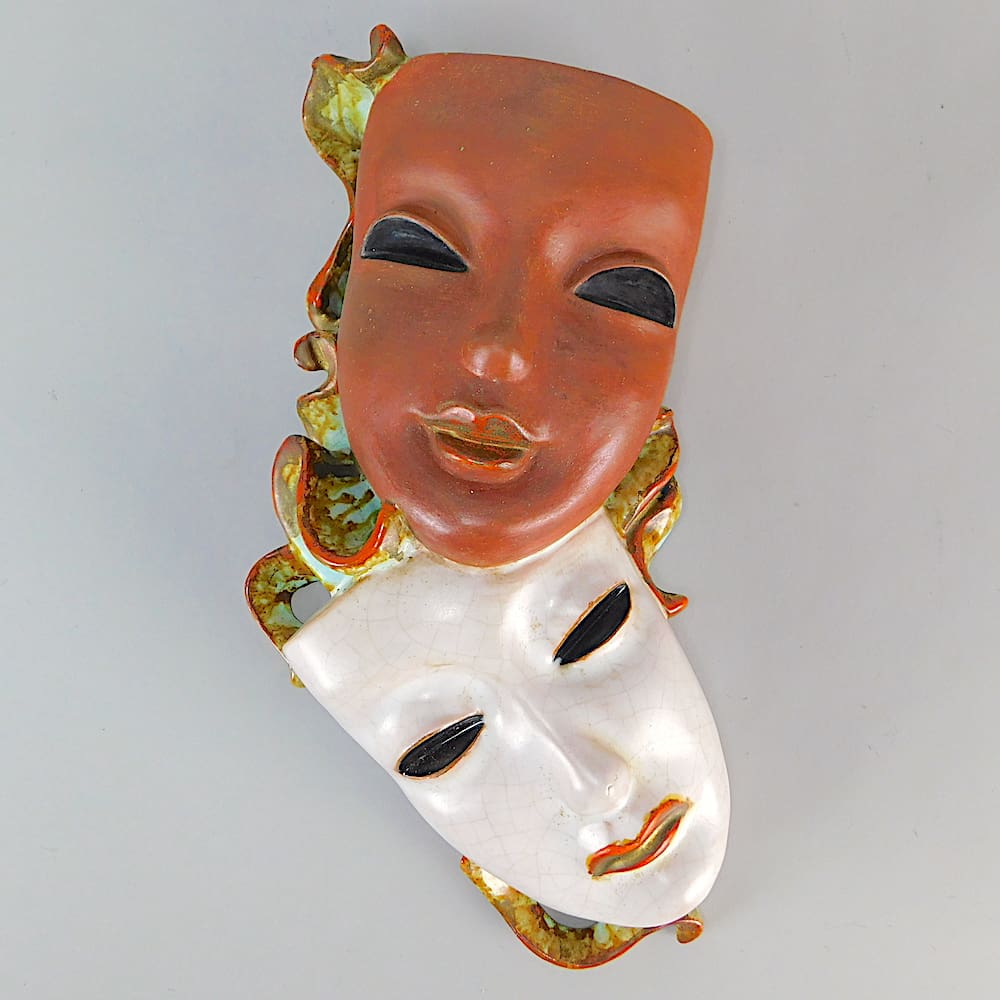
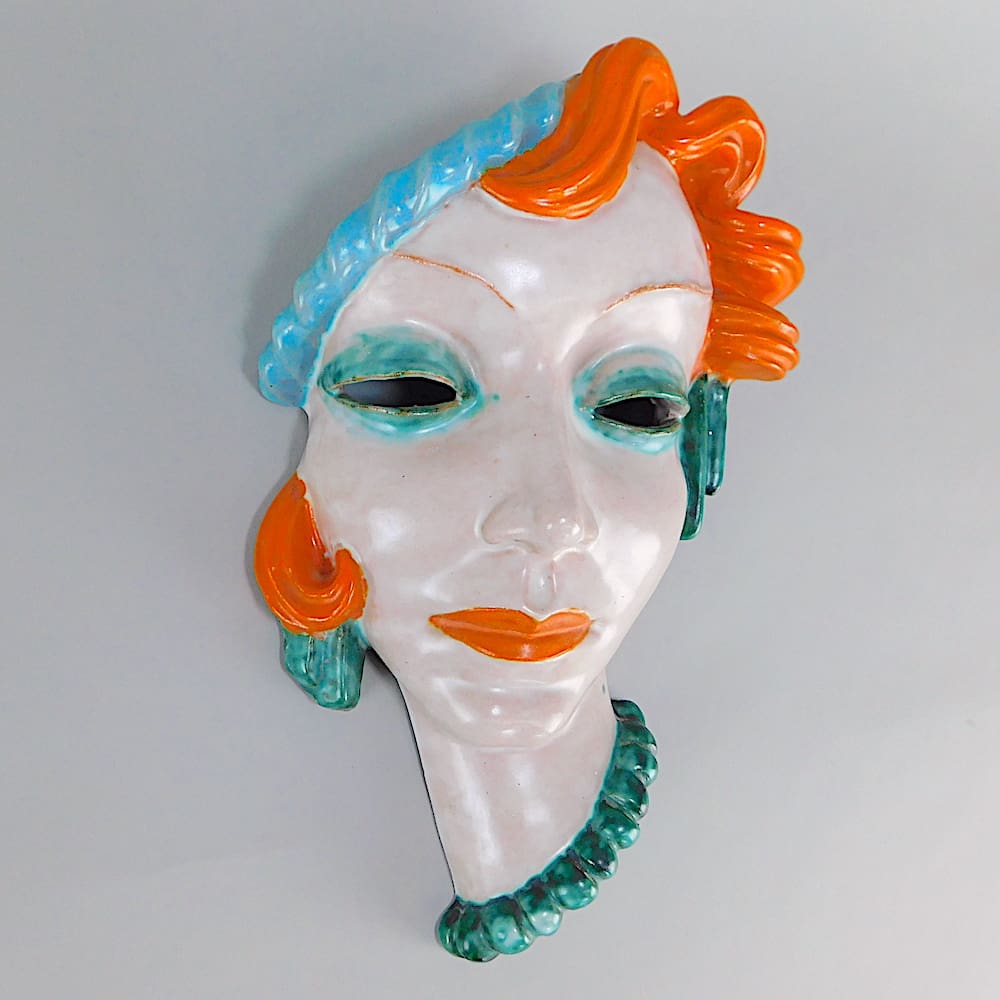
He is famous for his high quality and now very collectible Busts and wall masks. Frederic was forced to emigrate in 1938 due to war and anti-semitism. The company continued to produce items during the war but the range of models were considerably reduced. Another particularly famous model is his statue “captured bird” which was also made as a light and the design was influenced completely by the German dancer Niddy Impekoven.
After temporary nationalisation the firm was restored in May 1950 to its former owner Walter F. Goldscheider.
More than 9,000 different models were created over a period of three generations. Many pieces won gold medals and prizes at world fairs recognised for the exceptional quality of items.
The company closed its doors in 1953 when the old moulds were destroyed. Goldscheider figures are nowadays very much sought after by collectors world-wide and reach astonishing prices at top auction houses all over the world.
Goldscheider-Myott
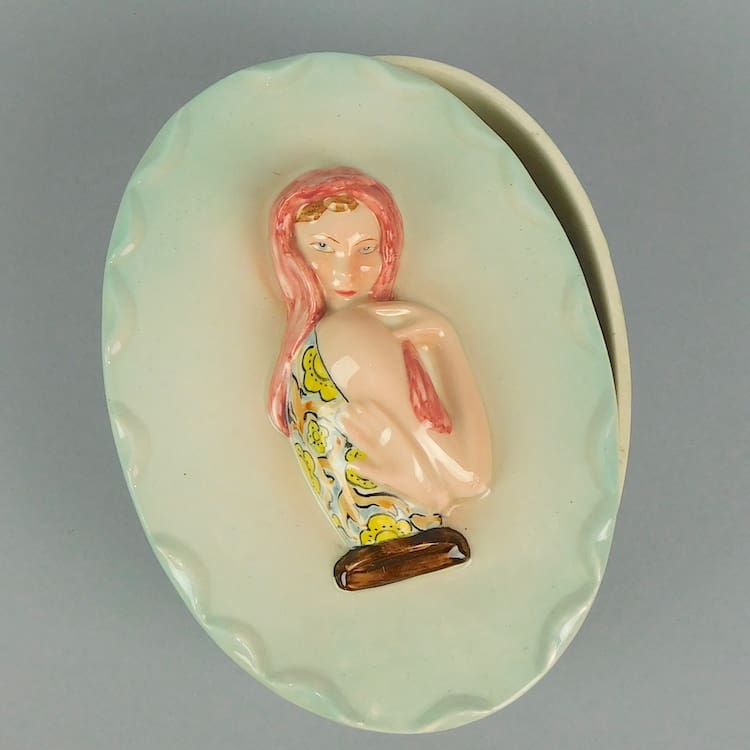
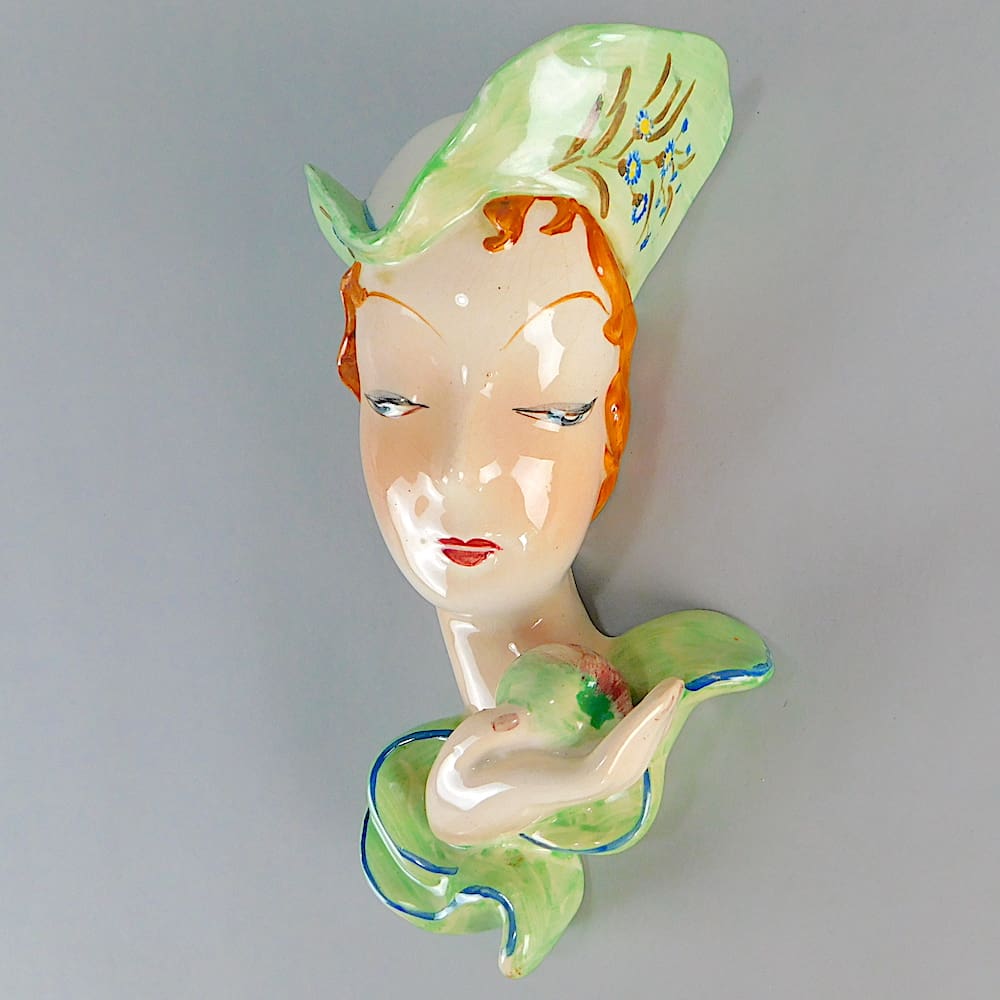
Myott was and English ceramics company producing vases, wall plaques and other ceramic items.
Worked in conjunction with the Goldscheider company when the Goldsheiders fled Austria to escape the Nazis who would take over the running of the Goldscheider business. One brother came to England and worked with the Myott Company and the resulting items were stamped Goldscheider-Myott.
The other brother would head to the USA and worked with the Everlast Company producing similar items that were stamped Goldscheider-Everlast.
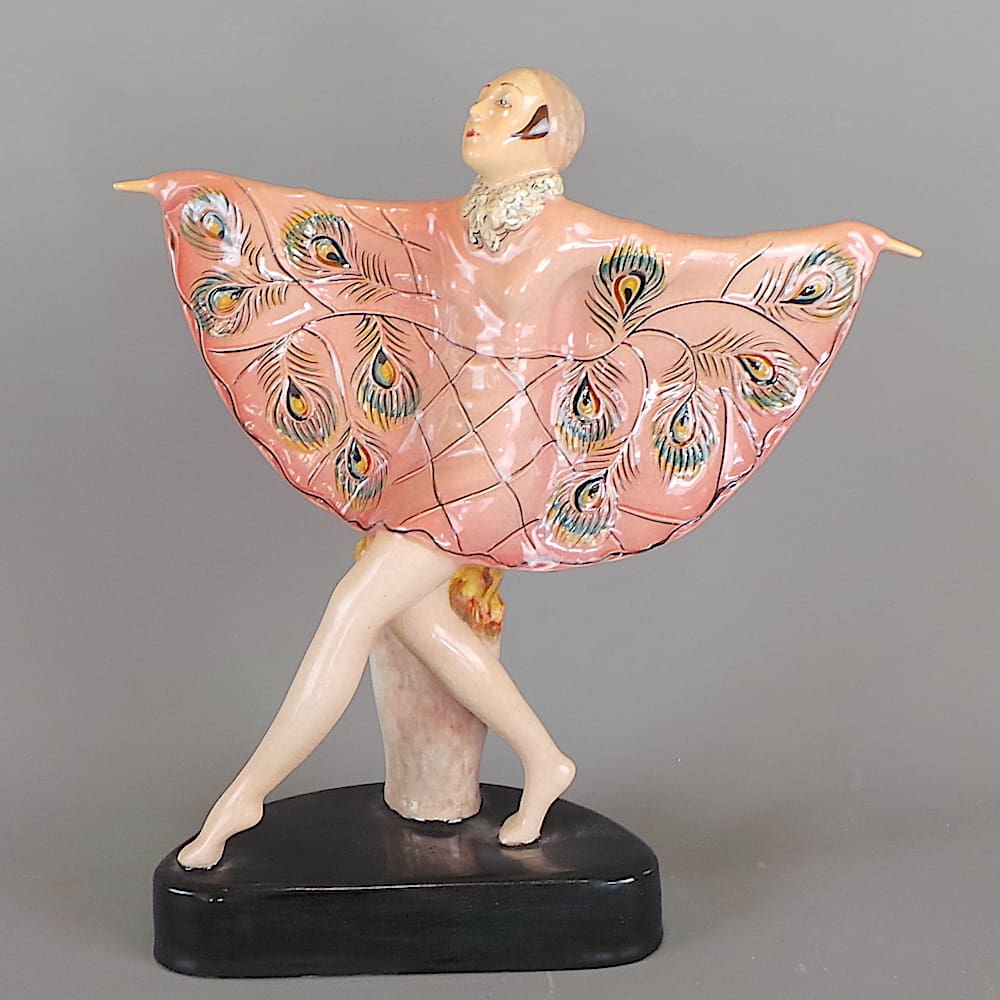
Gomme, Ebenezer (G Plan)
English furniture maker who set up his business in 1898 in High Wycombe, in Bucks. During the First World War the company was set to making DC9 aircraft but in 1922 the factory was completely gutted in a disastrous fire.
Nevertheless by 1939 it had become one of the largest manufacturers in the industry at the time. Gomme produced some extremely unusual deco furniture, mainly made of limed oak or oak painted in very brave bright colours. These deco items of furniture do not yet realise the prices that they should. Gomme’s deco items were of good quality and very stylish.
During the second world war the company helped to produce the Mosquito aircraft and the experience gained in machining and assembling wooden parts to tolerances normally associated with metal working stood the company in good stead when life eventually got back to normal in the 1950’s. Once again there was much pent up demand to supply and Donald Gomme – Ebenezer’s grandson – was able and willing to supply it.
One of his many bright ideas was to promote his products direct to the consumer – unheard of at that time for a manufacturer. And thus G Plan – the name he coined in 1953 – became the first furniture brand to be heavily promoted through advertising. In fact G Plan can lay claim to a whole series of ‘firsts’ in the world of furniture. It was the first company to introduce the concept of whole house furnishing – much boosted by significant TV advertising in the early seventies. In those heady days there was even a flagship London showroom in George Square, W1. It was also the first to introduce modular furniture: Form Five was the name of the first range, which had a base unit with a sliding door mechanism and five bookcase display elements for the tops.
G Plan was also the first to introduce flip action extending dining tables; and the first to put stops on cutlery drawers to prevent them (and their contents) from being spilled onto the floor.
In 1987 the Gomme family – major shareholders in the company, which had gone public in 1958 – decided to retire. They sold the business to the then directors, who, three years later, sold it to the Christie Tyler group of companies.
In 1996 the Morris Furniture Group acquired the licence to make and market G Plan Cabinet furniture from its state of the art facilities in Glasgow. It has since developed and extended the range into today’s highly successful collection, securing the future of the famous brand for the 21st century.
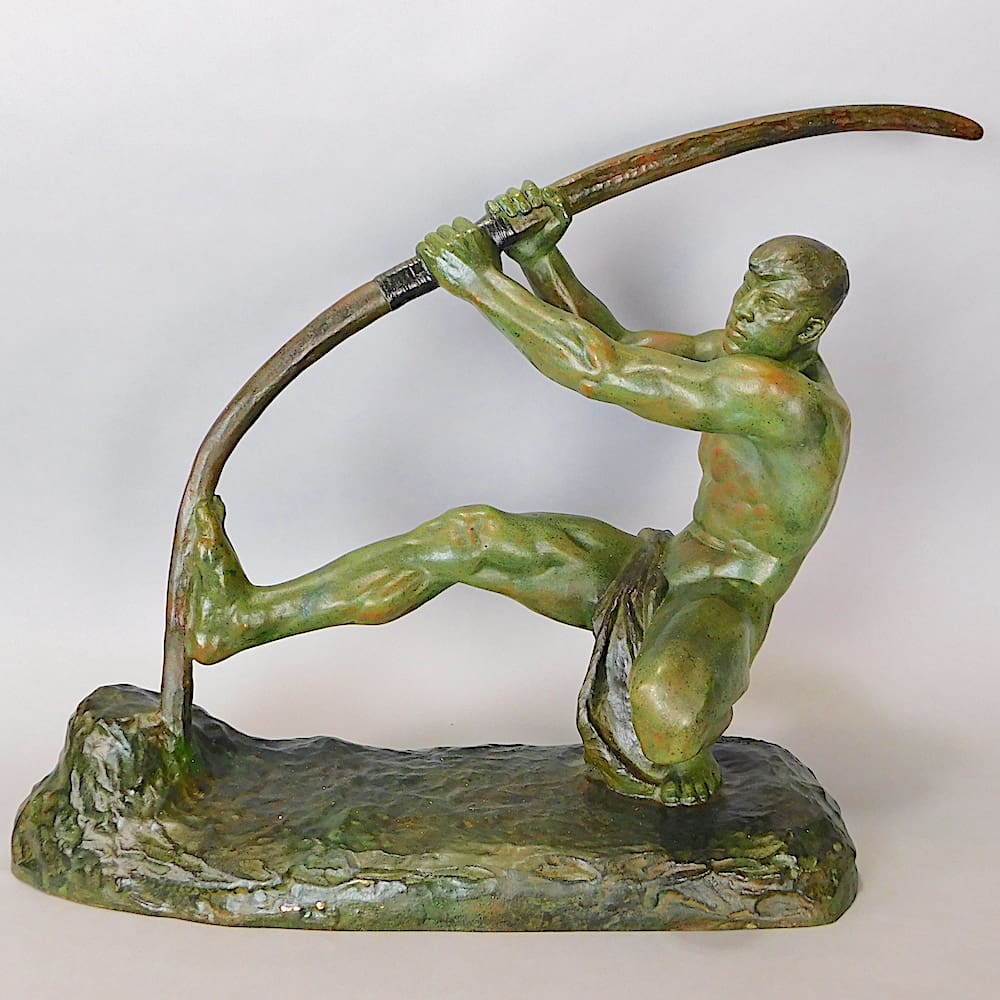
Gory, Georges
Born in Paris at the turn of the century, he studied under Injalbert and exhibited his works at the Salon des Artistes from 1929 and won a bronze medal in 1931.
Gory, Affortunato
Italian sculptor born in Florence in 1895 and died in 1925. Worked mainly in bronze or bronze and ivory but also produced a few spelter pieces. Exhibited in Paris.
Goupy, Marcel (1886 – 1954)
He was primarily a designer rather than a glass maker and was a student of the Decorative Arts National school of Paris. Famous as a painter, ceramist, jeweller and glass worker and decorator. He often worked in conjunction with other artists like August Helingenstein (1891 – 1976) who decorated most of the Leunne glass pieces.
From 1918 he designed a range of glassware which he hand decorated in simple designs. In 1919 he was asked to work with Georges Rouard at his shop in Paris. This is where he produced many of his amazing art deco glass ware. Rouard promoted Goupy’s work along with other glass artists such as Lalique, Maurice Marinot and Jean Luc.
Most of his art deco items are his vases and they are now extremely collectible. Many Goupy designs were actually designed by Helingenstein but signed M. Goupy. Much of his work was not signed at all.
Granger, Genevieve (1877 – 1967)
Sculptor and Ceramist, studied under Henri DUBOIS, became a member of the Society of French artists in 1899, winning a medal from them in 1927. A former member of the Salon of Artistes and decorators.
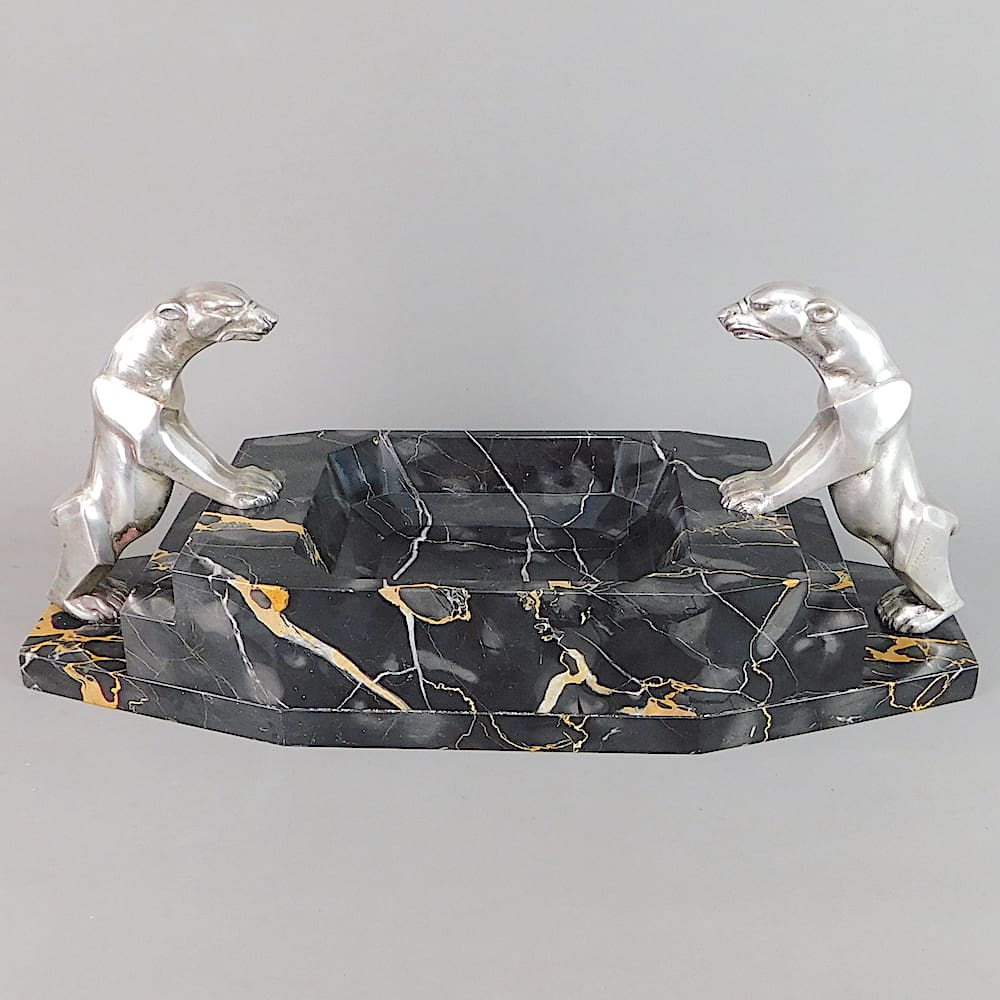
Gregoire, Emile
Specialised in genre sculpture working in Brossac France in the early 20th century. Gregoire was born in 1871, and was a French artist who studied under Dubois and Thomas. Won the Prix de Rome Medal in 1899. Famous for specialising in medals and plaques.
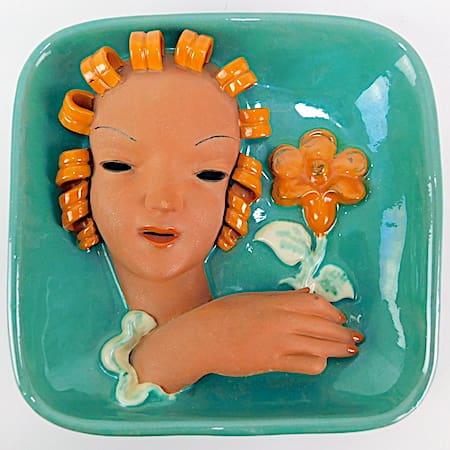
Grossl, Karl
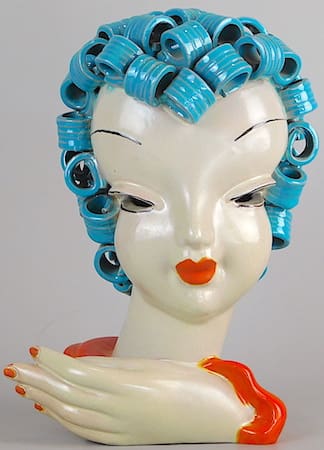
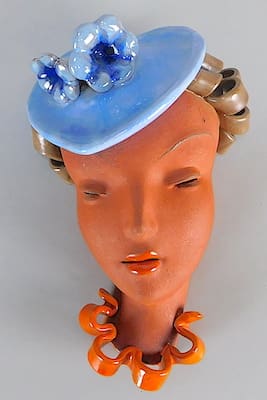
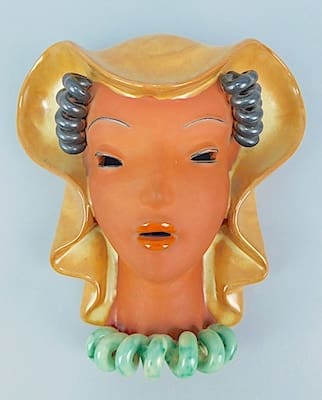
Ceramist and modeller worked mainly freelance and on commission for Goldscheider, Keramia, Majolika-Fabrtik, Rorstrand and Jasba.
Designed a large amount of wall masks for Keramia and Keramos.
Later he became a ceramics teacher.
Grun, Samuel
Russian artist worked in London and Paris during the 1920’s and 1930’s. Exhibited at the Royal Academy and Paris Salons.
Gual, Jaume Sabartes (1881 – 1968)
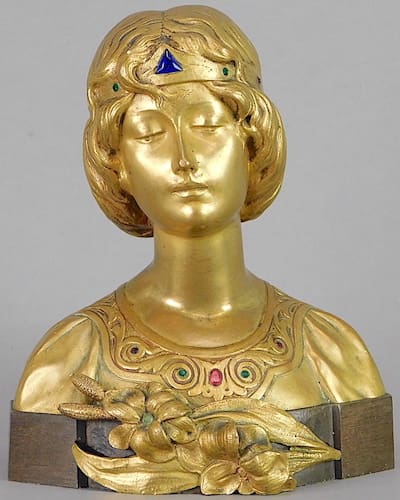
Born in Barcelona, 10 June 1881, died in Paris on 13 February 1968. Spanish Catalan sculptor, poet, journalist and collector. He was a cousin of the painter Joan Miro.
Sabartes studied sculpture at the Escuela de Bellas Artes in Barcelona. Although he exhibited at the Sala Pares, Barcelona (1901), he concentrated on writing modernista poetry, though with little critical success, while frequenting intellectual gatherings at the Quatre Gats.
Through the sculptor Mateo Fernandez de Soto (b 1884) he met Picasso in 1899 and was deeply impressed, despite being the target of his ridicule. In 1901-2, like Picasso, he lived in poverty in Paris. In 1904 he turned to journalism, moving to Buenos Aires before settling in Guatemala City by 1906. He introduced local artists to contemporary European developments through gatherings at his studio, most significantly encouraging Carlos Valenti (d 1912) and Carlos Merida to move to Paris in 1912. For 30 years he maintained a correspondence with Picasso, and on returning to Europe in 1935 he was invited to become Picasso’s business secretary when the latter briefly abandoned painting in favour of automatic writing.
He managed in occupied Paris however, to have Picasso’s sculptures cast in bronze despite the military appropriation of metal. On Sabartes’s death, Picasso donated his Las Meninas series (1957) to the Museu Picasso in Barcelona in his memory.
It is known that Gual worked in the studio of Henry-Paul Rey, producing bronzes, and Gual’s association with Rey greatly benefitted Rey’s success as an artist.
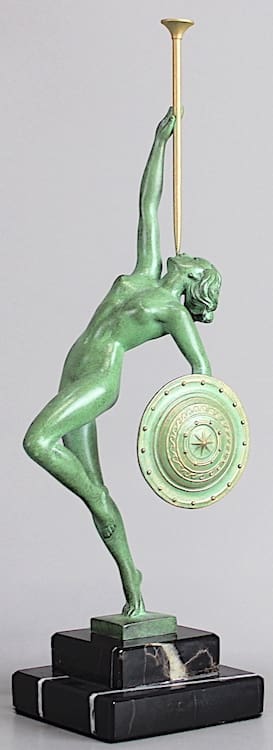
Guerbe – Raymonde Guerbe Le Faguays (1894 – 1995)
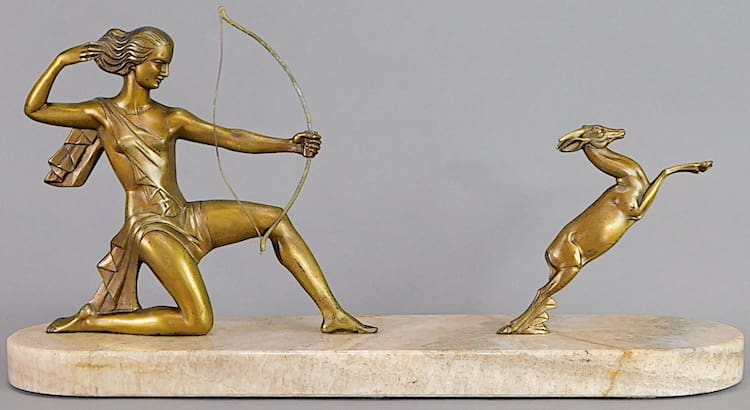
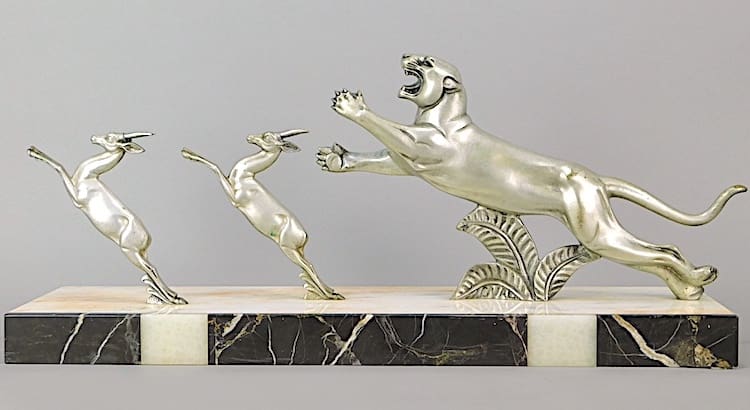
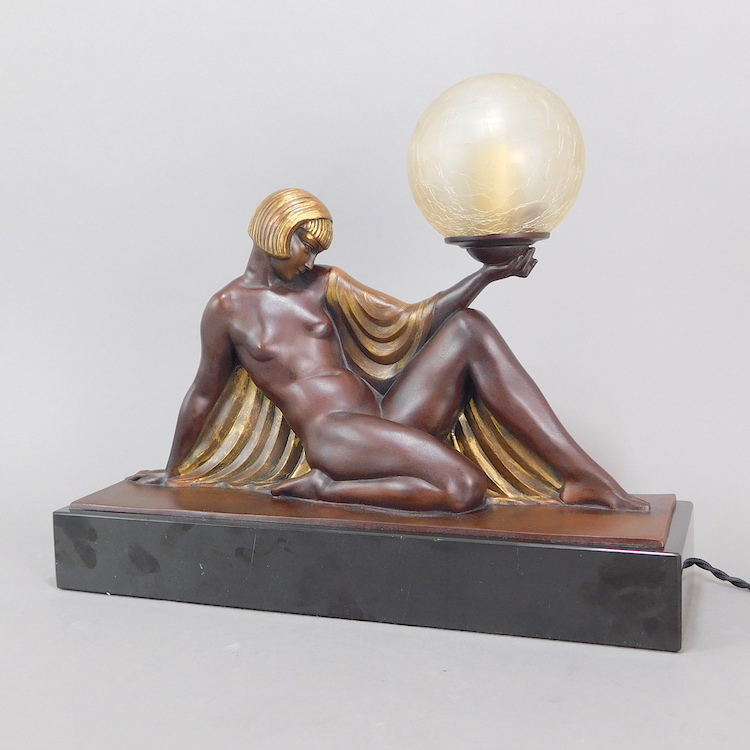
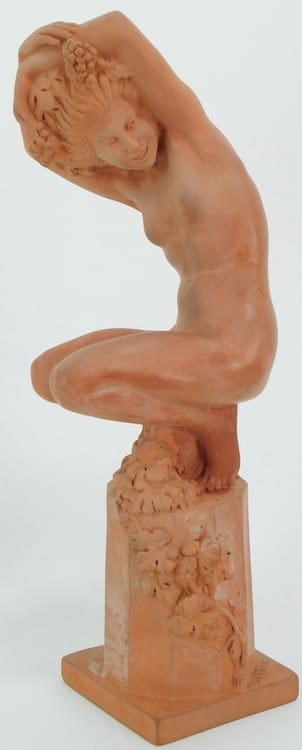
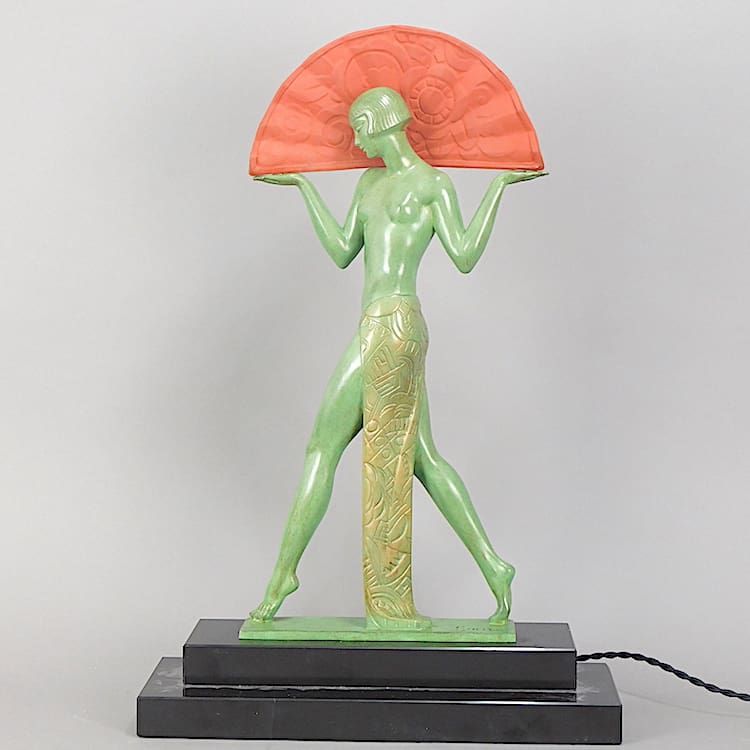
Born in Paris, she was the wife of Pierre Le Faguays and an amazing artist in her own right. She created many popular sculptures including Reverie, Espana and Automne which she sold to the Le Verrier Foundry who produced them. She also used the pseudonym Andre Guerval. In 1931 her husband Pierre Le Faguays painted a portrait of her that was exhibited at the Salon d’Automne. She was also the model for many of his sculptures. She often worked on studies along with her husband, producing such statues as Automne and Floraison. Most of her statues were produced by the Le Verrier foundry.
She worked in various mediums – art metal (spelter), bronze, bronze and ivory, ceramic and terracotta. The bronzes were produced by Les Neveux de J. Lehman, Etling Susse Freres. Her art metal pieces were produced by the Le Verrier foundry as were some of her bronzes and ceramic pieces. In the case of the pieces produced by the Le Verrier foundry, she would create the statue and sell it to the Le Verrier foundry. The Le Verrier foundry were then allowed to produce the item as they saw fit, i.e. as lamps and statues.
I have the original receipts of sale (letters of Proprietre) from the Le Verrier archives where she signs her name as Madame Raymond Guerbe Le Faguays. She along with her husband – Pierre Le Faguays and Marcel Bouriane were best friends with Max and Jeanne Le Verrier.
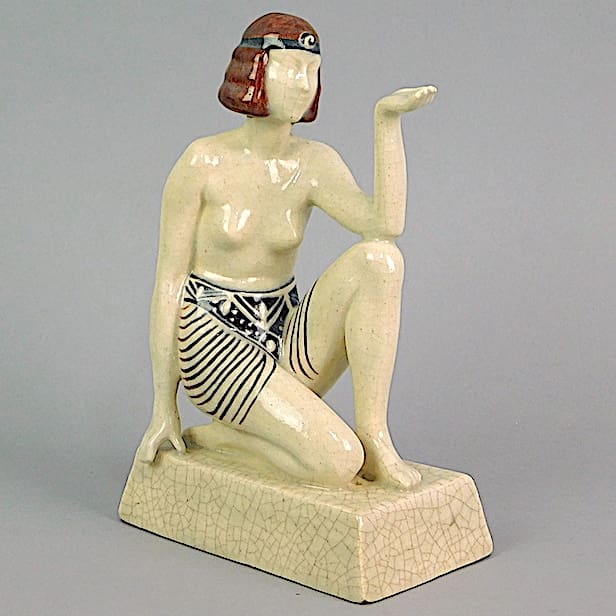
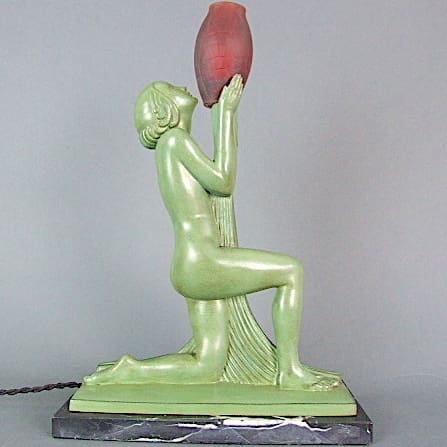
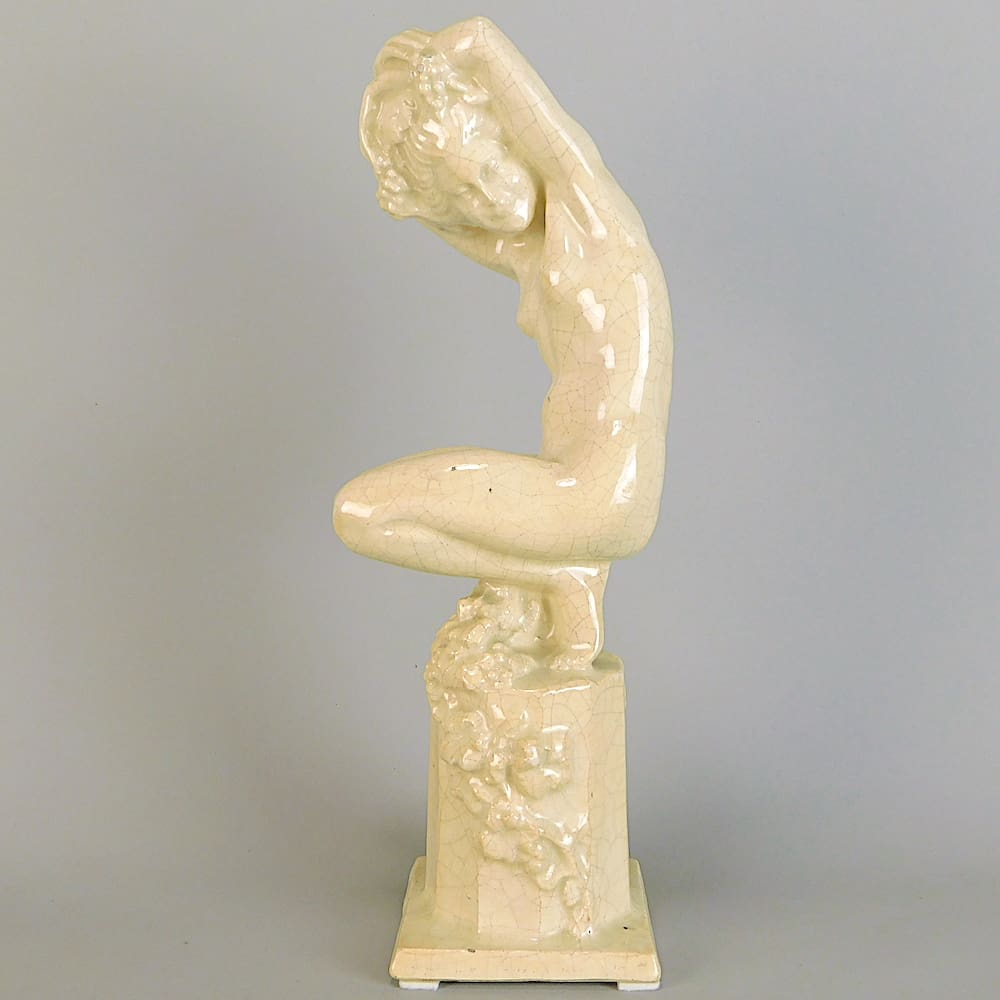
Guerval, Andre
Was a pseudonym used by the French artist Raymond Guerbe (wife of Pierre Le Faguays). First exhibited in 1924. Her most famous work using this title was Dawn.
Guillard, Marcell (b. 1896)
Guillard produced work for the Salon of Independence. He also formed a workshop with Andre Fau in Boulogne-on-Seine, France during the 1920’s. At this time many top artistes worked for Guillard and Fau and Therse including Wuilleumier, Leyritz, Guiraud-Riviere, Martel, Tribout, Goupy and Godard. When the company folded in 1926 Guillard continued with the financial help of the Etling company.
Etling being famous in their own rights as a foundry producing bronzes, terracottas, glass and ceramic ink pots, bookends, night lights and perfume burners. Many top prolific sculptural artists already worked in conjunction with with the Etling studio, such as Becquerel, Granger, Guiraud-Riviere, Bouraine, Colinet, Le Faguays, Lucille Sevin and Demetre Chiparus to name a few.
The items produced after 1926 often bear the Etling and the Guillard foundry stamps and are sometimes also signed by the artist. These pieces are highly sought after worldwide and command high prices from collectors due to the quality and rarity of the items.
Gueron, David,
Of Turkish origin and a former soldier in the French Foreign Legion, was the founder of the “Cristalleries De Compiegne”. This glassworks mainly produced household glass in the early 1920’s. In 1926 he founded a new factory, which he called ‘Verrerie D’Art Degue’ and put all his efforts in the design and production of Art Deco luxury art-glass. His new factory was located on the “Boulevard Malesherbes” and his showroom was on the “41 rue de Paris”. His new factory mainly produced vases, lamps and chandeliers.
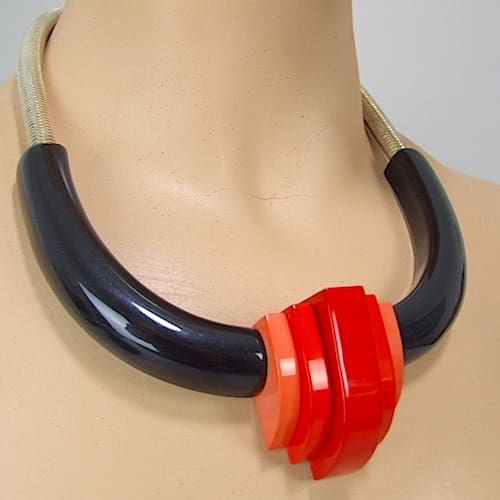
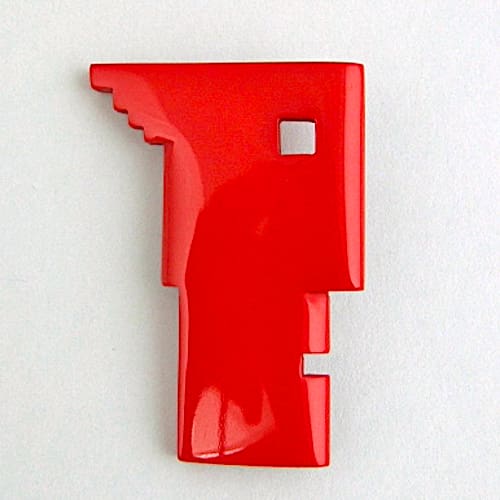
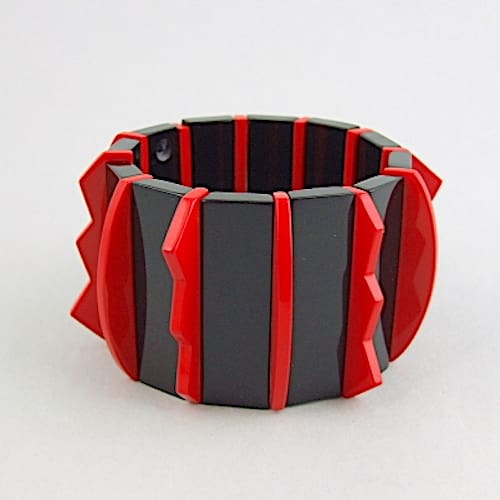
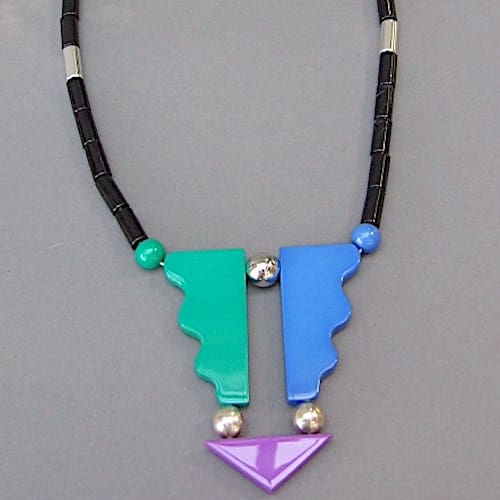
Guillemette l’Hoir jewellery (1976 – 1985)
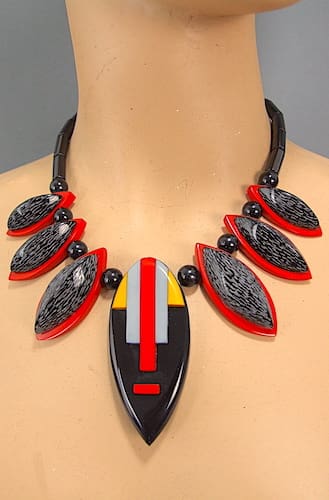
Francois Schoenlaub first became aware of Galalith (or French bakelite) in 1976 when he stumbled across some art deco jewellery that was signed Auguste Bonaz.
Bonaz was a creator of chrome and galalith jewellery based in Oyonnax, Germany. The factory of Bonaz had practically ceased its production and Schoenlaub was quick to realise the potential of using the galalith as a medium to create contemporary designer jewellery.
After 14 years spent in advertising Schoenlaub was very creative and recognised its potential. He contacted a French factory which still produced galalith and set up the company GUILLEMETTE L’HOIR, PARIS (named after his companion of the time).
The company was owned and run by Francois and his sister who later set up a company called Isadora – Paris. He designed and produced his first collection of jewellery in 1976 – refined and minimalist in style and it was instantly successful. He mixed galalith with other materials – precious wood, plexiglass, horn, black rubber – each piece cut and crafted by hand and then polished.
He invented subtle ranges of colour, taking inspiration from the major creative trends of the time, notably the Memphis group, resulting in eye-catching jewellery. His items of jewellery are on show at the Museum of decorative Arts in Paris.
The business closed in 1985 and his pieces are highly sought after by collectors worldwide. You can view his website at www.schoenlaub-galalith.com and also check out www.guillemette-lhoir.com