
A – B – C – D – E – F – G – H – I – J – K – L – M – N – O – P – R – S – T – U – V – W – Z

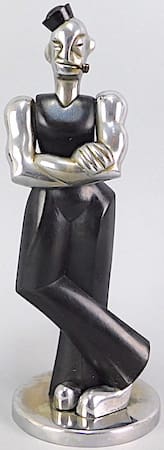
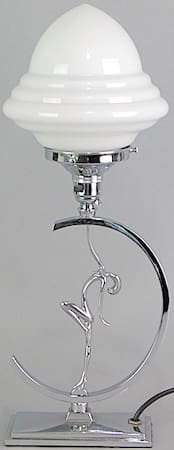
Hagenauer
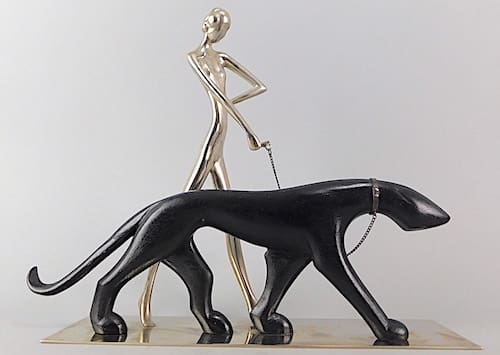
Austria and its cultural centre of Vienna has produced some amazing bronze artists. Lorenzl, Baller, Bosse and Hagenauer who between them produced some wonderful decorative accessories and sculptural items during the Deco years.
The firm of Hagenauer was first started in 1898 by Carl Hagenauer (1872 – 1928) and produced items designed by Hagenauer and many other artists including Josef Hoffman and the Wiener Werkstatte.
Carl Hagenauer was an apprentice Goldsmith for Austrian Jewellery firms. The firm of Hagenauer exhibited its work at many Exhibitions in Paris, London and Berlin and its works were widely exported world wide.
The Hagenauer company was a family run business and Carls son Karl (1888-1956) joined his Father in the firm in 1919 aged 31. He contributed considerably to the firm as he was highly appraised sculpture in his own right. Other members of the family also contributed styles and techniques to the Hagenauer company.
Harders – Hans (1875 – 1955)
German statuary artist who studied in Berlin and Dresden at the Academy of Fine Arts. Worked with Rosenthal producing ceramic pieces and Maerder. His bronze and ivory and bronze pieces were produced by Preiss and Kassler who produced the Ferdinand Preiss statues.
Hatot, Leon – See ATO.
Hemming, Oliver

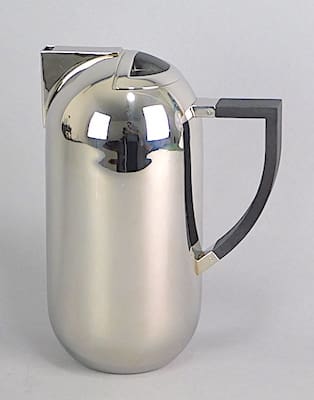
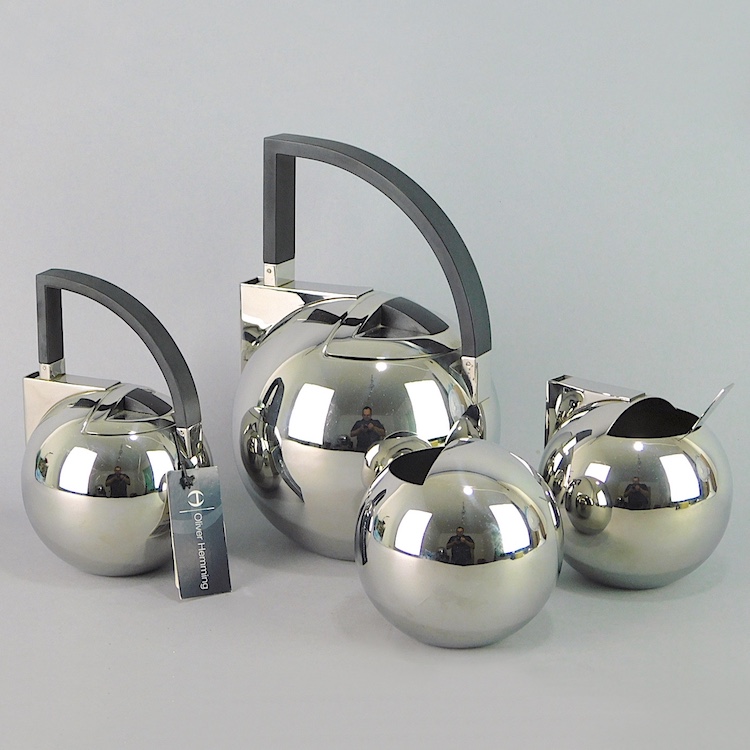
Producer of modernist table wear items and clocks. Born in Kenya in 1959, he spent his childhood in England. As a teenager he lived in London and went to St Paul’s school and then on to art school in Oxford and Leicester. Studying 3D Design and Silversmithing he won several design competitions including the Johnson Mathey Silver Award in 1982 and a Bursary from the Royal Society of Arts.
On graduating from college he opened his own Silversmithing studio and worked mainly on private commissions. In 1985 he started the brand Ziro, making contemporary clocks and watches. Ziro became very influential in the development of contemporary clock design and by 1995 Ziro employed about 50 people in two factories in the UK and USA, making around 350,000 pieces a year with exports to over 35 countries. The business was sold in 1998 and Oliver took the opportunity to take a 2-year sabbatical.
Now living with his family in Hong Kong, Oliver has started a new business and has put together this focused, yet diverse collection.
Working in his own factory again he exports his work all over the world and his designs are widely regarded as being distinctive, innovative and uniquely differentiated. The Oliver Hemming Difference having achieved numerous accolades for design excellence, Oliver has taken his skills in aesthetic design and product development and set-up his own factory in Donguan, China. Oliver is responsible for all elements of the design and production of his collection.
Herbst, Rene (1891 – 1982)
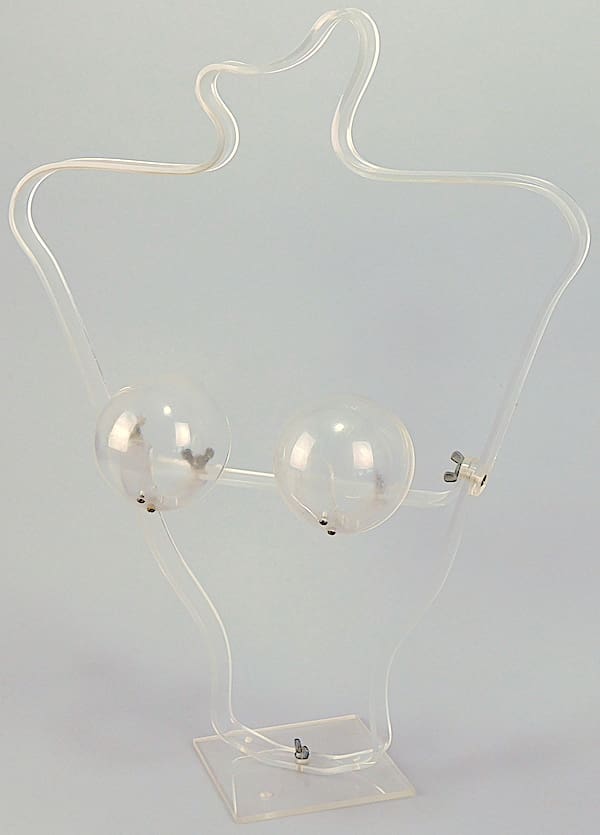
Pioneer of Modernism, nicknamed the man of steel. He pioneered the use of the material for furniture and other items in the 1920s – years before it was used for mass production on a large scale. He created enduring furniture of simple and functional form and elegance.
There is a collection of his work at the Library of the Musee des Arts Decoratifs in Paris. This focuses on Herbst’s idea of promoting modern living. Rene Herbst studied architecture in London and Frankfurt from 1908. After finishing his studies, he travelled extensively in Russia and Italy but by 1919 Rene Herbst was again in Paris, where he started working as a furniture designer and interior decorator.
He founded Etablissements Rene Herbst to produce the pieces he designed. In 1925 Herbst designed several exhibition stalls for the Paris “Exposition Internationale des Arts Decoratifs et Industriels Modernes”.
In 1927 Herbst designed the revolutionary and functional “Chaise Sandows” seat furniture. The frames were nickel-plated tubular steel, the seat and back was made of rubber strips stretched taut and fastened to the frame by hooks at the end.
He first showed his “Chaise Sandows” at the 1929 Salon d’Automne, where Le Corbusier also presented furniture with tubular steel frames. In 1930 Herbst joined Robert Mallet-Stevens, Francis Jourdain, and others in founding the Union des Artistes Modernes (UAM) – a large group of artists and designers committed to Modernism joined the co-founders.
The UAM was founded as a countermovement to Art deco, which the UAM artists repudiated because they found it overloaded with decoration and too ornamental.
In 1945 Herbst was elected chairman of the UAM gewahlt. The UAM mounted exhibitions in Paris under the heading of “Les Formes Utiles” (Utilitarian Forms).
Herbst died on 29th September 1982, by coincidence the same date that his archives – his final legacy – were entered into the Bibliotechque des Arts Decoratifs.
Hettier and Vincent
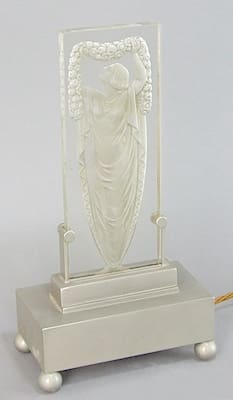
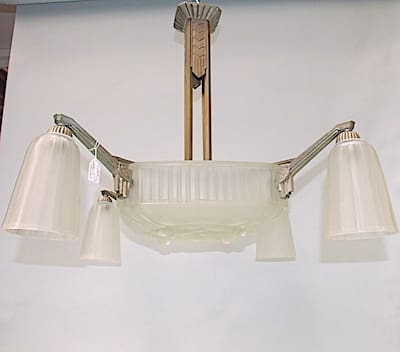
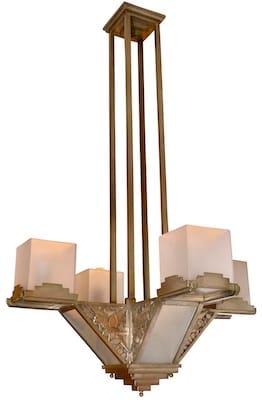
Quality French art deco glass retailers. Opened a shop in 1926 Place des Vosges Paris. Selling mainly lighting but also other glass items. Metal holders and frames were made of silvered bronze or fere forge (wrought iron).
The glass used in their items was top quality and often made by Verlys, Des Hanots, Les Andeleys, Muller Freres and Baccarat. Signature is usually hard to find as it is in very small letters usually to the edge of the glass.
Hoffman, Alfred (b. 1879)
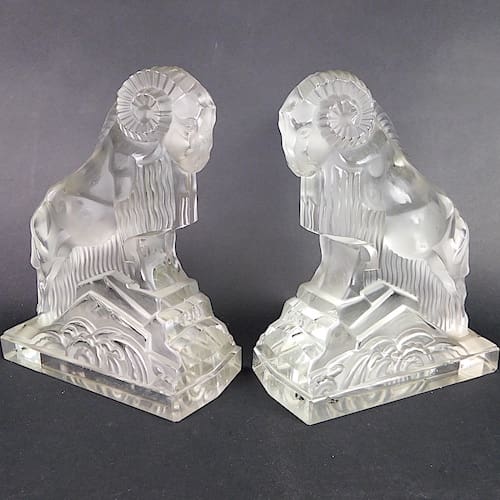
Austrian born, travelled extensively and most of his statues were of a classical theme. Worked mainly in bronze and ivory.
Hoffman, Heinrich (1875 – 1938)
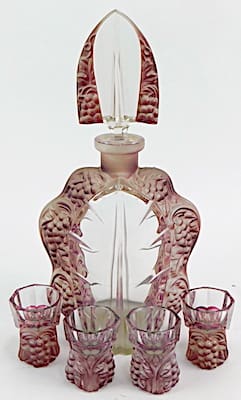
One of the foremost designers of Czechoslovakian art glass in the form of scent bottles, powder boxes, atomisers, boxes and vases etc. Heinrich was the son of Franz Hoffman and came from a long family line of Bohemian glass makers.
He later worked in conjunction with his son in law Henry Schlevogt, himself a top glass artist. Both men were very successful and pioneers in unusual glass colours and styles, specialising in moulded glass. Hoffman had a glass firm in Paris and in Gablonz. Many pieces of Hoffman glass were not marked at all but those that were bore the butterfly mark.
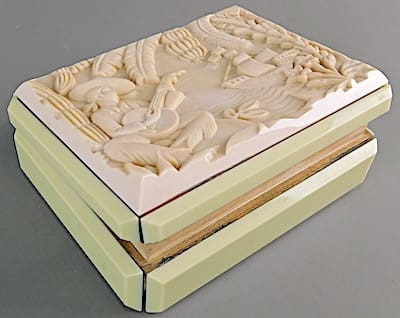
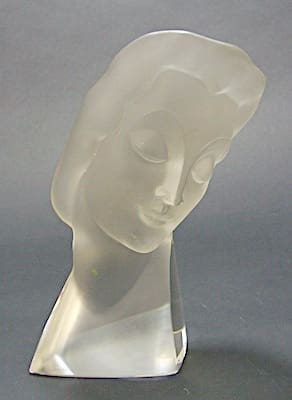
The Hoffman company also produced glass eyes for those who lost them in the war. He pioneered the method of pressing glass in the negative from the reverse side – known as Intaglio. This method was used for scent bottle stoppers, ashtrays, pin trays trinket dishes, box lids, handles for mirrors and edges for trays.
The Hoffman firm used many top designers including – Frantisek, Adolf Becker, Alexander Pfohl and Professor Zdenek Juna. Henry Schlevogt married Hoffmans daughter who died giving birth to his daughter – Ingrid. Hoffman and Schlevogt worked together and created a new line in commemoration and they called it the Ingrid line. The firm ceased production in 1945.
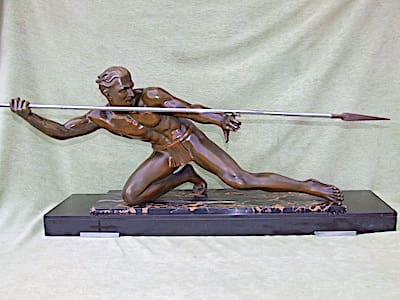
Hugonnet, Pierre Joseph
French statutory artist, worked mainly in bronze.
Hutschenreuther, Carl Magnus (b. 1793)
Born in Thuringia, Germany, ceramics painter and decorator who founded the first porcelain studio in Bavaria producing excellent quality ceramics using kaolin in 1814 while just 21 years old. He opened a second factory in 1857 in Selb, (home of Rosenthal), and with his son Lorenz taking charge, started producing stunning quality ceramics at both sites using models created and decorated by brilliant artists such as Werner, Fritz, Defanti, Tutter and numerous others.
In 1969 both factories joined under the name of Hutschenreuther AG, in Selb, where quality ceramics are still being produced.