
A – B – C – D – E – F – G – H – I – J – K – L – M – N – O – P – R – S – T – U – V – W – Z

Kandinsky, Wassilly Wassilyevich (1866 – 1944)
Russian painter and art theorist. Considered by many as the pioneer of abstract art. Born in Moscow where he graduated at Grekov Odessa Art School. He also studied law and economics.
In 1896, Kandinsky settled in Munich, studying first at Anton Azbe’s private school and then at the Academy of Fine Arts. He returned to Moscow in 1914, after the outbreak of World War I.
Following the Russian revolution, Kandinsky became an insider in the cultural administration of Anatoly Lunacharsky and helped establish the Museum of the Culture of Painting. However, by then his spiritual outlook was foreign to the argumentative materialism of Soviet society and opportunities beckoned in Germany, to which he returned in 1920.
There he taught at the Bauhaus school of art and architecture from 1922 until the Nazis closed it in 1933. He then moved to France, where he lived for the rest of his life, becoming a French citizen in 1939 and producing some of his most prominent art. He died in Neuilly-Sue-Seine in 1944.
Katzhutte (Hertwig & Company) 1864 – 1958
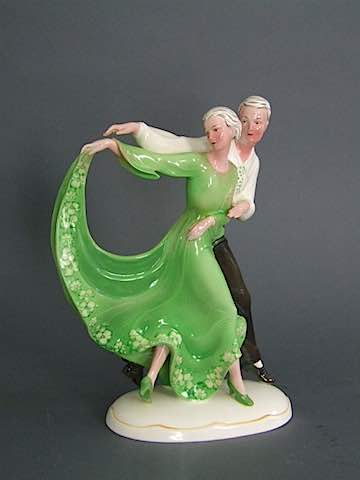
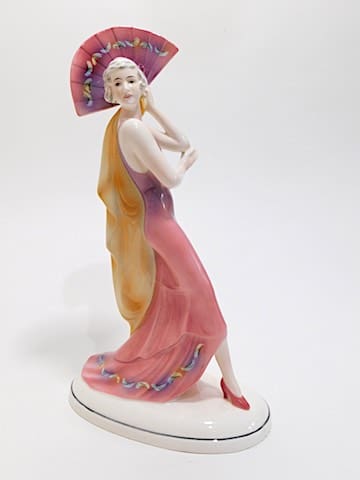
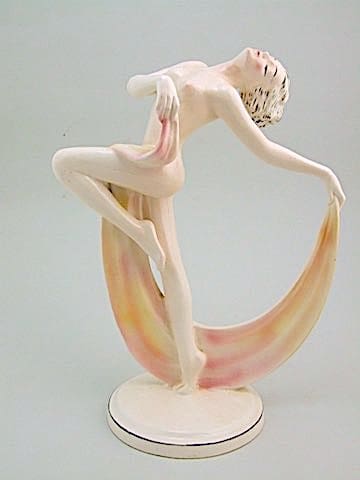
German ceramics company, originally producing kewpie dolls for the American market. Later they would produce beautiful hand painted ceramic dancers of the art deco period. Worked with freelance designers such as Dakon and Lorenzl.
The abandoned factory was looted in the 1980s and old records were recovered. These documents now reside in private collections.
After German reunification in 1990 the run down factory was closed.


Kauba, Carl (1865 – 1922)
Born in Austria, Kauba was a student of Carl Waschmann and Stefan Schwarts in Vienna, he specialised in cold painted bronzes depicting scenes from the American West. Never visiting America himself, Kauba was inspired by the romantic stories written by the German Carl May and the many photographs and illustrations of Indians and cowboys which he had seen. Although his work was exported to the U.S from 1895 to 1912, he was not fully appreciated there until the 1950’s.
Keck – Hans (1875 – 1941)
Born in Austria, he worked with the Gebruder Brandel foundry in Berlin. Most of his pieces were Nouveau bordering onto Art Deco. They were classical and Medieval subject in bronze and ivory.
Kelety, Alexander (d. 1940)

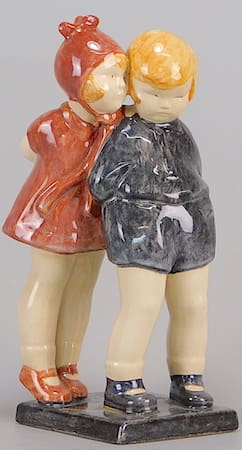
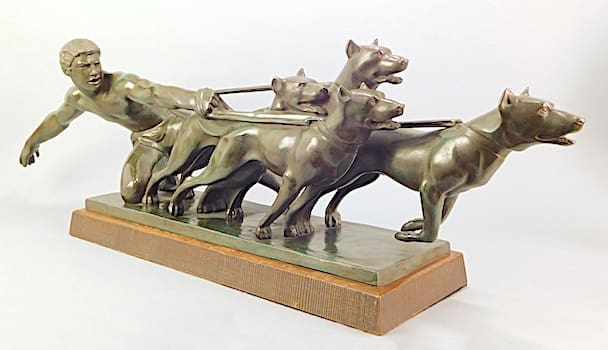
Born in Budapest, Hungary date unknown, worked 1918-1940. Studied in Toulouse France along with Imre Simay. He then moved to Paris where he studied and exhibited during the inter war years.
Highly acclaimed for the quality of his works which are well sought after by collectors world wide. His most famous pieces being ‘The release’ and ‘The Archer’ – he also produced some wonderful children statues of exceptional character and quality.
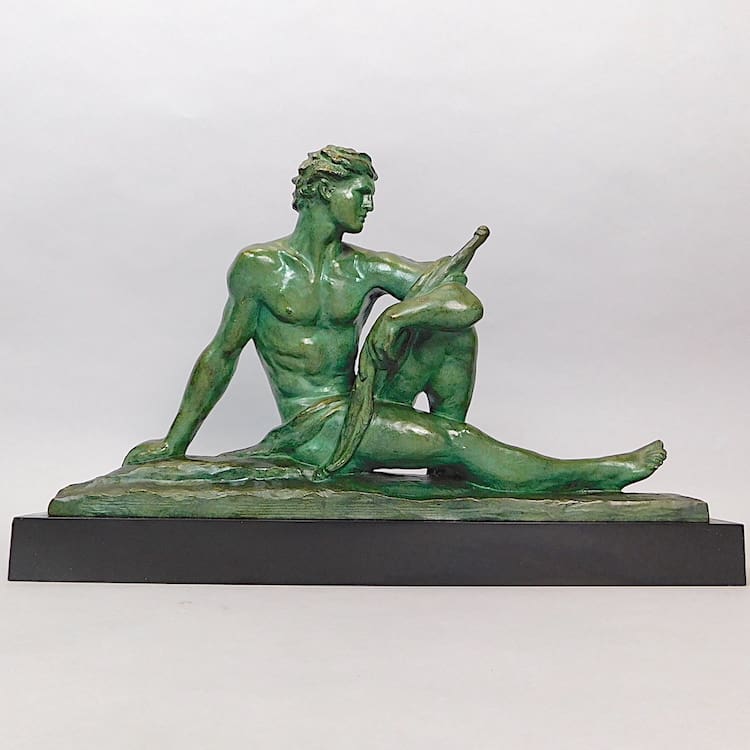
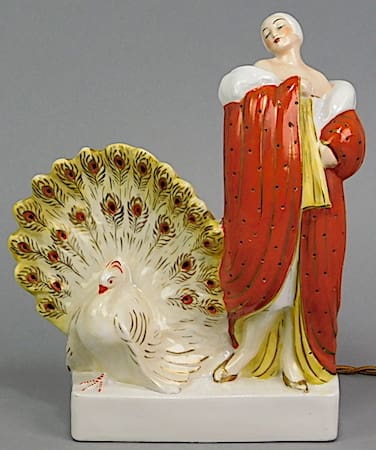
Worked in bronze, bronze and ivory and ceramics. Most of his bronzes were produced by Goldscheider, Etling and Lehmann. His animal subjects were produced by M. Ollier and he also produced male and children statues.
A prolific artist his items were used as other household items such as bookends, lighting and incense burners and ashtrays. He liked the dinanderie technic as a finish.
Keramia
Austrian ceramics company, producing ceramic figures and wall masks. Many of the masks designed by Karl Grossl
Keramos – Keramos Wiener Kunstermik
A Vienna ceramics company famous for its wall masks which in 1939 joined forces with Porzellanmanufaktur Bruder Wolf KG to become Keramos. Among the owners were two sculptors/ceramists Robert Obsieger and Rudolf Podany. The company produces earthenware statues and many wall masks which were designed by Stephan Dakon, Rudolf Podany and Ina Eisenbeisser. There was a Keramos Germany and Ansl Austria.
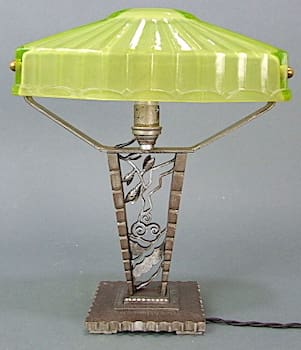
Kiss, Paul
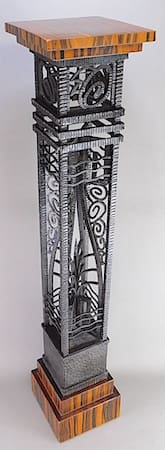
French artist famous for his art deco ornamental ironwork, producing excellent quality items considered by many to be on par with Edgar Brandt. Items were produced in bronze and ironwork and included, radiator covers, console tables, lamps, stair banisters, window grills, and gates – although he specialised more in lighting.
His shop was based at 10 Rue des Perichaux, Paris.
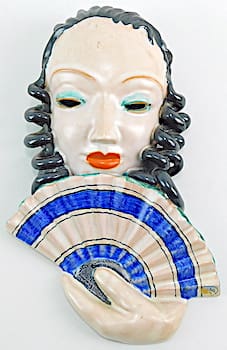
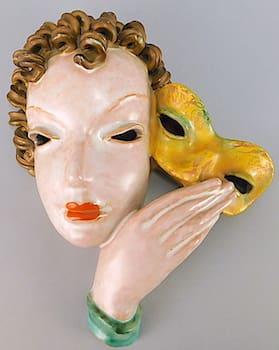
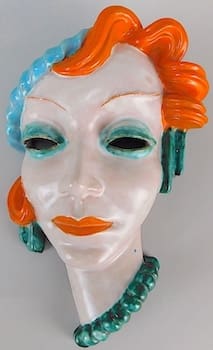
Knorlein, Rudolf (1902 – 1988)
Austrian Sculptor and ceramist worked for the Wienner Werkstatte and Gmundner keramik and for Goldscheider.
He was famous for his new colours and glazes which played a major design role in the West German Goldscheider range.
He also designed wall masks for Goldscheider.
Knox, Archibald (1864 – 1933)
He was born and educated on the Isle of Man. Knox was the most important of the designers, called upon by Arthur Lasenby of the famous London Liberty store. He produced more than 400 designs for the Cymric range as well as some designs for the Tudric pewter range which were inspired by the earlier Cymric wares. His observation of Celtic remains on the Isle of Man were the underlying influence on his choice of decoration. The ornate elements are easily recognised and often incorporated spear-headed entrelac symbols (a form of interlaced decoration drawn from ancient jewellery). Pieces are often embellished with peacock blue/green enamels and or inset with turquoise, lapis lazulli or similar semi-precious stone cabochons.
Kolzoff, Serge
Born September 1892 in Moscow, studied at Moscow school of fine arts and was winner of its gold medal. Most of his work was realistic, but during the 1920’s his style changed to constructivism.
Konig-Scavini
Italian female ceramics artist. Designed statues and wall masks for the Lenci company.