
A – B – C – D – E – F – G – H – I – J – K – L – M – N – O – P – R – S – T – U – V – W – Z
Lambeaux, Joseph (Jef) Marie Thomas (1852 – 1908)
Belgian artist born in Antwerp in 1852, died 1908 Brussels. Famous as the teacher of Colinet. Jef Lambeaux was born into an artistic family. He learnt sculpting at the Antwerp Academy with Jozef Geefs as his teacher. In Paris he helped J. Beers in his atelier, later he also worked at the atelier of J. Vanaise. Lambeaux took part in many exhibitions, won a gold medal in 1881, and in 1882 was given a scholarship by the city of Antwerp, which he used to travel to Italy.
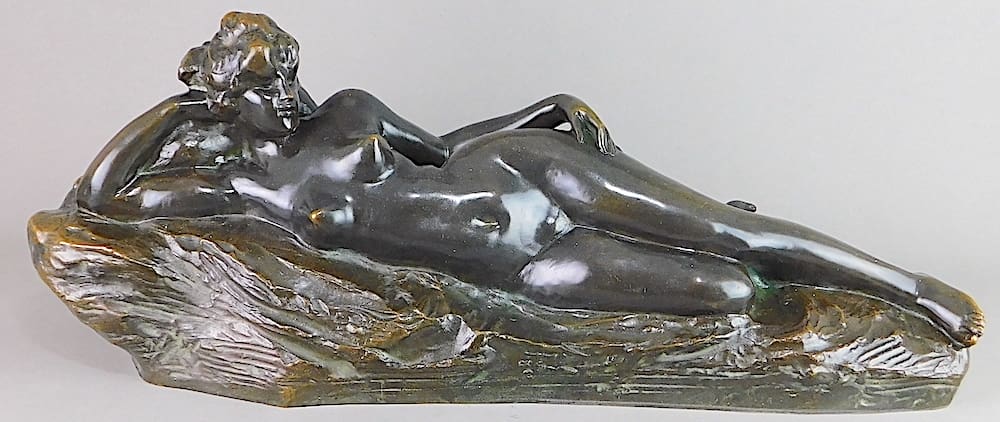
The main theme in his work is the expression of movement, nude figures become more important as time passes. He also made busts and in Italy he found inspiration for making fauns.
He designed the Caryatids of the Antwerp City Hall, the famous Brabo-fountain in the same city, as well as many other important monuments.
His most important work is The Calvary of the Human Race which in 1899 was placed in the Brussels Jubelpark in a small building designed by the architect Victor Horta.
Lange – Richard, W
German artist worked in bronze and ivory and bronze and designed ceramic statues for the Rosenthal company.
Larche, Raoul-Francois (1860 – 1912)
A renown French sculptor mainly known for top quality bronze female figures, possibly gilded, often naked or sheathed in drapery. He produced a series of well known figures based on the American actress and dancer, Loie Fuller who was regarded as a living embodiment of Art Nouveau.
Larroux, Antonin
French artist born in Toulouse 1859.
Laurent, Blanche
French, born in Paris and exhibited there.
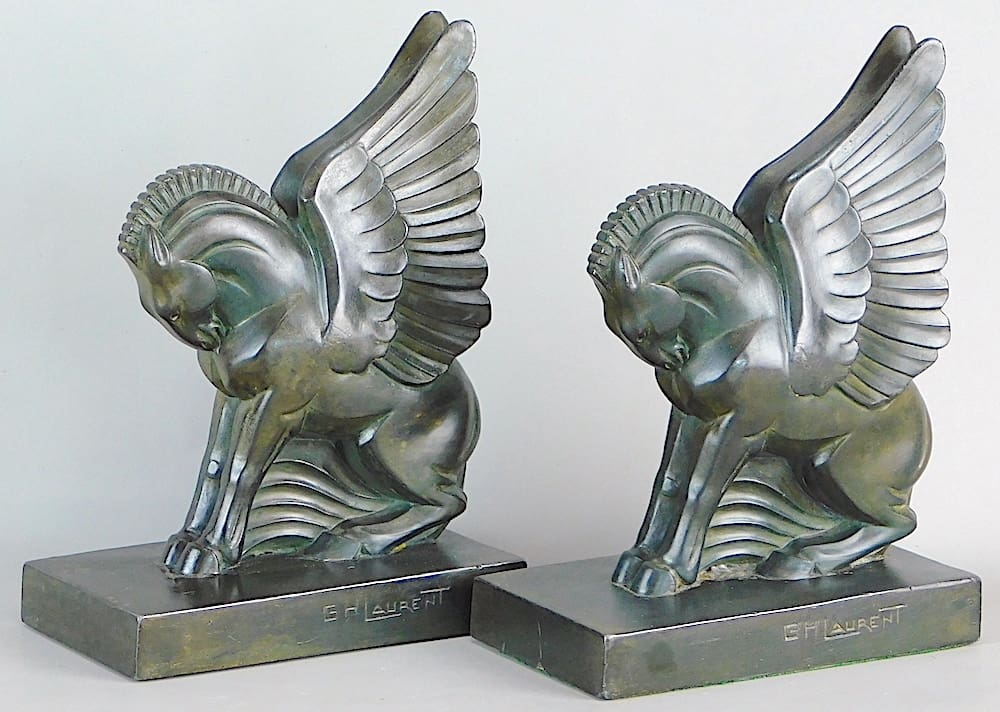
Laurent, Georges Henri (1880 – 1940)
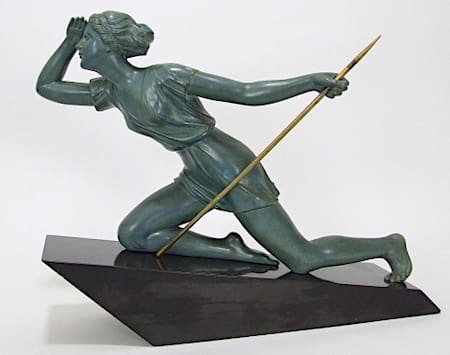
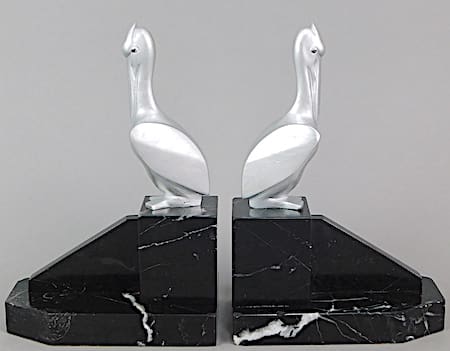
A French postwar and contemporary sculptor famous for his numerous bronze female and animalier sculptures. Active between 1900-1930.
He also used the pseudonym Garcia and a female dancer was produced by the Le Verrier foundry signed Garcia to the base.
Laurent, Pierre
Born in Montlucon, 1868, a student of Barrias, won several awards.
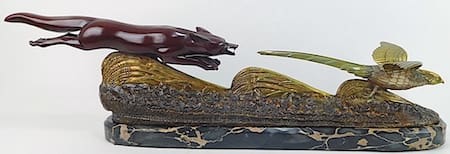
Lavroff, Georges (1895 – 1991)
was born Georgij Dmitrievic Lavrov in Siberia. He studied painting and medicine at the University of Tomsk. In 1917-20 – he served in the 6th Regiment of the partisans of Azchipov. 1923-1926 – He became a member of the Russian artistes association in Moscow and in 1927-1935 Lavroff was sent to France to promote Soviet Art. This was the start of the famous works we now associate with George Lavroff and for which he is famous, mainly his art deco animal statues.
He worked in several mediums mainly bronze and ceramics. For some time he worked closely in conjunction with Marcel Guillemard and indeed some of Lavroff’s statues and other items are marked Guillemard and not Lavroff. He moved back to Russia in 1935. From 1940-1980 Lavroff worked mainly on monumental sculptures and busts of important members of the Soviet society. Displaying his works in many of the important Salons.
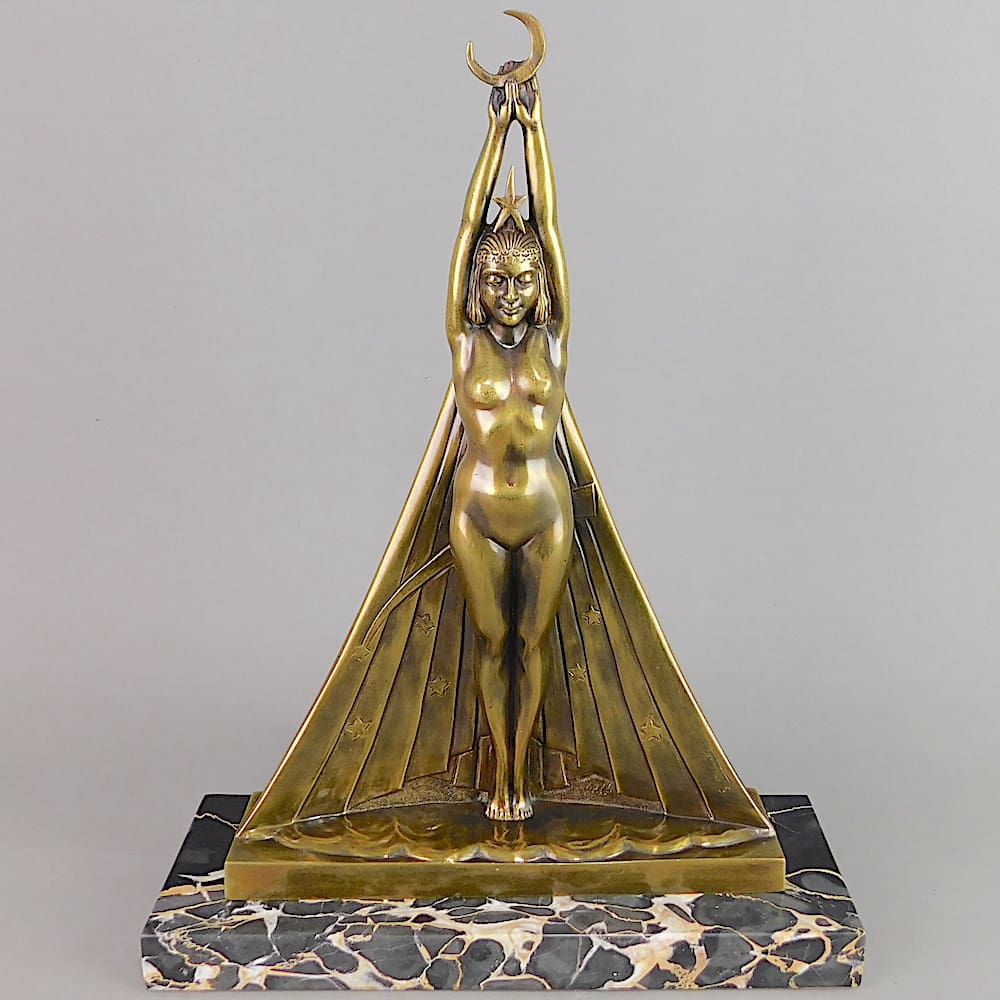
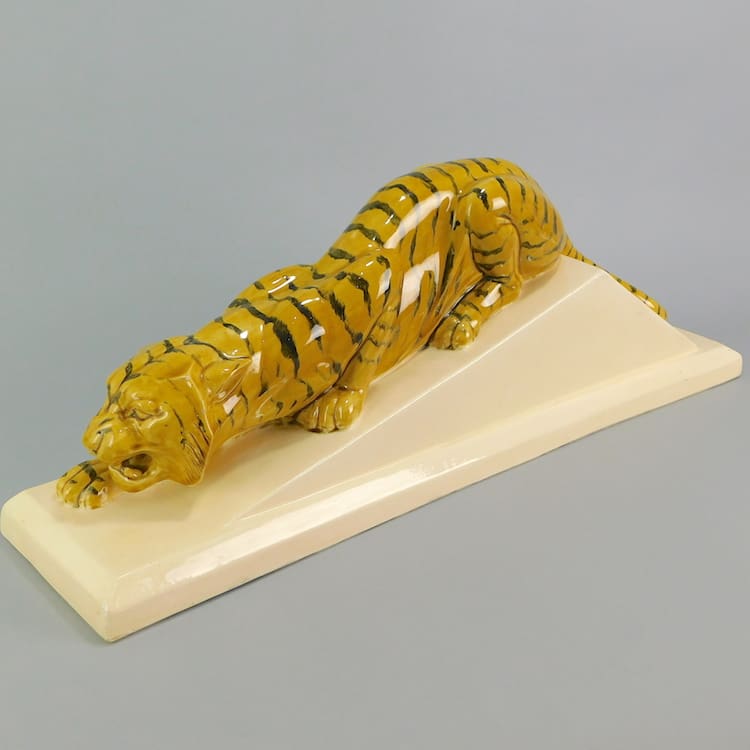
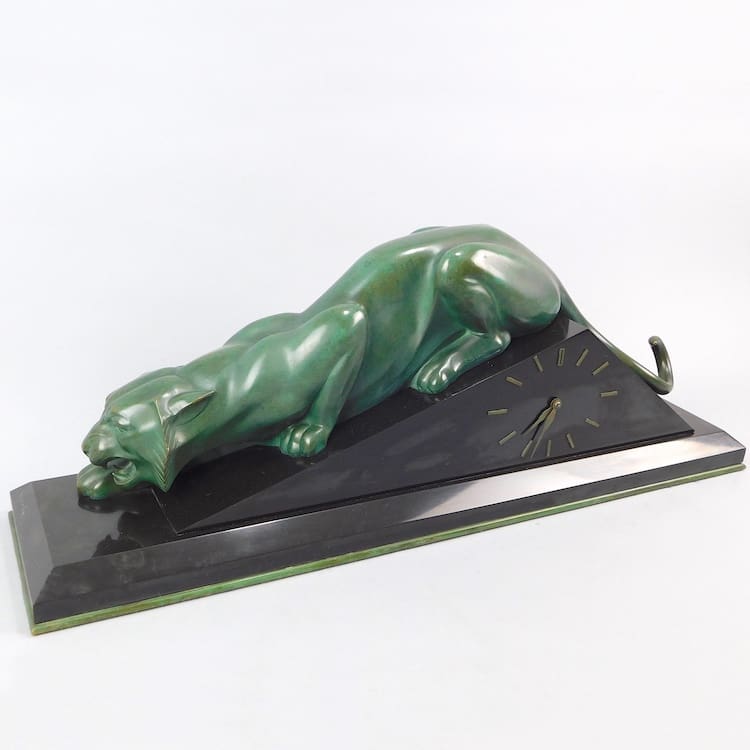
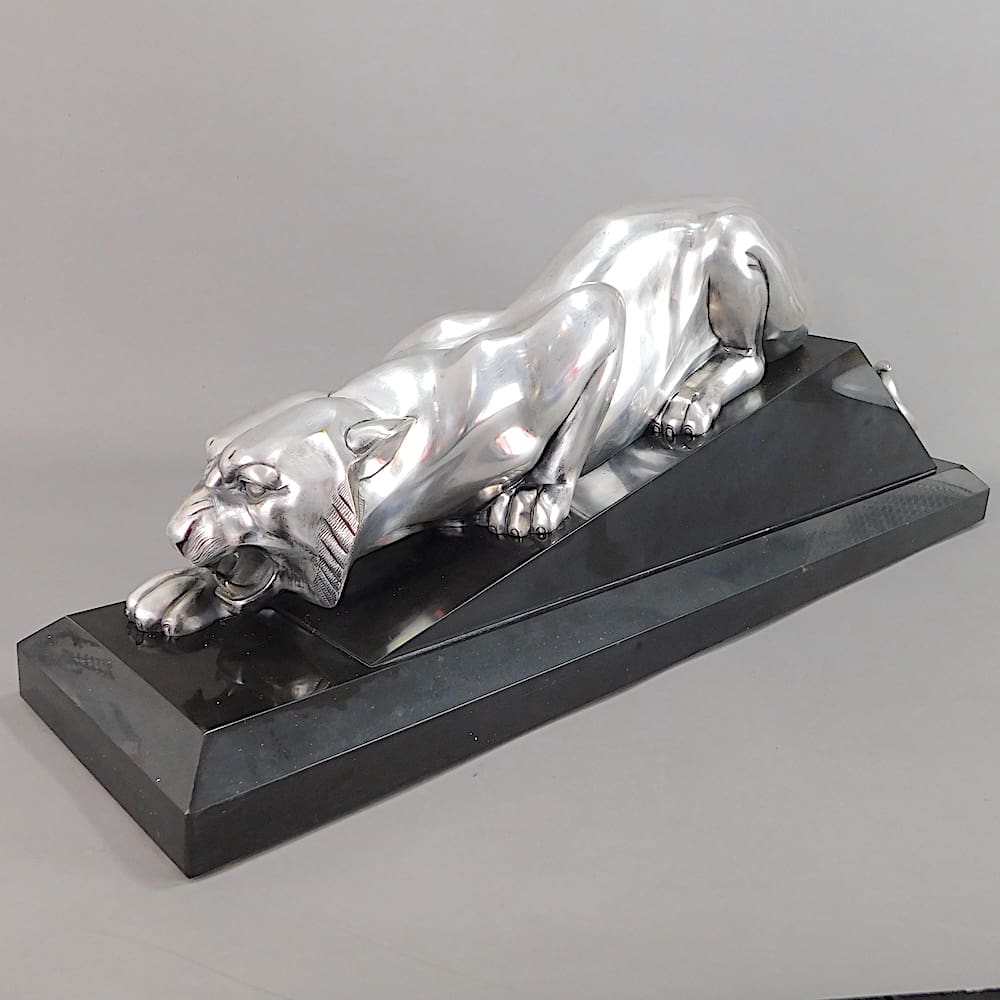
In 1982 there was an exhibition which was devoted to his work. In 1984 – George Lavroff became a member of the Republic Socialists of the Soviet Federations of Russia. He died on August the 29th 1991 at the ripe old age of 96 years! Lavroff is famous for the quality of his pieces, and his work is highly sought after by collectors world wide today. Not all Lavroff pieces are signed.
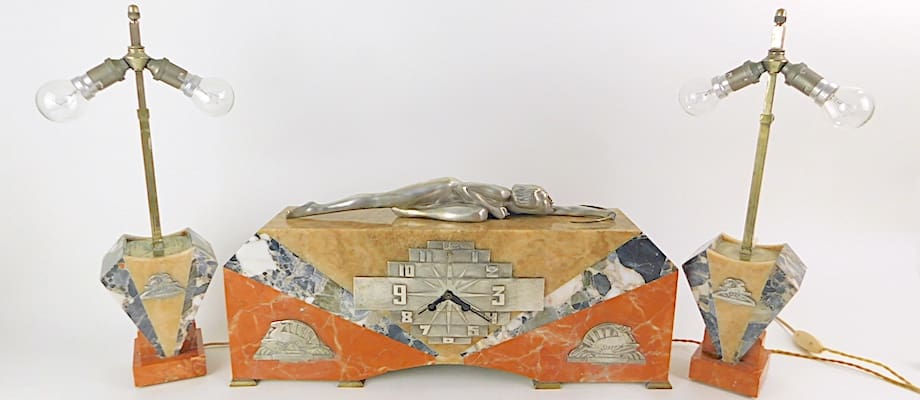
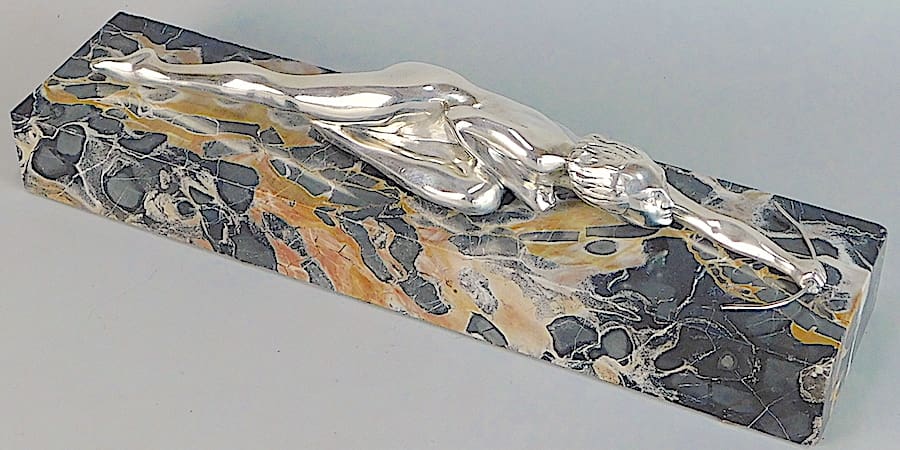
Lea Stein (b. 11 February 1936)
Lea Stein was born in Paris in 1936 and trained as an artist at a young age.
She married Fernand Steinberger in the 1950s. She was once a designer for Coco Chanel.
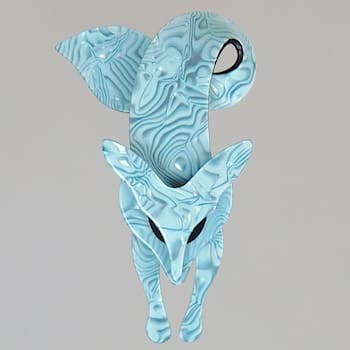
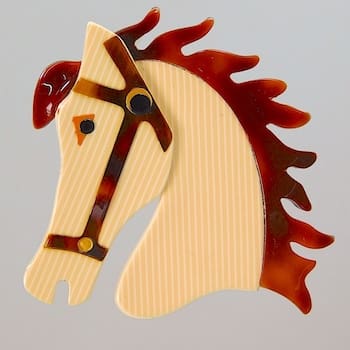
In the 1960s she left Chanel and formed her own jewellery company making unusual and original jewellery items, with the help of her Husband who was a chemist. He created the formula used to create the the laminated celluloid which her jewellery is made of.
The Lea Stein company worked in 2 different periods. Initially from 1969 to 1981 and then from 1991 until the present day. These different periods are referred to as “vintage” and “modern“.
Subjects of Lea Stein brooches vary from cars and hearts to Celebrities and animals.
Prices vary according to whether it is an vintage or modern piece, if the specific piece is still in production and its rarity.
Some of her pieces are no longer in production although she is still working today producing the more modern items. Her main focus now appears to be brooches and her earlier items such as boxes, vanity mirrors, rings, necklaces and earrings are no longer in production and rarely available.
Much more information can be found on our Lea Stein Blog post. We currently have one of the largest, if not the largest collections of Lea Stein items available for purchase.



Lemoine, Jean
French Art Deco sculptural artist. He used several pseudonyms including Lemo and Melo, and Le Jan (which he used on his ceramic pieces) and Janle, Janli and he also his full name Jean Lemoine.
He designed many statues produced by the Le Verrier foundry including the Don Quixote and his side kick Sancho Panza bookends and Bacchanale which are actually signed Janle. He created the statue and sold it to the Le Verrier foundry.
Many statues by Lemoine were created by the Le Verrier foundry.
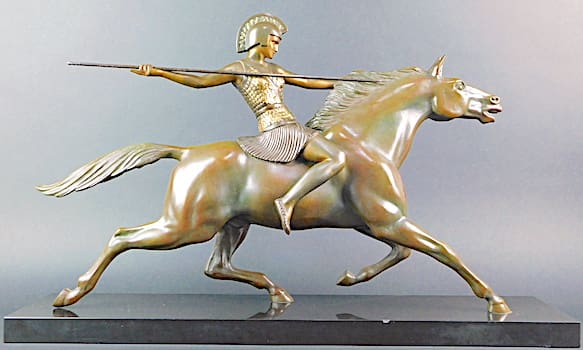
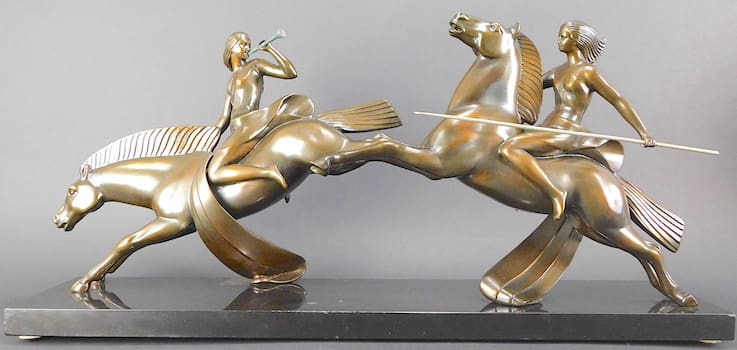
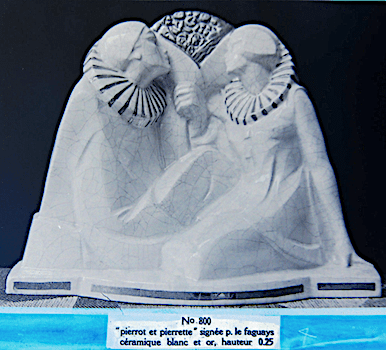
Le Faguays, Pierre (1892 – 1962)
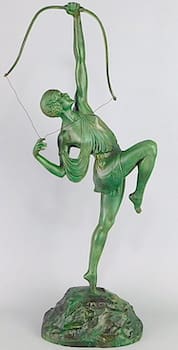
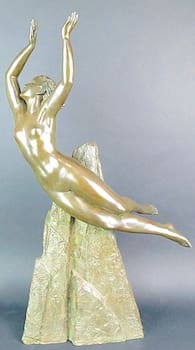
Pierre Le Faguays was born in Nantes, France and became famous for the originality he gave his dancers, many of which were inspired by the statues of Tanager and sports and theatrical dancers.
A genius for the depiction of movement in his statues, he gained a medal of honour for his work in 1927.
He used 2 pseudonyms as well as his own name and they were Fayral on his art metal pieces and Pierre Laurel on some of his bronze pieces, named after his mother Laure. Fayral was a family name, his wife was Raymonde Guerbe and many of her non bronze items were also produced by the Le Verrier foundry including the Espana lamp, Reverie and Automne.
Le Faguays was a leading sculptor and his work is frequently praised for its high quality and attention to anatomical accuracy. He also produced designs for Goldscheider in Paris under the ‘La Stele’ label. He worked in several mediums including ivory, bronze, spelter, stone, wood, alabaster and ceramics.
He studied with his friend Max Le Verrier and was a good friend of both Marcel Bouraine and Max Le Verrier and indeed the Le Verrier foundry produced many of the Le Faguays statues in art metal. All three had studied together at the Beaux Arts in Geneva and remained life-long friends. He and his wife were such good friends with Max and Geanne Le Verrier that they are all laid to rest side by side in a cemetery in Paris.
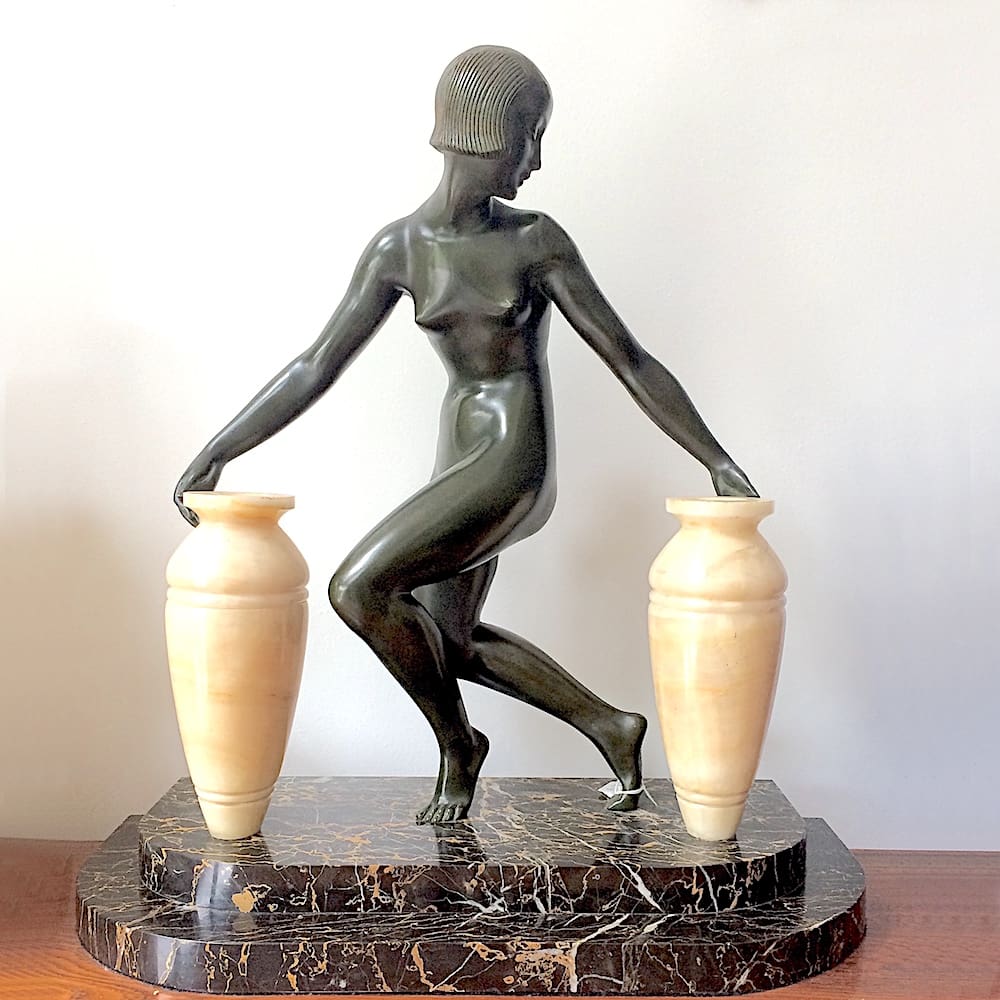
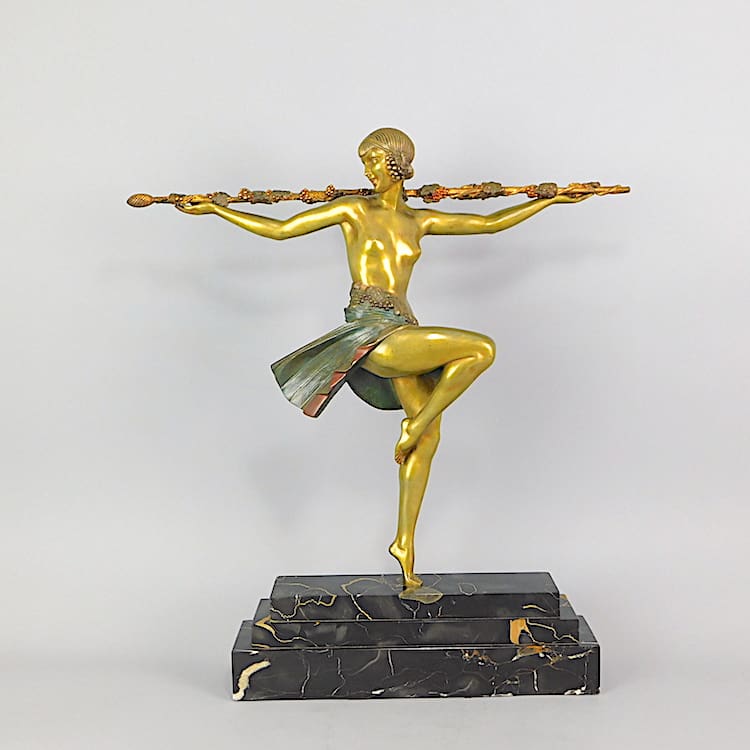
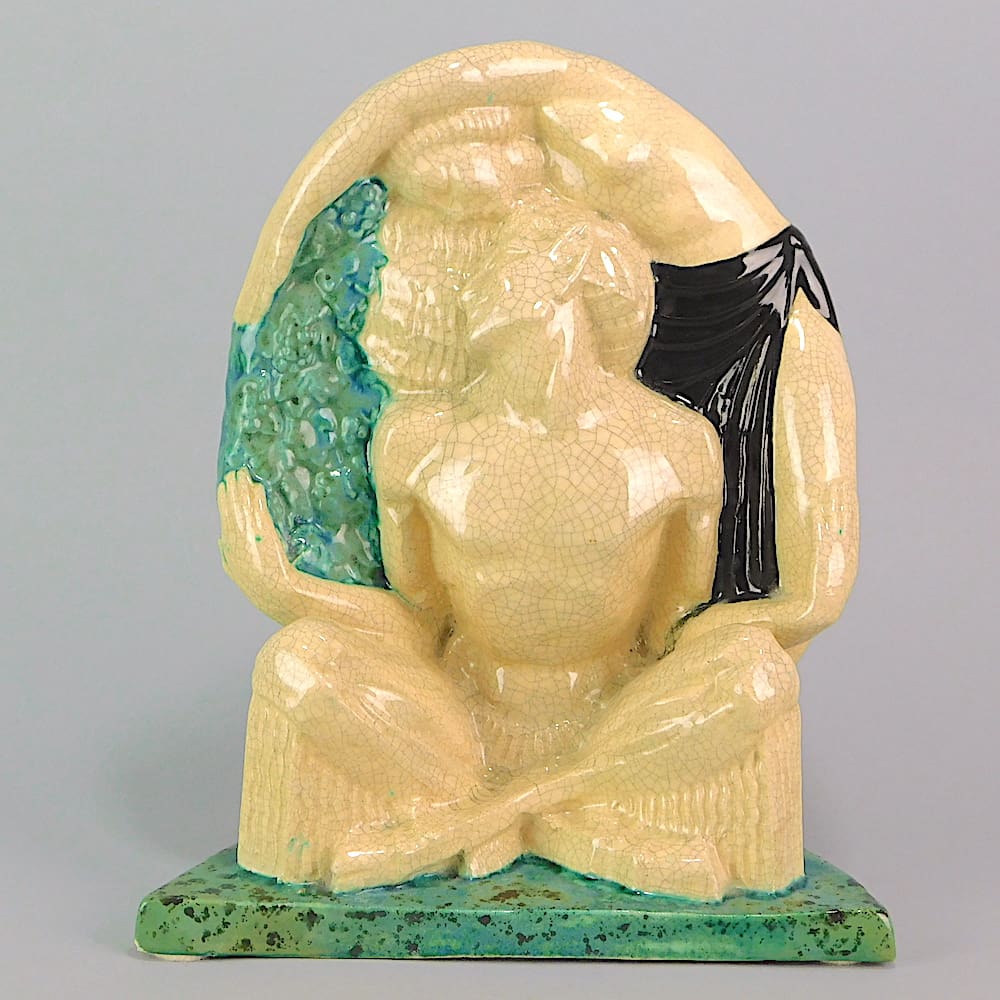
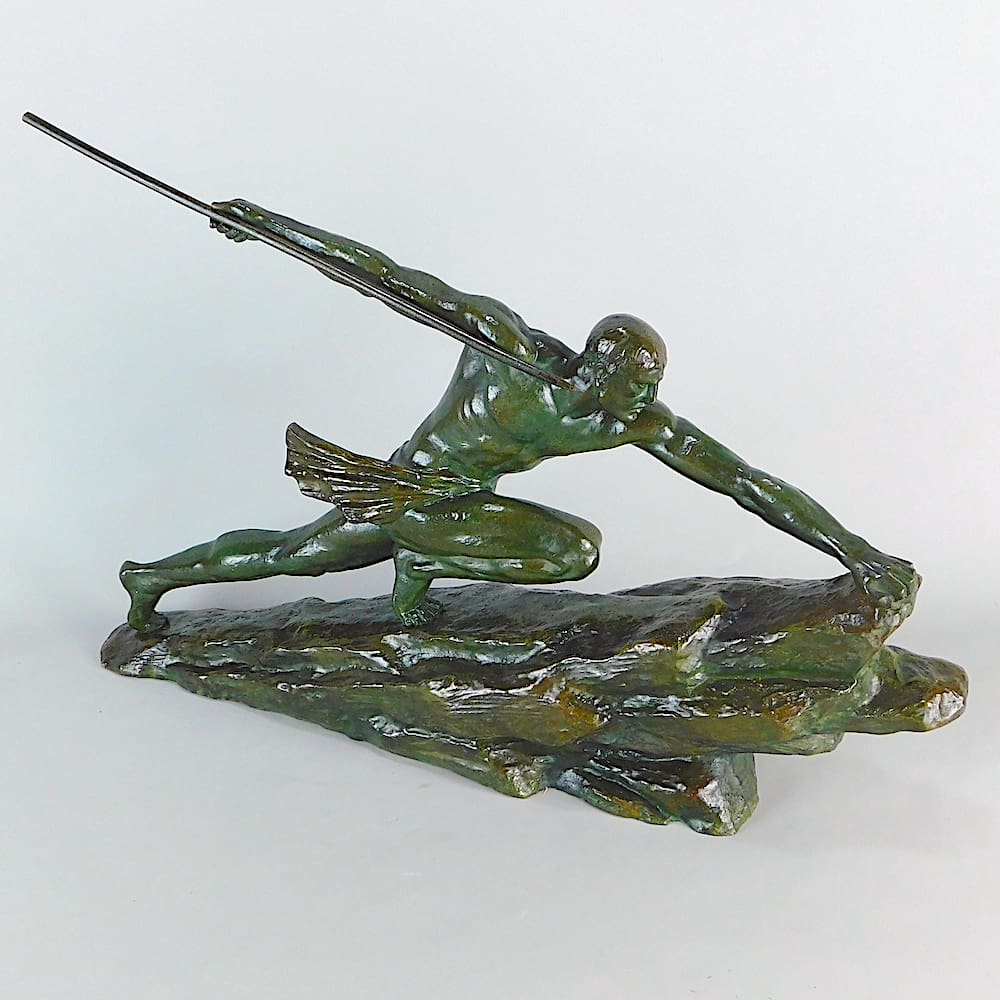
I have been lucky to have purchased the original transfer of ownership documents of the popular figural items – Amazone Aux Javelot, Olympie, Antiope, Jeanesse, Lysis, Message of Love, Verite, Trophee and many others from Le Faguays to Max Le Verrier, all documents signed in ink by Le Faguays and Le Verrier.
Lehmann, Les Neveux de J. Lehmann
A bronze foundry run by two brothers, Jules and Hugo Levy in Paris. Very active in the 1920s and 1930s, the company produced items by Gennarelli, Kelety, Pina and Le Faguays, exhibiting at many of the Paris Salons and exhibitions during this time.
Sadly their father was killed in a concentration camp during the Second World War.
Le Verrier, Max (1891 – 1973)
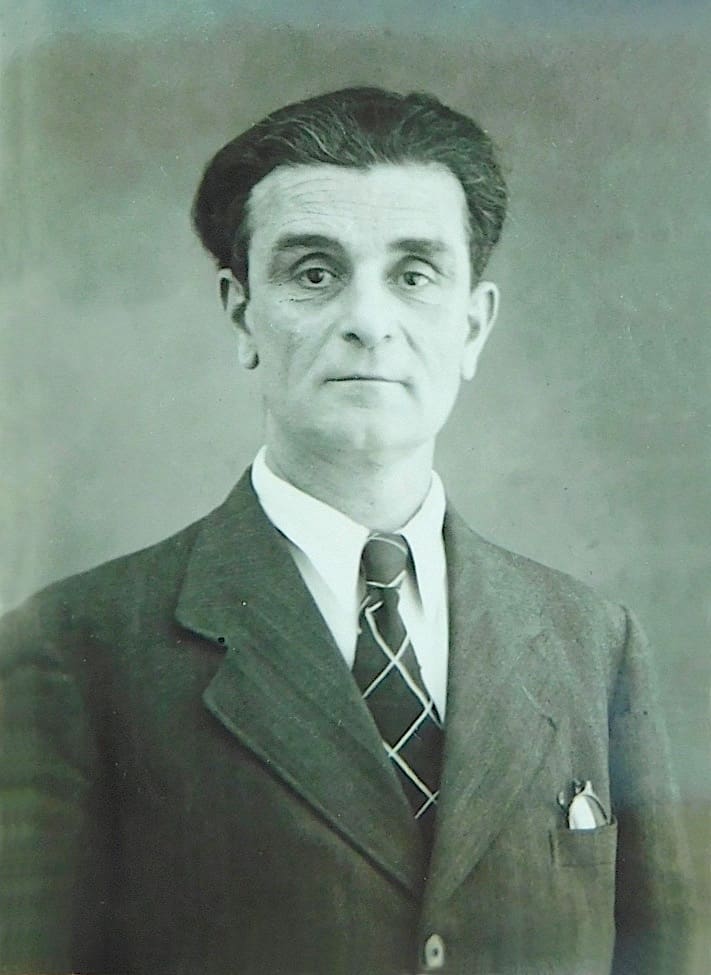
Louis Octave Maxime LE VERRIER was born in Neuilly sur Seine on January 29, 1891. His mother was Belgian and his father was a Parisian goldsmith and jeweller in Paris. They divorced when he was 7 years old. Max attended several boarding schools (College de Verneuil sur Avre) and was a brilliant student.
He was interested in drawing and sculpture from a young age and he practiced talents on wooden rulers, which he turned into little houses, churches, and other small items. His father thought that his future lay in farming, therefore he sent Max to study agriculture (St Sever and La Reole) against Max’s wishes.
Max kept alive his liking for sculpture during his spare time. His Father disowned him and Max was left to fend for himself. At the age of 16, he returned to Paris and did odd jobs to escape farm-work and to provide for himself. In 1909 when he was 18, he left for England. As a foreigner, it was very difficult for him to find a job in London but he refused to go back to France and admit defeat, he lived a poor existence.
He met a Frenchman named Jameson who bought a plane on credit, and together they opened an aviation school. Max worked on the planes for him and learned to fly and gained his pilots license in 1913.
He was then called up for military service as a pilot.
On May 25th 1915, he was shot down by two German fighter planes during an air battle. His fighter was riddled with bullets, and his engineer was killed behind him. Fortunately, he was not hurt but managed to land behind the enemy lines and was classified as ‘missing in action’. He received the Military Medal posthumously and the Croix de Guerre 1914 – 1918.
Max was sent to a prisoner of war camp in Munster, in Westphalia (German region), where he stayed for 3 years. As he was a pilot and non-commissioned officer, he was not forced to work, and he asked for tools and modelling clay and began sculpting seriously. He made friends with other artists in the camp, such as Bardin, a wood carver. He portrayed friends, and created a statuette of a Russian. From time to time the professional and amateur artists of the camp held an art exhibition.
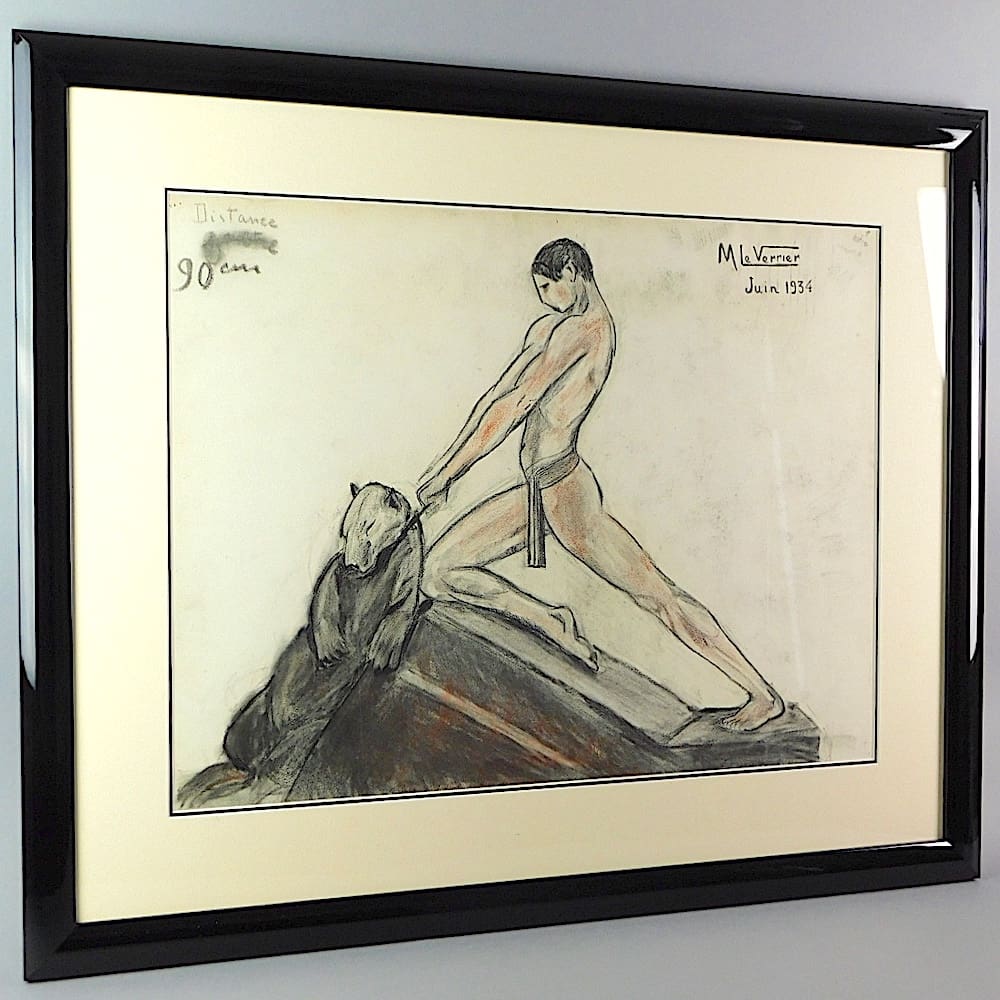
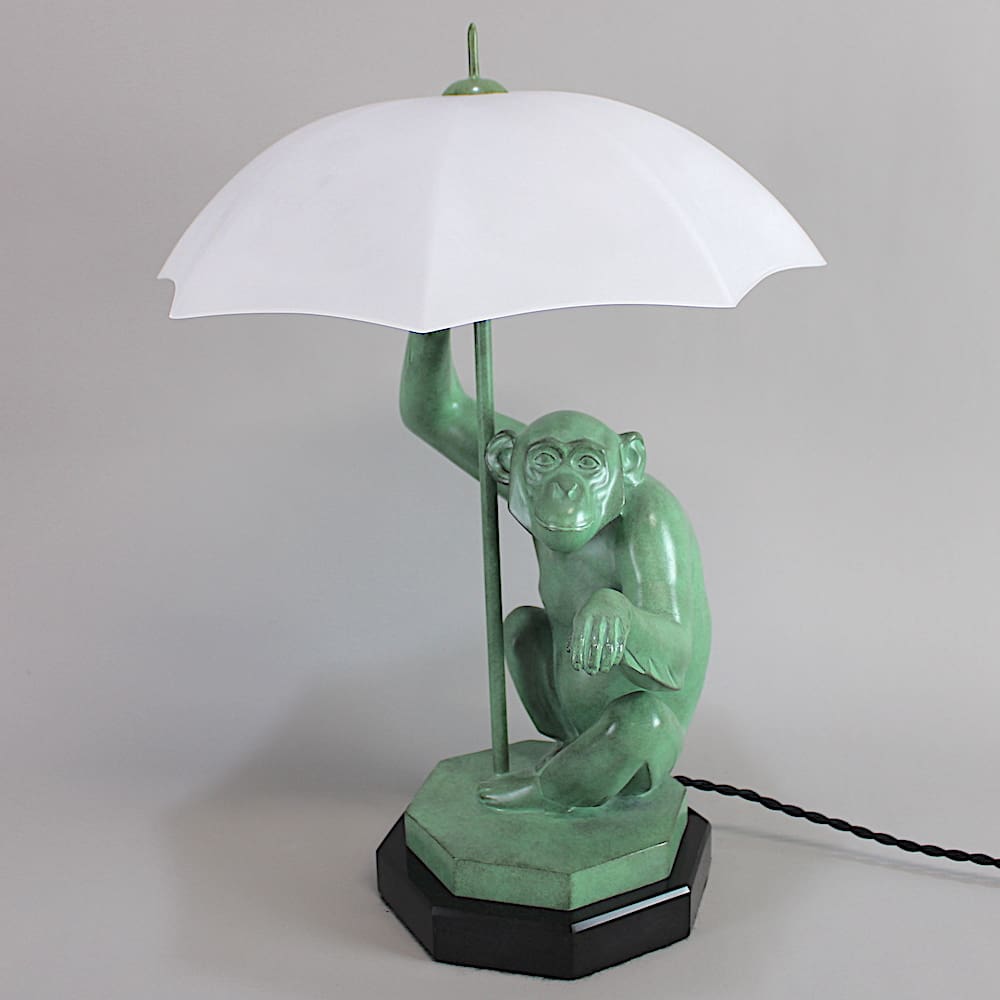
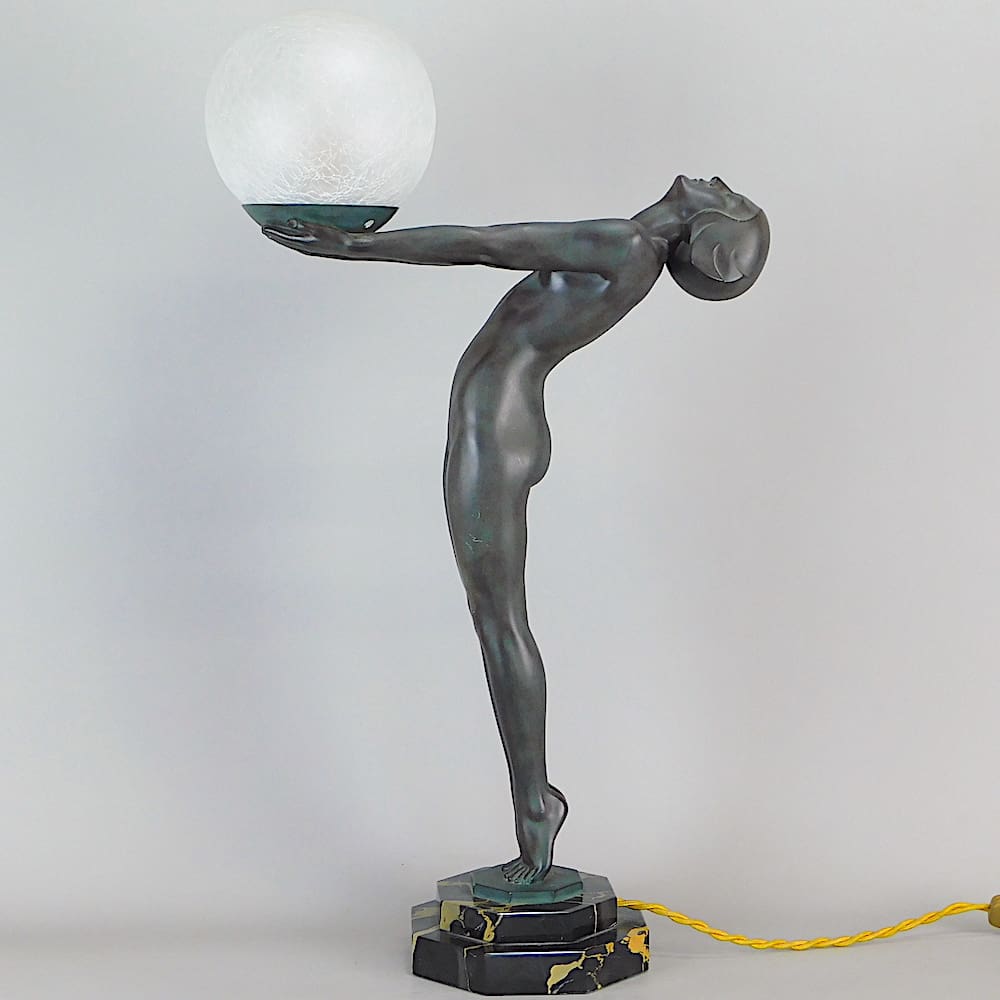
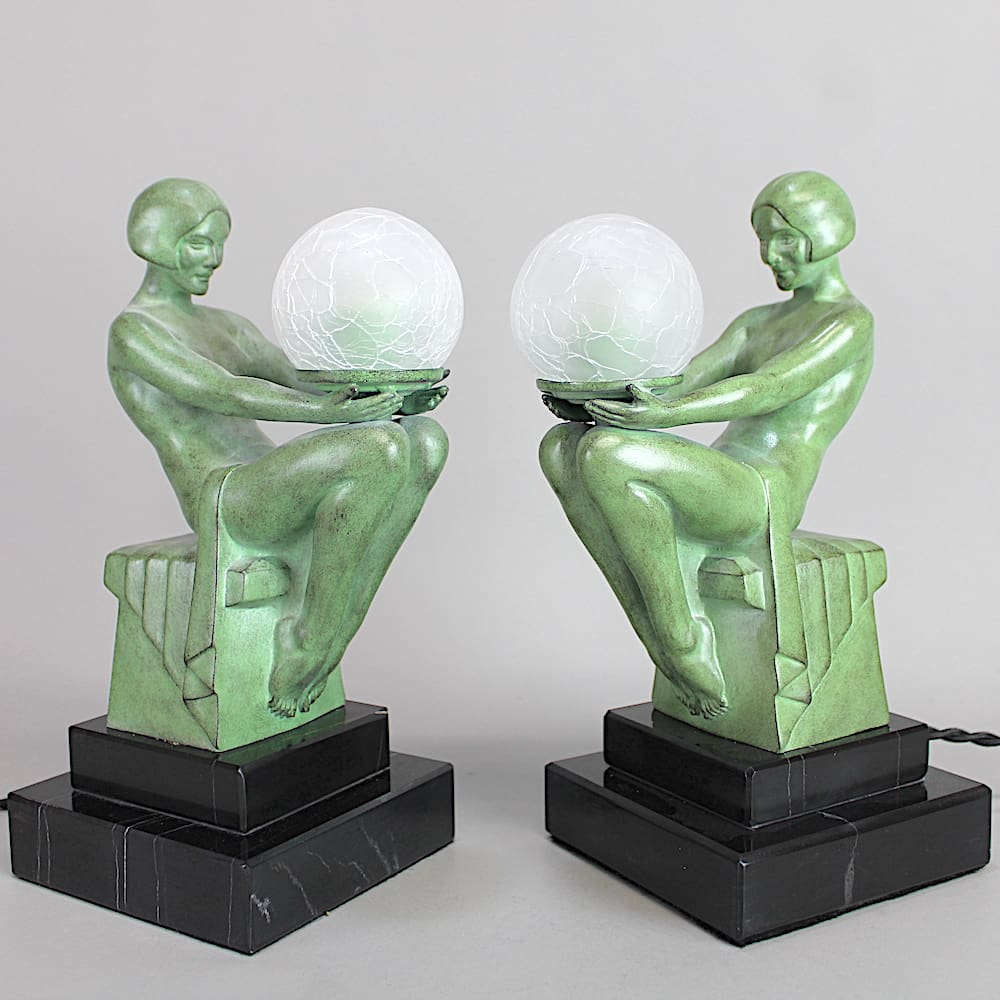
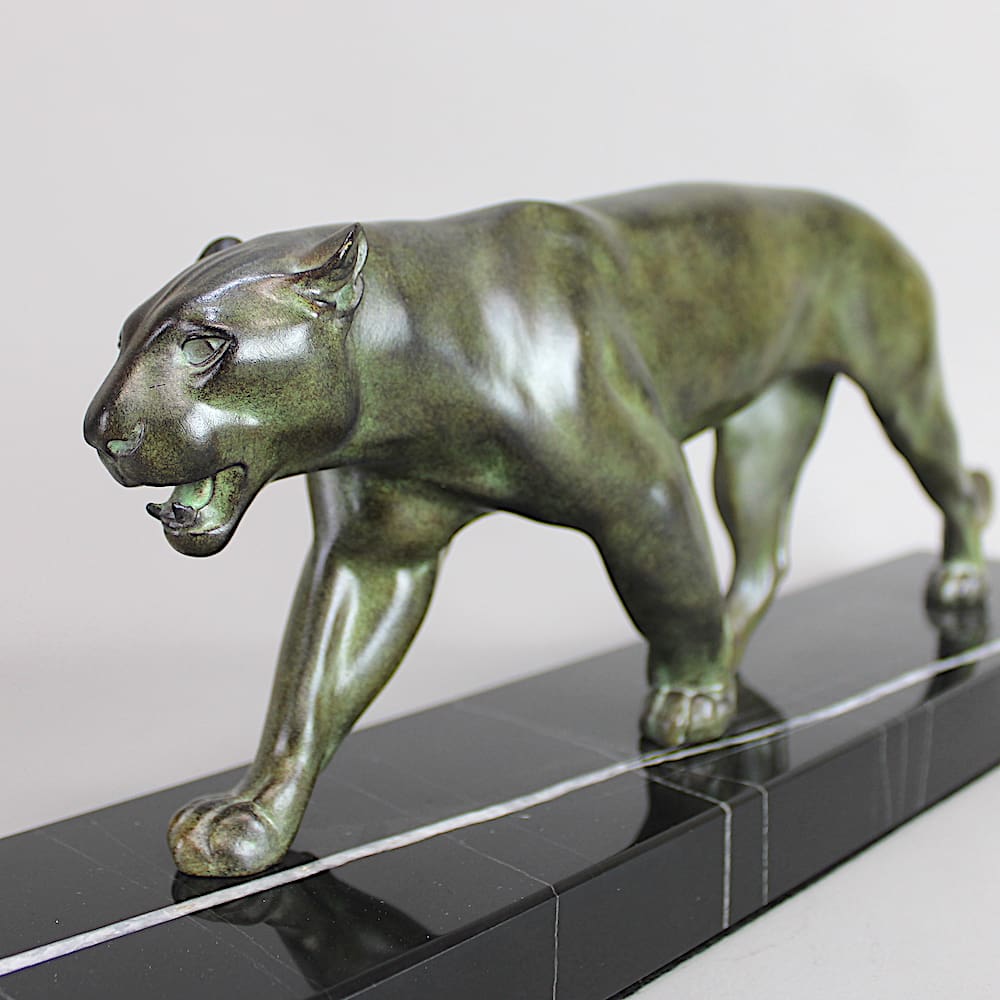
After serving in the war he studied at the Beaux Arts in Geneva furthering his talent for art work and sculpture. He studied along side the now famous sculptors Pierre Le Faguays and Marcel Bouraine who became his life long friends. He was later to produce many pieces for them at his Atelier in Paris, which he opened in 1919. Here he produced his very first commercial sculpture ‘The Pelican’ which was to be the first of many wonderful pieces of his vast and very versatile collection of statues. His foundry also produced the works of other artists like Fayral and Guerbe (pseudonyms used by Le Faguays), Le Faguays, Derenne and Briand (pseudonyms used by Bouraine), Bouraine, Masson, Charles, Becquerel, Janle, Denis, De Marco, Garcia.
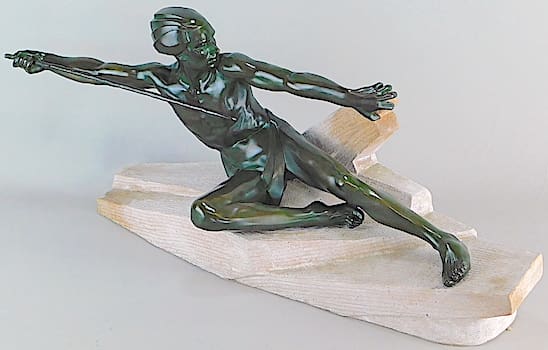
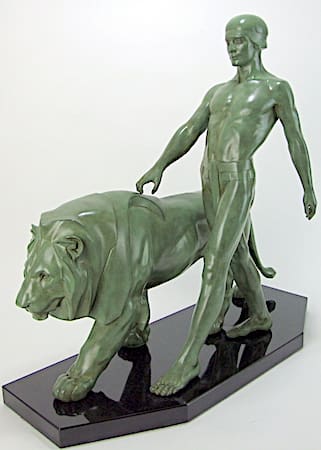
Max Le Verrier appears to have been very particular who he would produce pieces for and their standard of work had to be as high as his own, as all of the Le Verrier foundry items are of exceptional quality and bear a similar stylisation. Statues were produced in different forms and sizes. For example the large ‘Group Atalante’ by Demarco was produced in a large and a smaller version both had a lady and a leaping gazelle on the base. The same De Marco lady was produced on her own without the gazelle, in a large and small size and it was called ‘Atalante’.
Many of the statues were produced in two different sizes. Often the same subject would be produced as both a statue and as a lamp. His work was very versatile and showed amazing movement.
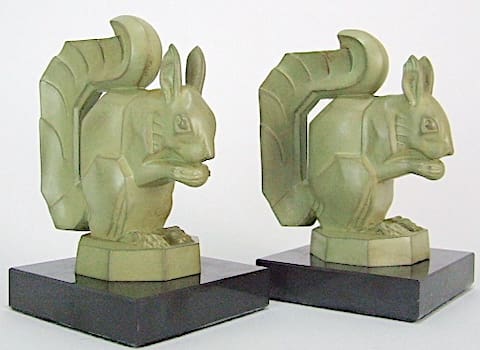
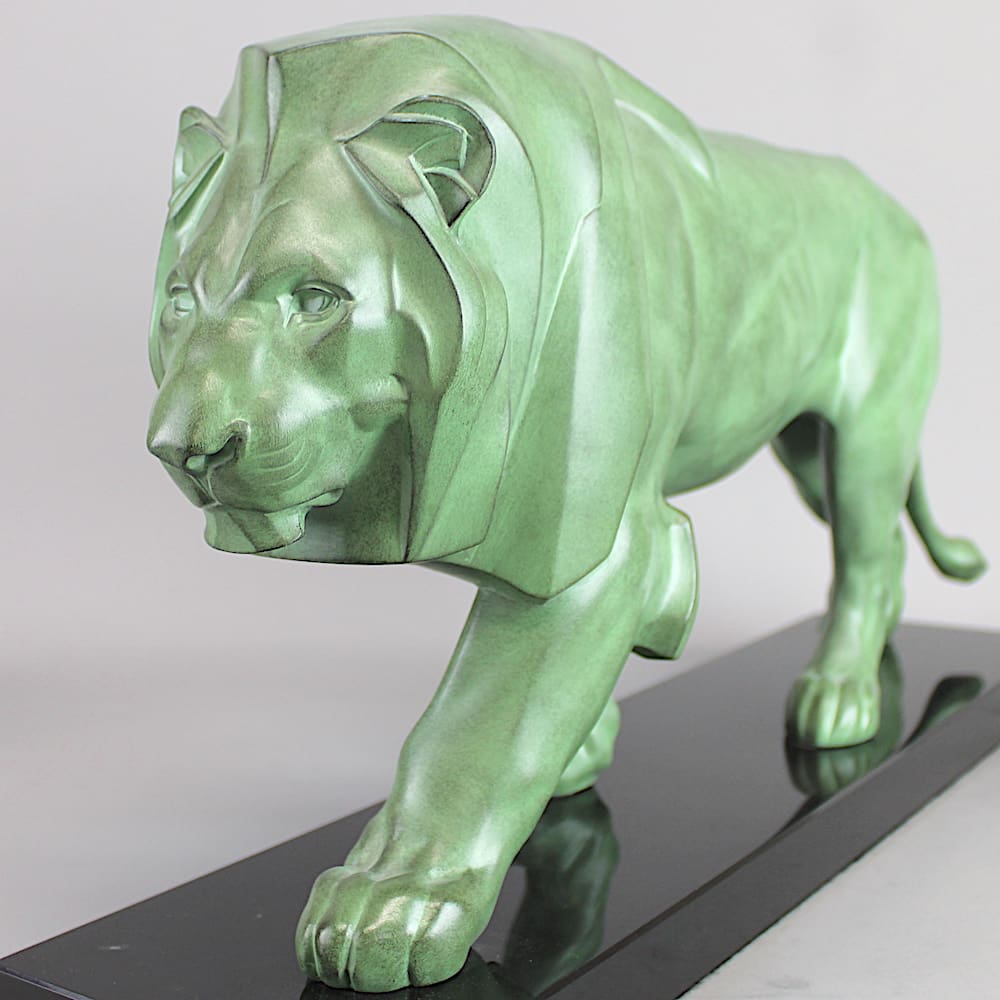
He won a gold medal from the Salon in 1925, this period was known as his animal period when he produced many lions, panthers, horses, monkeys, squirrels, hippos, dogs and birds. Most of the Le Verrier pieces were produced in the company’s secret formula metal that they called ‘art cast’. It is a grey metal often confused as bronze due to its weight and quality. The moulds were designed by Max Le Verrier himself. Some bronzes were also produced and so were some ceramic and terra-cotta pieces, each sculpture being hand finished.
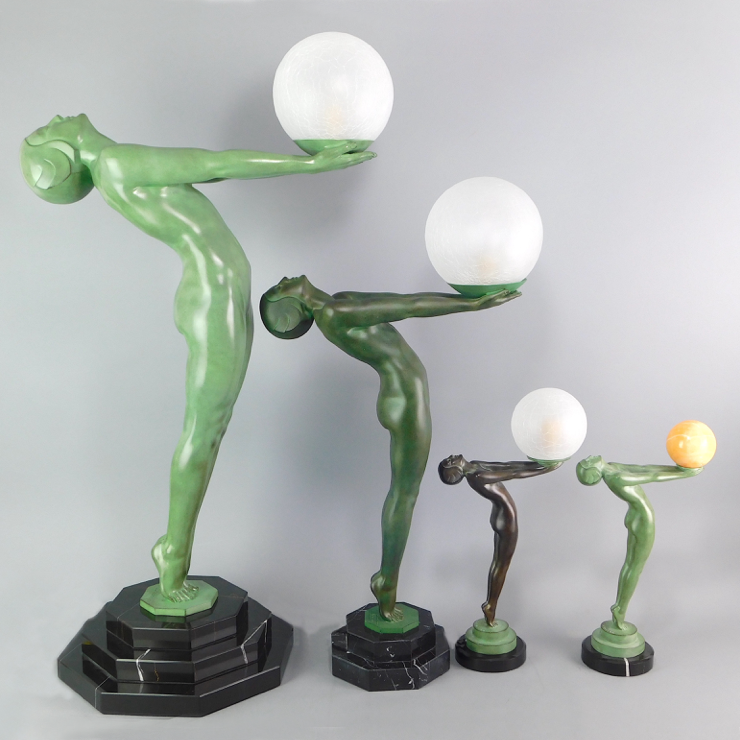
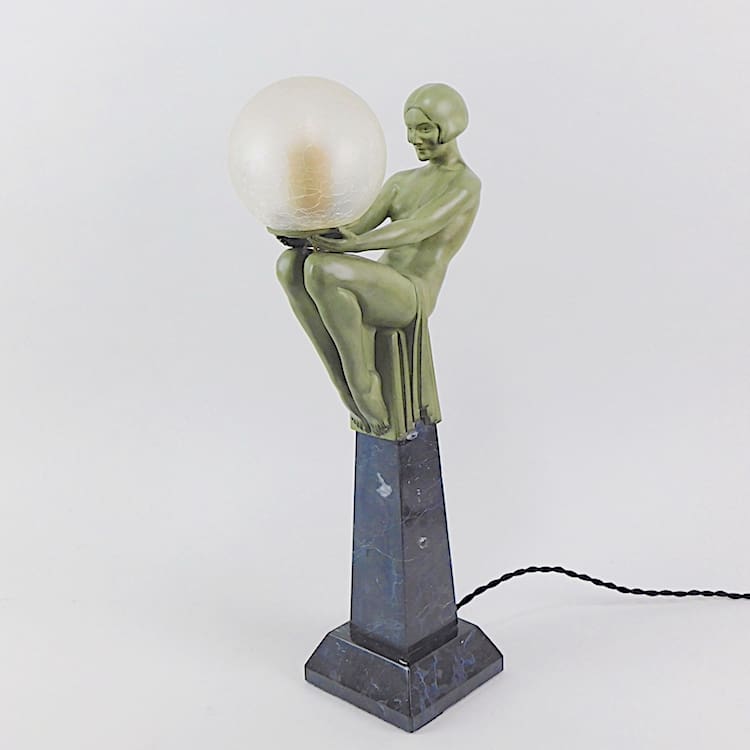
Le Verrier is in my opinion one of the best sculptors of the art deco years. Probably his most famous piece is ‘Clarte’ the nude lady lamp (produced in 1928) which came in 4 sizes – the largest being life sized – each has a different name. As is the case with many artists he may have used as many as 6 different models for each statue to produce what he saw as the perfect woman.
His foundry is famous for the production of very stylish lights, statues, busts, ashtrays, dishes, bookends, car mascots and paper weights. His pieces are of the highest quality and highly collectable, Max Le Verrier was in my opinion a genius and a top artist.
Le Verrier, Jean Paul (1922 – 1996)
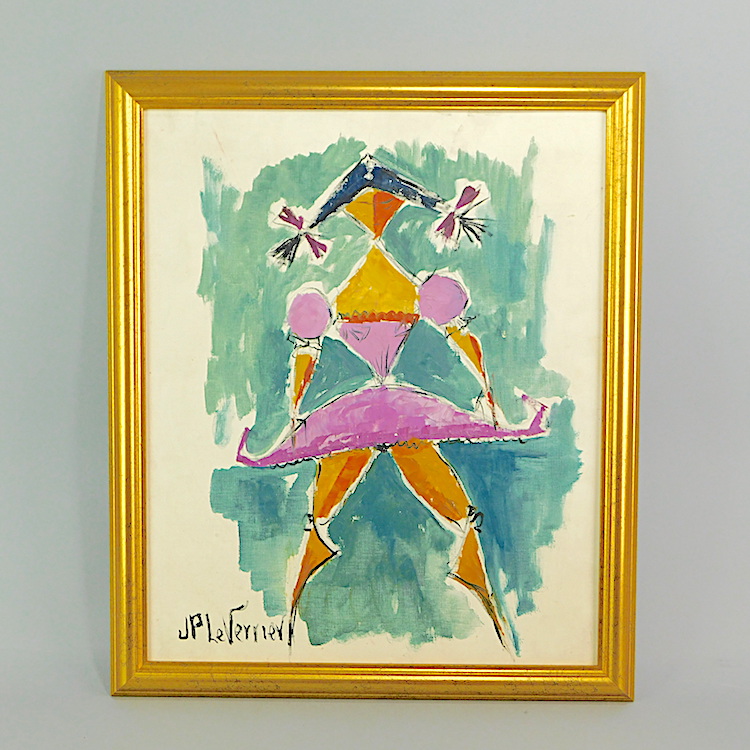
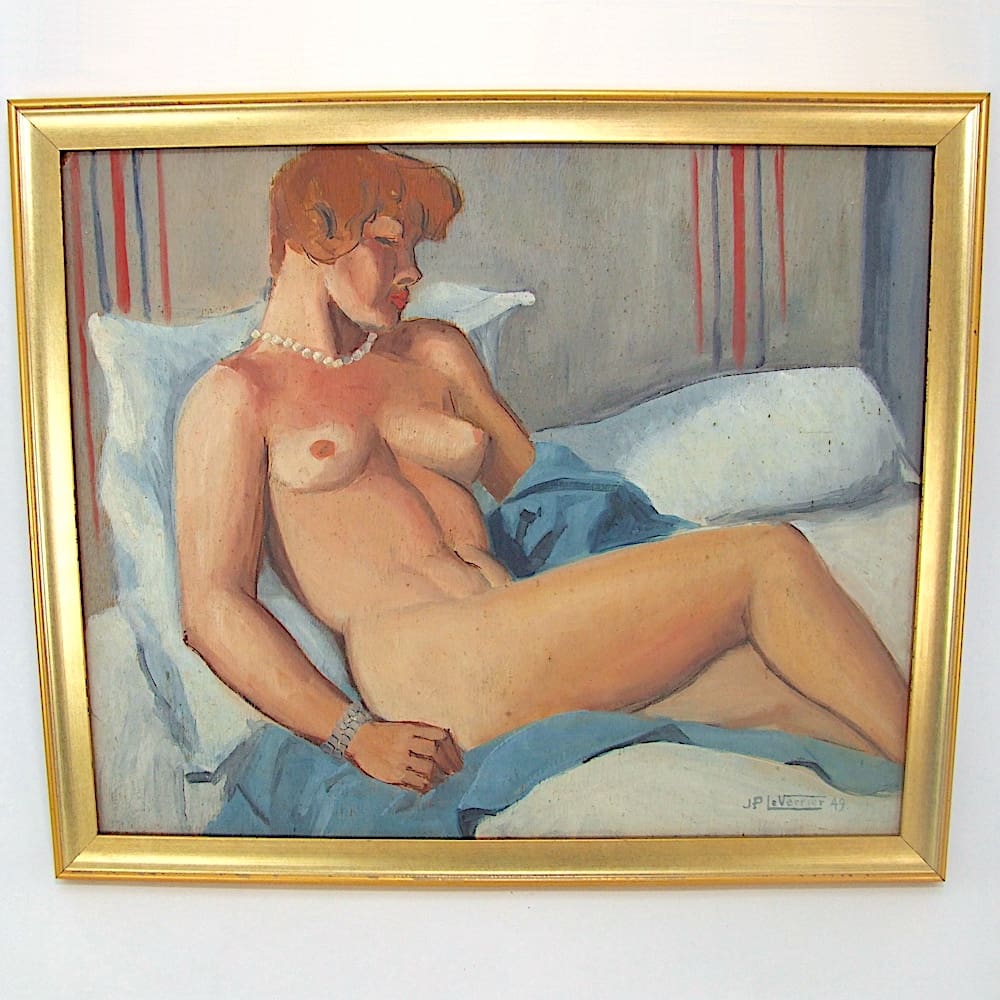
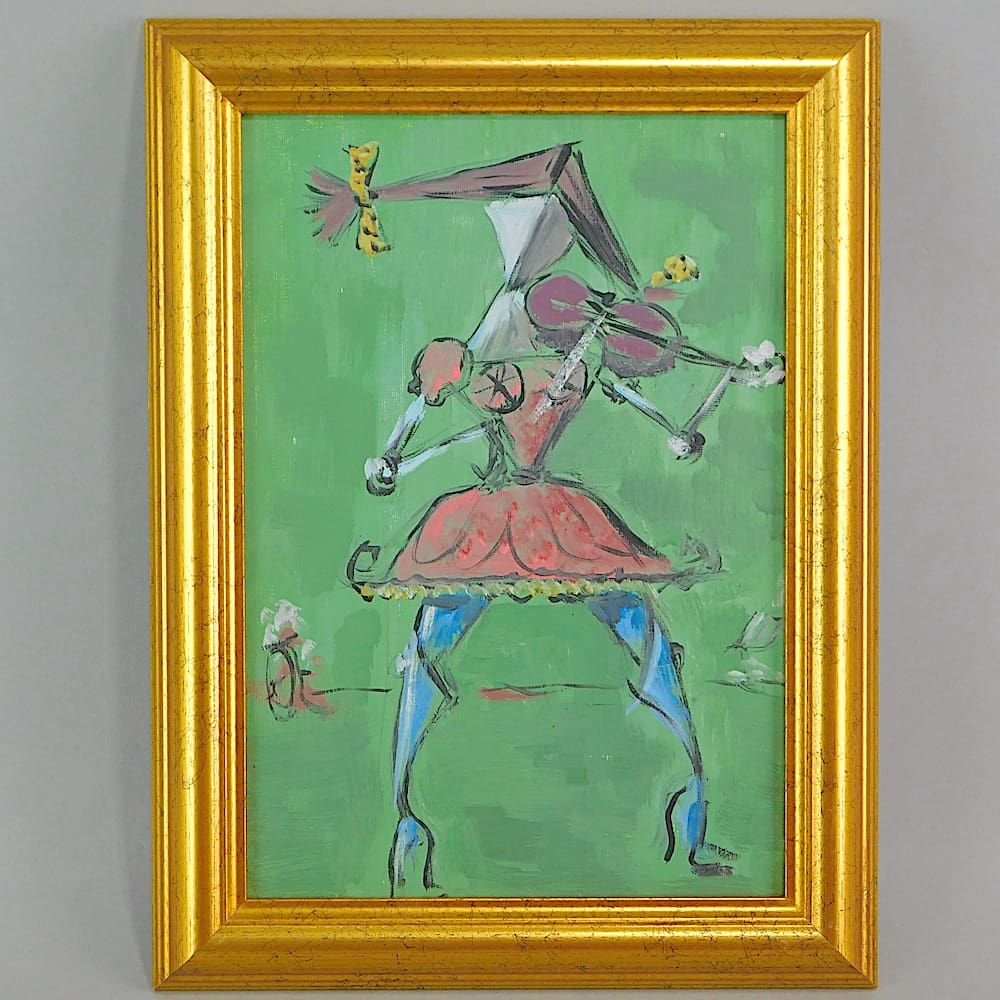
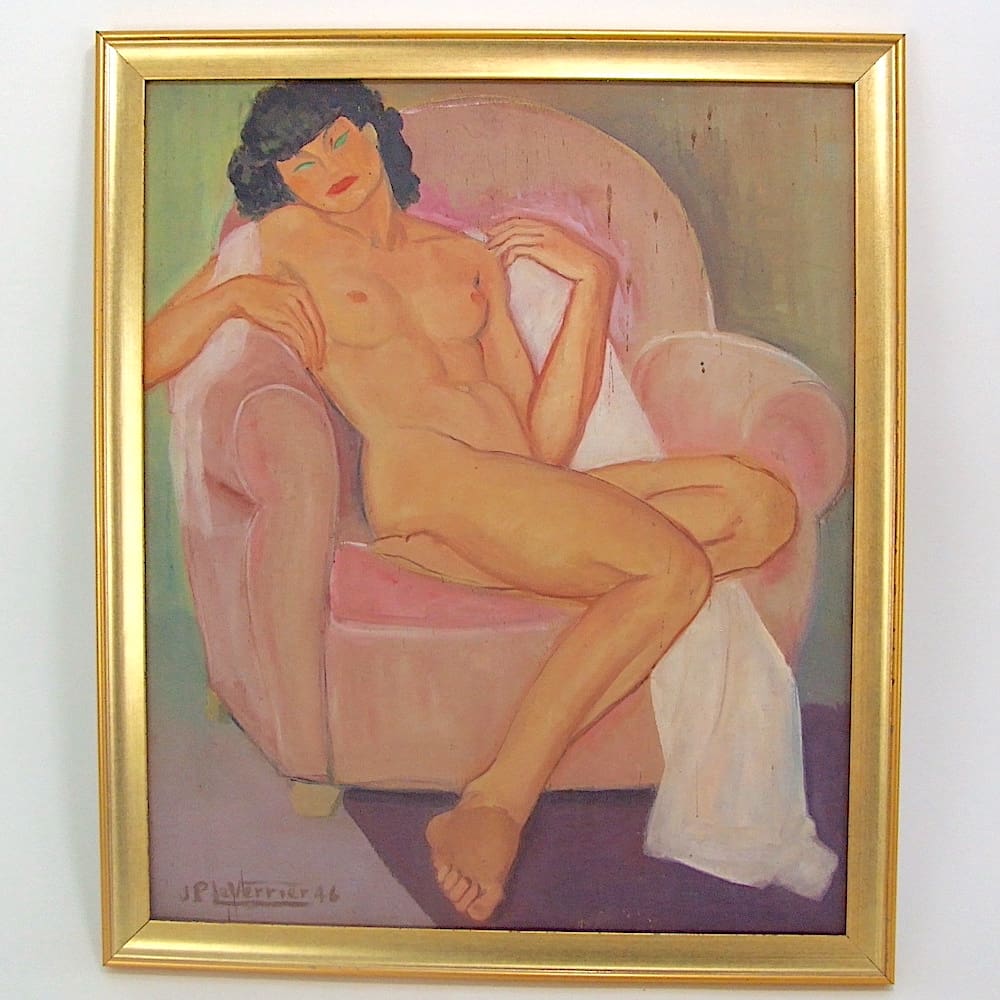
Son of Max Le Verrier. He studied drawing and sculpture at the Beaux Arts school in Toulouse from 1939 to 1943 (he received an award ‘Prix de la Peinture’ in 1943), and at the Beaux Arts School in Paris from 1945 to 1949. He was an interior designer for exhibitions and designed French pavilions for international fairs. At the same time he continued painting and sculpting.
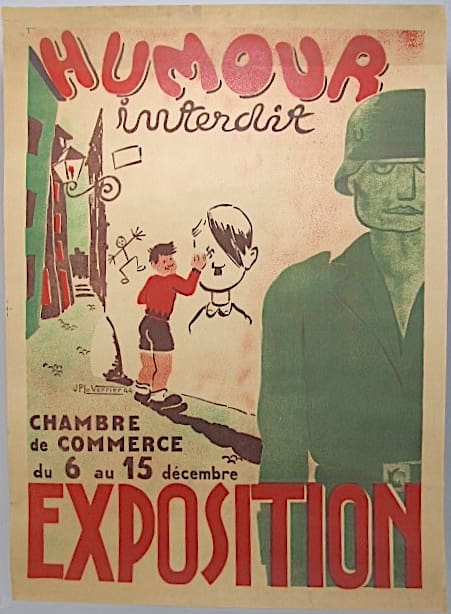
He made humorous drawings, created a lot of posters, and after his father’s death, made humorous bronze sculptures, ashtrays and book-ends.
He carried on with his fathers business after the 2nd world war and continued after Max Le Verrier’s death along with his mother Jeanne Le Verrier.
Both Max and Jean Paul were active in the Resistance during the war, Jean Paul created many propaganda posters for the movement and I have several in my collection along with a a plaster panel made by Max of Jean Paul and also an oil of Max by Jean Paul.
During his resistance work he used the pseudonym Robert Noel and assisted his father in saving countless lives from Nazi persecution.
Lenci
Lenci is an Italian (Turin-based) manufacturing company founded on the 23rd April 1919 by Enrico and Elena (Helen) König Scavini.
We understand the name Lenci came from Elena’s nickname as a child. A motto for the company was Ludus Est Nobis Constanter Industria (play is our constant work) and was also an acronym of Lenci.
Initially Lenci made high quality felt dolls which were sold worldwide. The quality of dolls would lead to great success for a time. Lenci opened a boutique in Milan in 1923 but soon noticed imitation dolls hitting the market which would lead to a downturn in sales.
It was in 1928 when Lenci began to produce ceramic items in the style of the time, Art Deco. Elena would design many of the early pieces herself before Lenci would collaborate with other artists. Artists well associated with Lenci are; Sandro Vacchetti, Felice Tosalli, Abele Jacobi and Gigi Chessa.
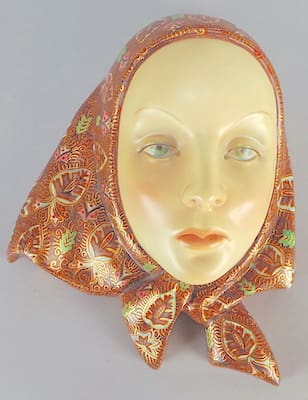
The vast majority of Lenci ceramic figurine subjects are of people, animals or a combination of both. Lenci would also produce ceramic wall masks with exceptional hand painted detail.
In 1929 Lenci displayed a large number of pieces at the Galleria Pesaro in Milan to rave reviews but unfortunately the company was badly impacted in the same year by the US stock market crash and a few years later were forced to bring in an accountant, Pilade Garella to stave off bankruptcy but ultimately the company would fall into the hands of the accountant in 1937.
Garella would rebuild the factory after it was bombed during World War 2 and new product lines (including Walt Disney) would follow.
The ceramic figures stopped being produced in 1964 but would continue making dolls until 2002 when the company would close.
Leonard, Agathon (1841 – 1923)
A Belgian artist who studied in Lille under the guidance of Eugene Delaplanche. Most of his work was in bronze and ivory in the art nouveau style. His ceramic pieces were produced by Sevres, Gionori, Sesto Florentino and Heubach in Germany. His bronze pieces were produced by Susse Freres
LEONARDI (LEONARDENE CO.)
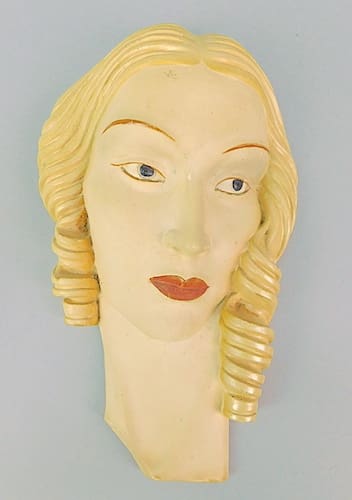
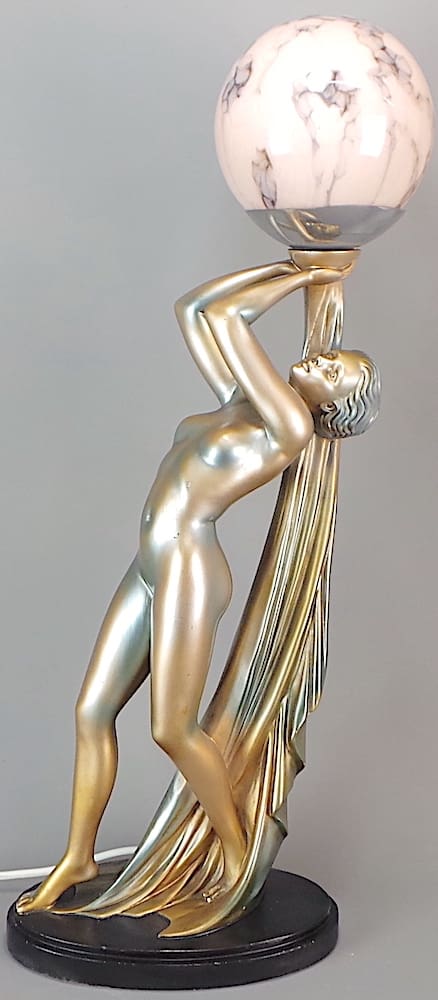
English Manufacturer of what the firms advertising department called ‘Art Models – Figures designed and modelled in England’. These items were made during the 1920’s and 30s and the owner of the Company was called Leonardi. The Company was based in Elthone Road, Holloway London. They produced a wide range of plaster Art Deco figures, which included Ladies, lady lamps, Bookends, Mirror ladies, Men, Children, Animals and wall masks.
The early lady lamps were mounted on chrome bases, and many or the same figures were put to different uses. You could often get a certain model as a figure and as a lamp. Each Leonardi item was stamped on the back of the base, usually with a registration number, model number and the distinct CL initials which are stamped on top of each other. Each model number was given a name and was available in a selection of different colours, which included Jade, Matt Rose, Pearl, Green Pearl, Metallic, Copper-Green, Green-Gold, and Silver-Blue. Other colours were obtainable by special order. These pieces were made as affordable items for the general public and today are highly sought after and very collectible.
The quality and style of the Leonardi pieces is not the usual poor quality found in your average Deco plaster figures. Even Biba during the 1970s reproduced some of the Leonardi lamps, these ones are of course not stamped.
Leune Studio Glass
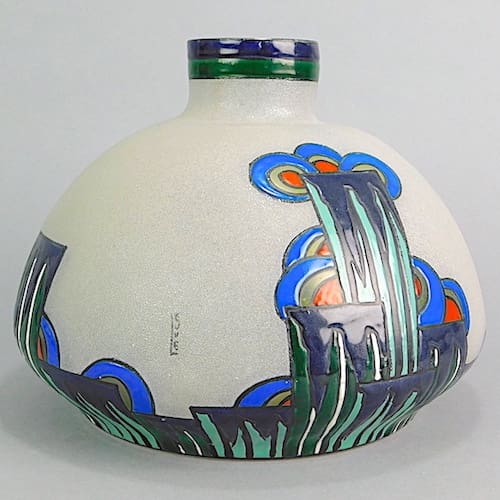
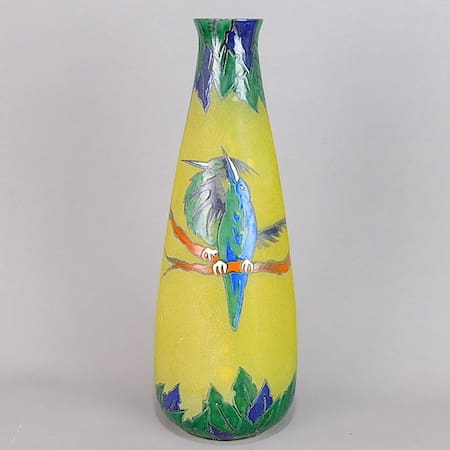
The Leune studios were situated in Paris, France and produced lots of art deco items in the 1920’s and 1930’s. The studio director was Auguste Heiligeinstein, and the glass was made by Daum in Nancy or Croismare and supplied to the Leune artisans who hand decorated them. Pieces were of the same period, style and quality as Daum, Muller, Schneider, Degue and Noverdy.
Leune
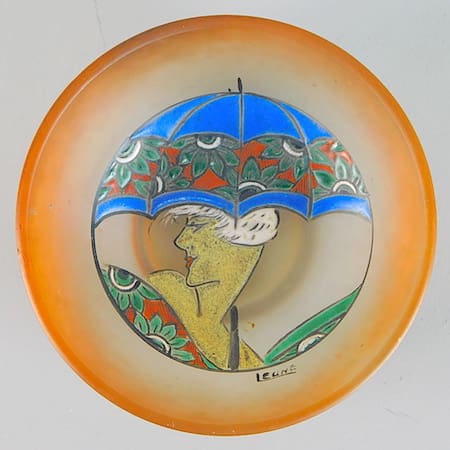
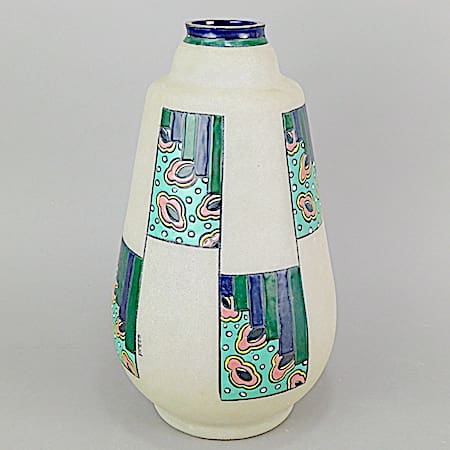
Hand painted enamel glass items.
Called the Societe des Anonyme des Etablissements, Leune’s glass factory was in Paris, France at 28 Rue du Cardinal Lemoine, established around 1900. During the 1920’s Paul Daum (brother of Jean Louis Daum) worked as the director of this company. In the years 1923-1926 they employed Auguste-Claude Heiligenstein as art designer. The company of Daum Freres & Cie, Verreries de Nancy supplied the unpainted items that were hand decorated after designs by Heiligenstein. The company closed at some time during the early 1930’s. All enamel painted items where signed with Leune. While press-moulded vases have a printed stamp. It is possible that the company also made lamps that were signed Leunox.
Levy, Jules & Hugo (brothers)
This is the Les Neveux de J. Lehman foundry in Paris, it was located at 14 Avenue de lâ Opera. They produced bronzes for – Le Faguays, Gennarelli, Kelety, Guiraude Riviere and Pina to name but a few.
Leyritz, Leon Marie de Leyritz
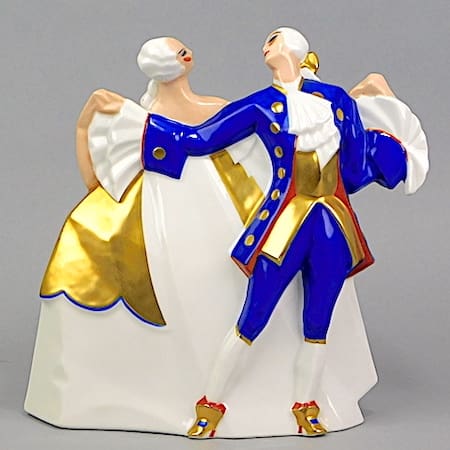
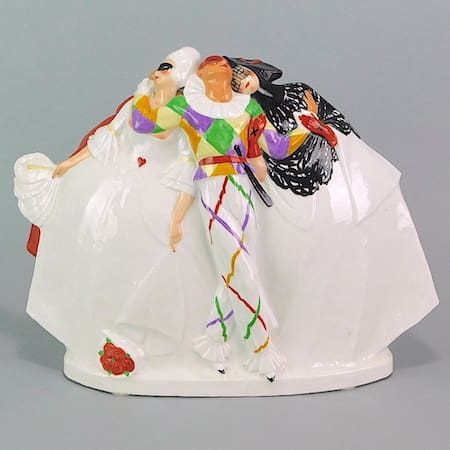
born 7th January 1888 in Paris. Versatile statuary artist worked in many materials including bronze, lead, aluminium, spelter, stone and ceramics. Studies under J P Aube and Mercie. Won Prix Chenavard in 1914.
Exhibited at the Paris Salons winning many medals and prizes between 1912 and 1931. Specialising in theatrical decor, he producing many busts and bas-reliefs of theatrical personalities and subjects.
Lindsey B (her surname is Balkwill)
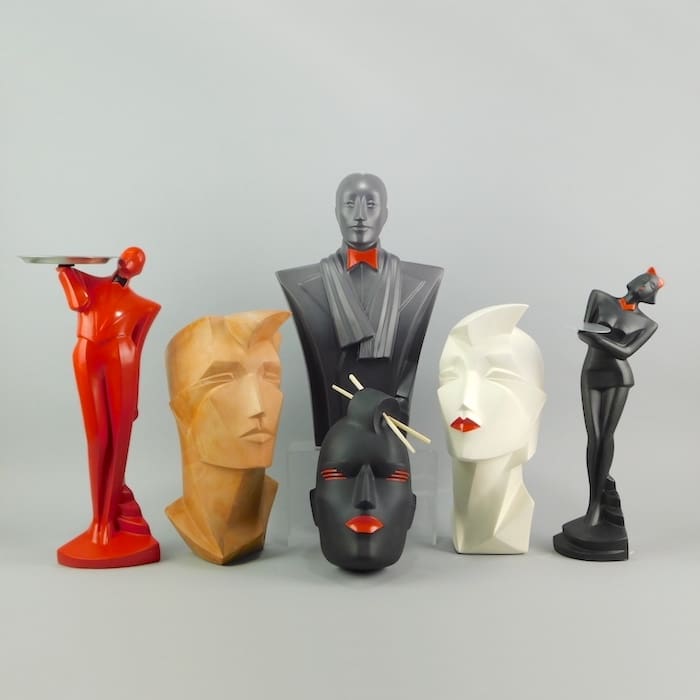
Trained in graphic design at the St Martins School of Art in London. Focusing on 3D form after a fortuitous encounter with John Taylor, who was the principal sculptor to Adel Roostein Mannequins. She was to work with John for ten year, during which time she experimented with technique and materials to evolve a style which evoked enthusiastic critical acclaim. In 1983 with the introduction of a range of decorative ceramic, plaster and resin sculpture, the company of Lindsey B was formed.
The collection was first shown in London and New York, and subsequently exhibited in major cities across Europe and America. Lindsey B reproductions were distributed throughout the world. Alongside her decorative work, Lindsey also developed a line of ornamental figures for use in commercial interiors and display. She also undertook specialised projects in creative advertising and the moving picture and theatrical industries. All originals were sculpted by Lindsey B at her Fulham Studios and decorative finishes were created in collaboration with her design team.
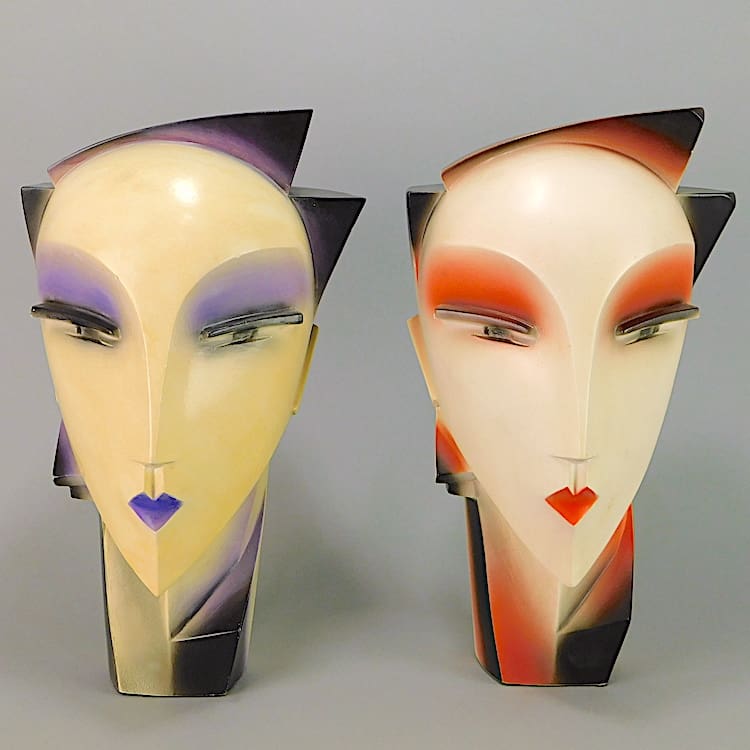
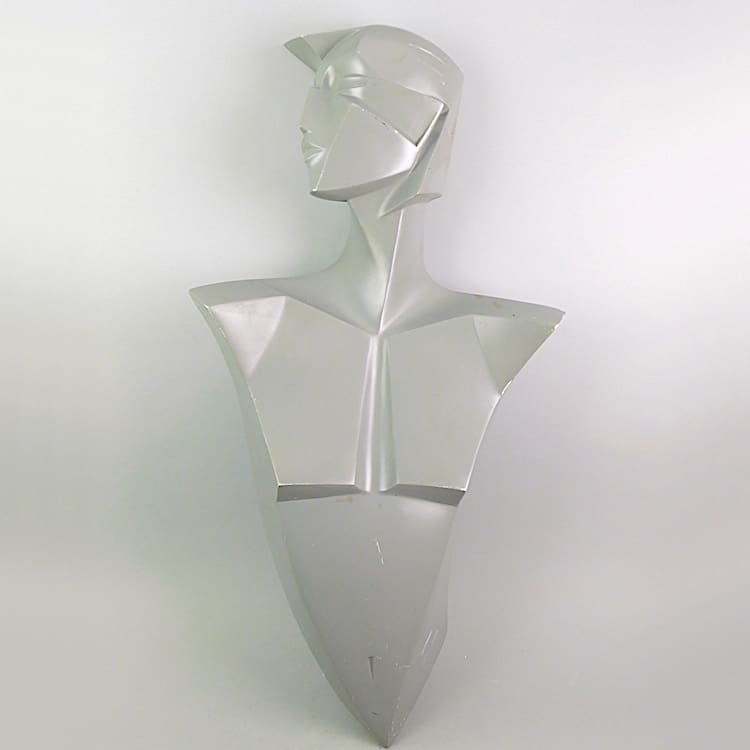
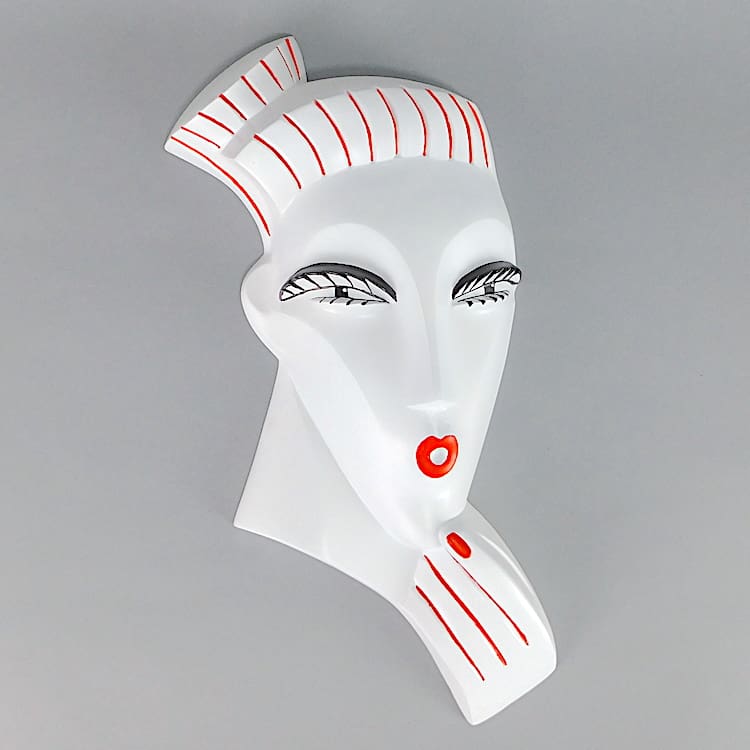
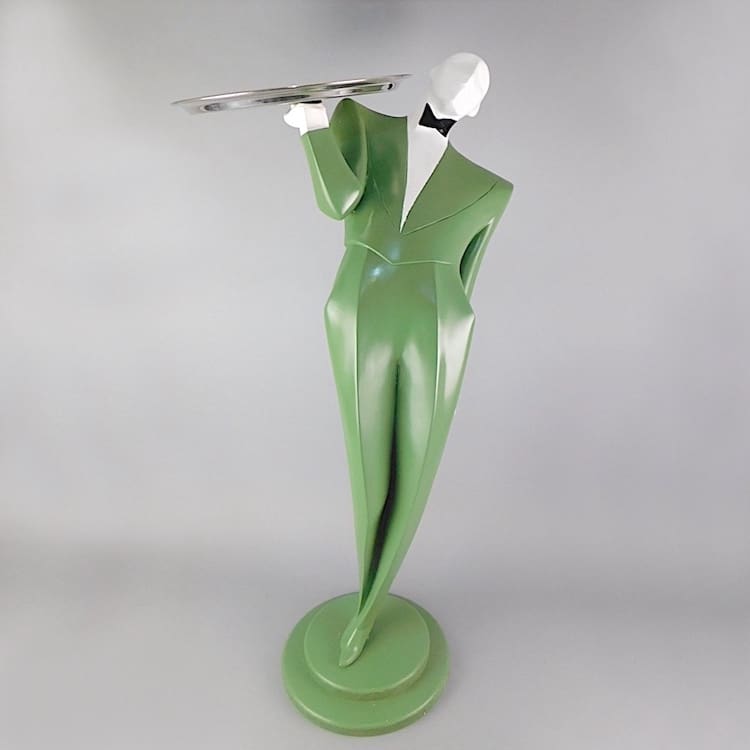
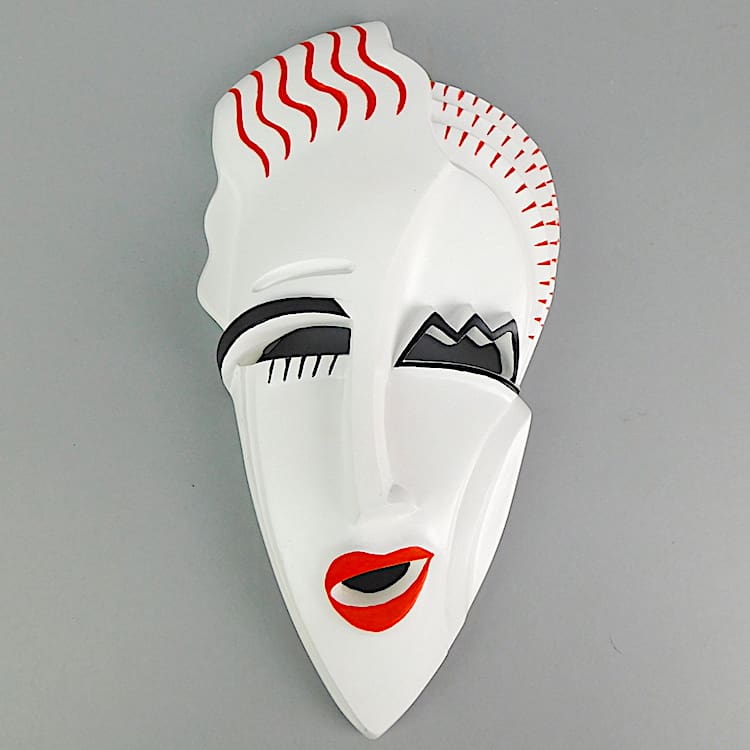
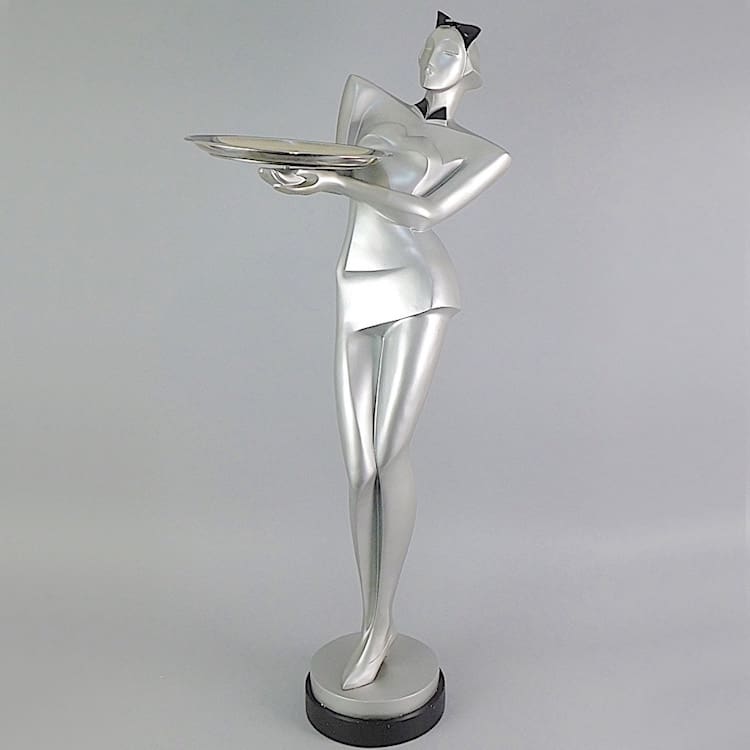
Each Lindsey B piece was individually hand-made and usually signed in the mould. Although the signature is not always easily visible as it is sometimes under the glaze. She made busts, wall plaques, candle sets, vases and other decorative items. Including a life size Garconne (waiter) and Agatha (Waitress) – which are now extremely rare – probably due to their fragility and price. Sculptures include such pieces as:- Ruby, Peking, Rick and Rachel, Luba, Brian, Brunnhilde, Blackpool girls, 3 different sizes of Garcon, Bud, Bonnie, Ted, Agatha, Mantis, Lillah, Tex, Pearl, Irmgard, Flick and Wick, and Rio. Brunnhilde was a bust bust made especially for optical stores – having deep high cheek bones for displaying glasses on.
The early Lindsey B pieces were made from 1984 before ceasing production in 1987 disillusioned with copies of her sculptures by other companies hitting the market. She carried on creating mannequins for other companies and creating other prototypes which did not go into production and is still working today. Her items are extremely collectible today and highly sought after across the world however there are many reproduction pieces on the market. In early 2020 we purchased all remaining stock directly from Lindsey B including many unique designs and prototypes.
Lipchitz, Marcelle (b. 1891)
Born 1891, lived in France and exhibited there. Moved to USA in 1941.
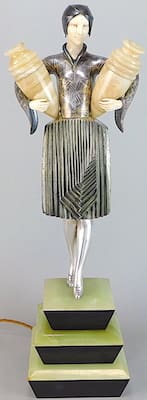
LIPCHYTZ, Samuel (Born Salomon Lipszyc) (1880 – 1943)
Born in the Polish provinces of Imperial Russia. He travelled to Berlin and then to Paris to practice his art. He lived in La Ruche the famous artists studio in Montparnasse, where all the vibrant artists of the time hung out.
His brother Morice also became a very famous artist and his name was modified to Lipsi.
Both brothers worked in ivory and in bronze, but Samuel also produced items made of marble and wood.
He was also a furniture maker who inlaid ivory crustaceans into his work.
In 1943 the French police handed him to the Nazis who sent him to Auschwitz where he died.
Lypchytz, Jacques (1981 – 1973)
Born in Druskieniki in 1891, lived in France until 1941 when he fled the country and moved to the USA where he was a very successful sculptor whose genre was predominantly Cubism. Died in Capri, Italy in 1973.
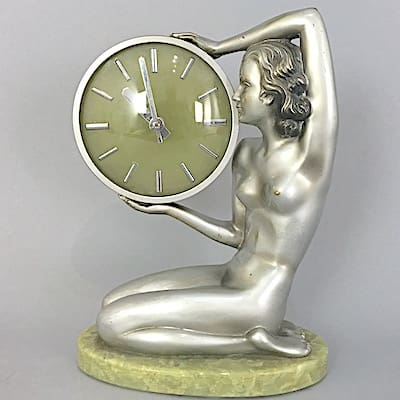
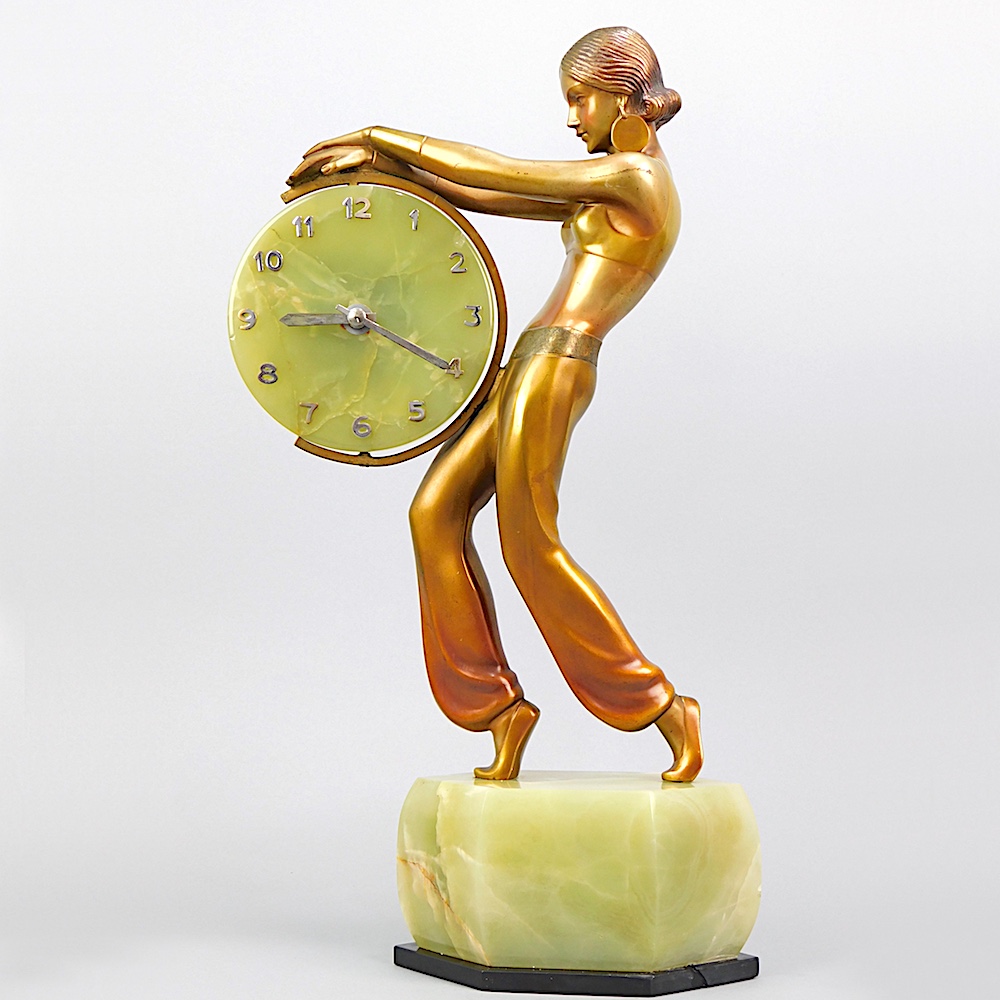
Lorenzl Josef (1892 – 1950)
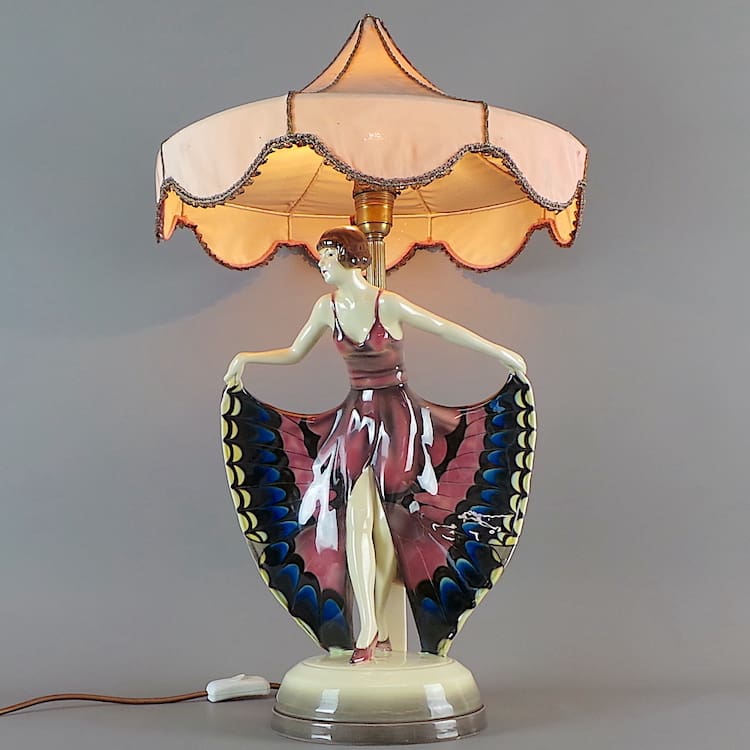
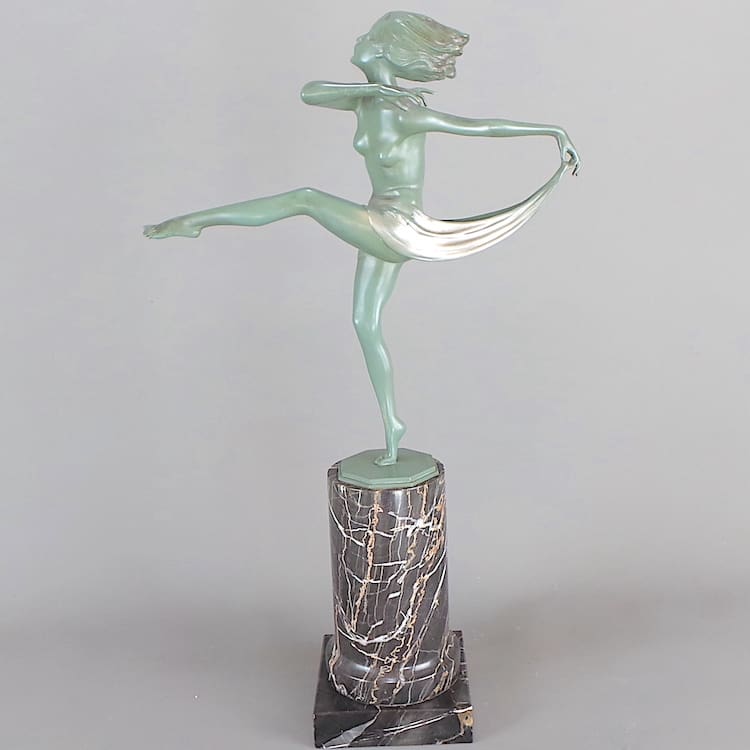
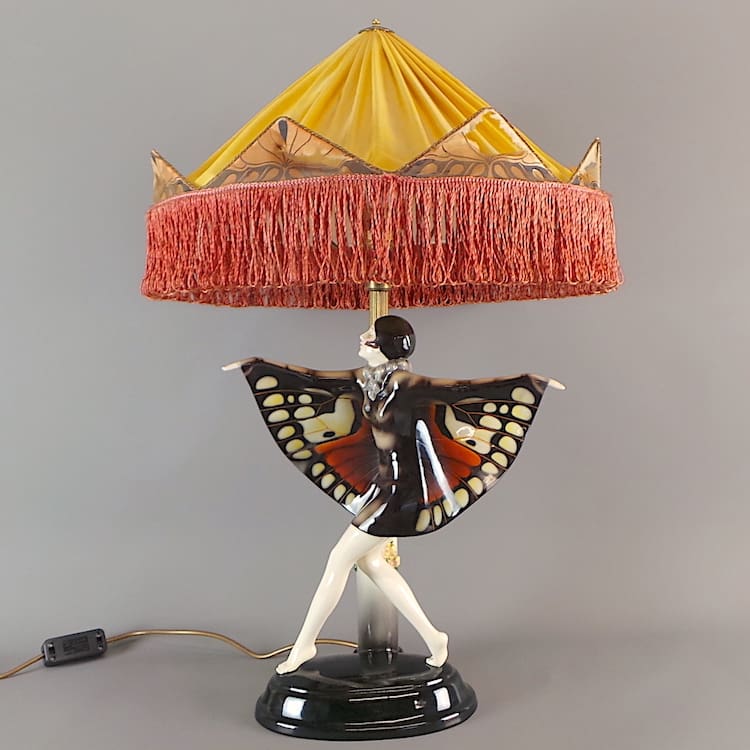
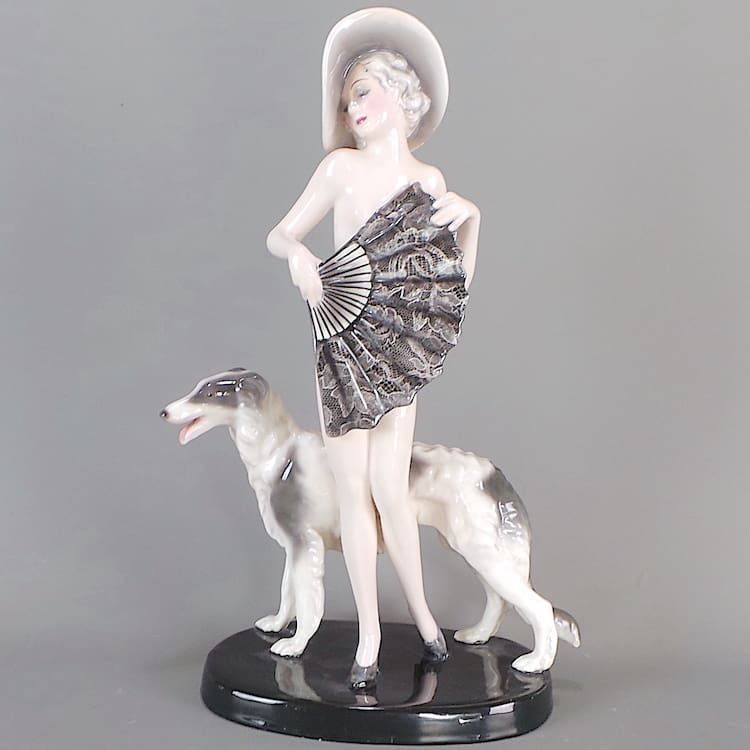
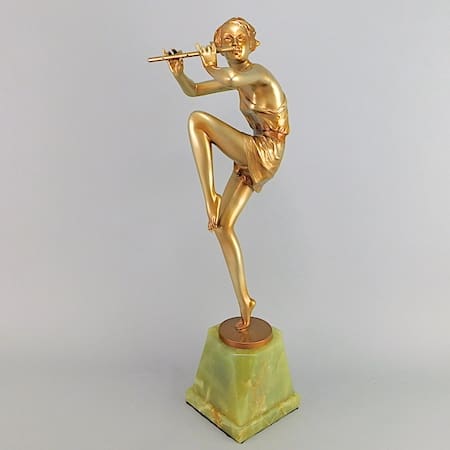
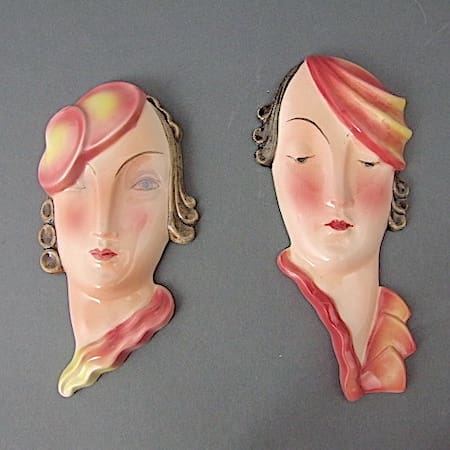
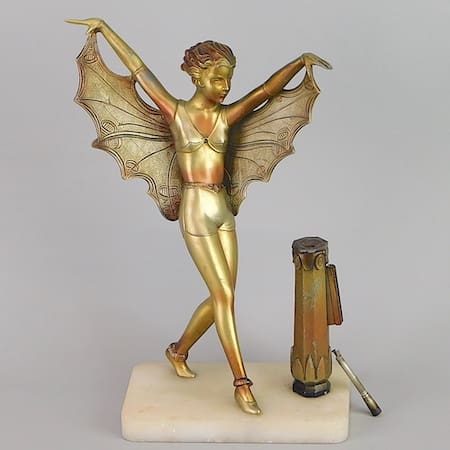
Josef Lorenzl was an Austrian sculptor and ceramist and one of the most famous sculptors of the Art Deco period. Most of his figures were singular slim female nudes with long legs which conveyed elegance, usually in dancing poses. Some of his figures were used to accompany mirror glass or marble clocks, lamps and also produced as bookends. He also made many figural strikers (lighters) mainly in spelter wall masks and ceramic figures.
He used various materials mainly, bronze, spelter, and bronze and ivory. Similar figures were often made in various sizes. He designed many ceramic busts, figurines and wall masks for Friedrich Goldscheider and Keramos. Lorenzl signed his pieces Lorenzl but also used abbreviations of his name, Lor, or Enzl and many pieces were unsigned.
His work was very similar to that of Dakon and at one time it was believed that Lorenzl and Dakon were one and the same artist.
Lorenzl worked at the bronze foundry in the Vienna Arsenal. Whilst there he made the acquaintance of Stephan Dakon who later became a fellow colleague at Goldscheider in Vienna. It was on Lorenzl’s recommendation that Dakon was employed by Goldscheider in 1924 as a freelance designer.
Lorenzl’s work is now highly sought after by collectors world wide and his name is known for the quality of the pieces and the designs that he produced. His pieces now command very high prices.
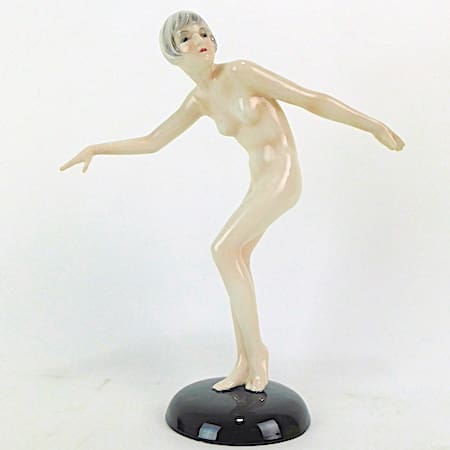
Lormier, Jean
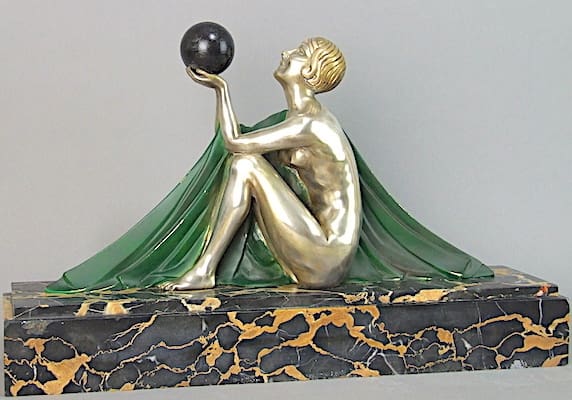
Made several Bronze figures during the Art Nouveau and Art Deco Period. Very little information can be found beyond that.
Lourioux, Louis (1894 – 1930)
Born in France in the Cher in 1894, this talented potter was a contemporary of Lalique and Galle. He worked predominantly in stoneware and was noted for his glazes. His father had encouraged him to work at the porcelain factory of Buchon and Legros and he took over the running of it in 1924. He rapidly developed the company and showed imagination and technical expertise. He worked closely with Aristide Pipet, the sculptors Joe Descomps, Charles Lemanceau and Cormier.
He produced pieces for Galeries Lafayette and Primavera. Some of his pieces were salvaged from the Titanic. He died in an accident whilst driving his convertible Delahaye Grand Sport in Bourges at the young age of 35 and is buried at Foecy, where his tomb, designed by Charles Lemanceau is typical of the period between Art Nouveau and Art Deco in which he lived and worked.
The factory was then run by his wife until 1949. Pieces are marked either with the two wings, each with an ‘L’ – a play on words in French – deux ailes – two wings and two ‘L’s, or with the stamp of a running female wolf. The original Lourioux factory was bought by the Philippe Deshoulieres group, another ceramics designer, and is now run as a museum.
Luce, Jean (1895 – 1964)
A French Art Deco ceramist and glass work designer. Jean first worked in his fathers ceramics company producing table ware. He first showed his own work in 1921at the Musee Galliera in Paris and other salons. In 1923 he opened his own shop.
From 1924 he produced pieces that were heavily sand blasted in mirrored glass with geometric patterning. In 1935 he produced ceramic and glass table ware items for the Normandie ocean liner. These included the large chunky glass deeply sand blasted centre table trays in mirrored glass which are now highly sought after. These items later adopted by Compagnie Generale Transatlantique flor other ships. He taught at the Ecole des Arts Appliques in Parisand was a technical adviser at Sevres.
Ludwik, Peter (1902 – 1983)
Born in Berlin. Painter, theatrical designer, ceramic wall mask artist and sculptor. Interned as a prisoner of war.