
A – B – C – D – E – F – G – H – I – J – K – L – M – N – O – P – R – S – T – U – V – W – Z

Tedd
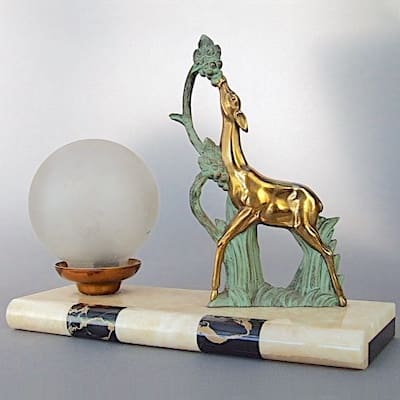
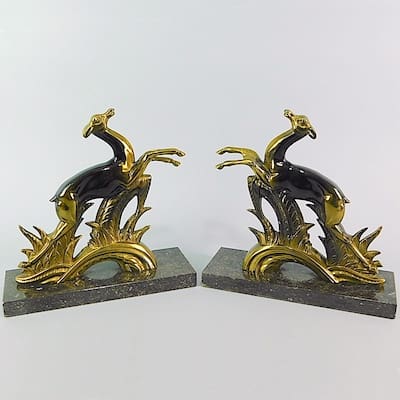
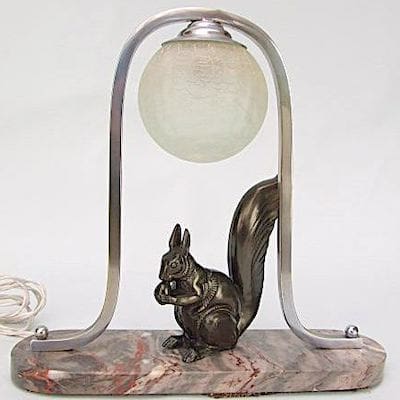
I believe Tedd was a small French Atelier who mass produced the cheaper spelter animal figures, which they probably supplied to other workshops to be used in figural groups along with ladies by the other foundries. They also produced some figural lamps and clocks themselves.
Tereszczuk, Peter (1875 – 1963)
Ukrainian sculptural artist, worked in Vienna. Produces statues, inkwells, table lamps and other items in bronze, bronze and ivory and also in glass.
Thenot, Maurice Rene (1893 – 1963)
Mainly famous for his medals and engravings. He was pupil to master engraver Patey. He won the gold medal at the Annual Competition for Young Workers in Paris in 1912. In 1920, he was accepted as apprentice at Arthus Bertrand, one of the leading manufacturers of medals in France. In 1921, he won the Grand Prize of Rome, studied at Villa Medici in Italy. In 1925, Thenot was awarded a silver medal at the International Exposition of Decorative Arts in Paris. From 1927-1935, he lived in Africa. In 1937 he was awarded a gold Medal at the International Exposition of Arts and Techniques in Paris. That same year he was selected for the position of Chief Engraver of the Casa de Moneda where he worked from 1937 to 1958.
Thomasch, Wilhelm
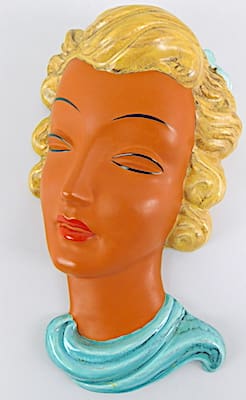
The company of Thomasch was formed in 1926. After training as a sculptor at Viennese schools of art he became works manager for Goldscheider and designed some very important figures. He left in 1926 and formed his own company.
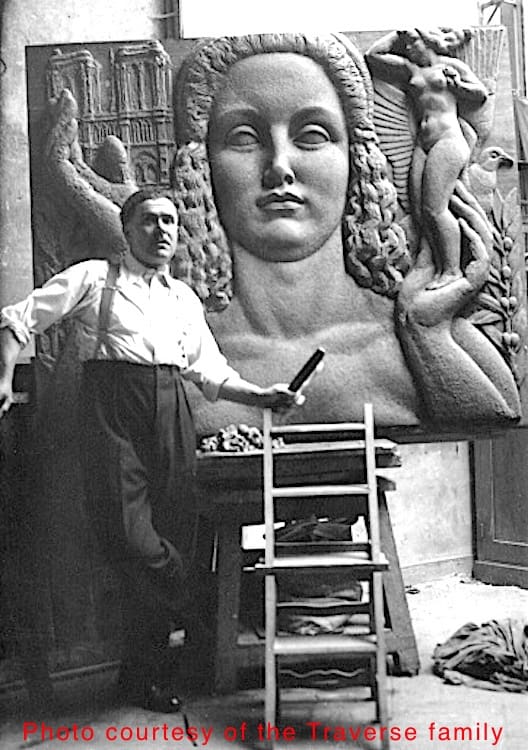
Traverse, Pierre (1892 – 1979)
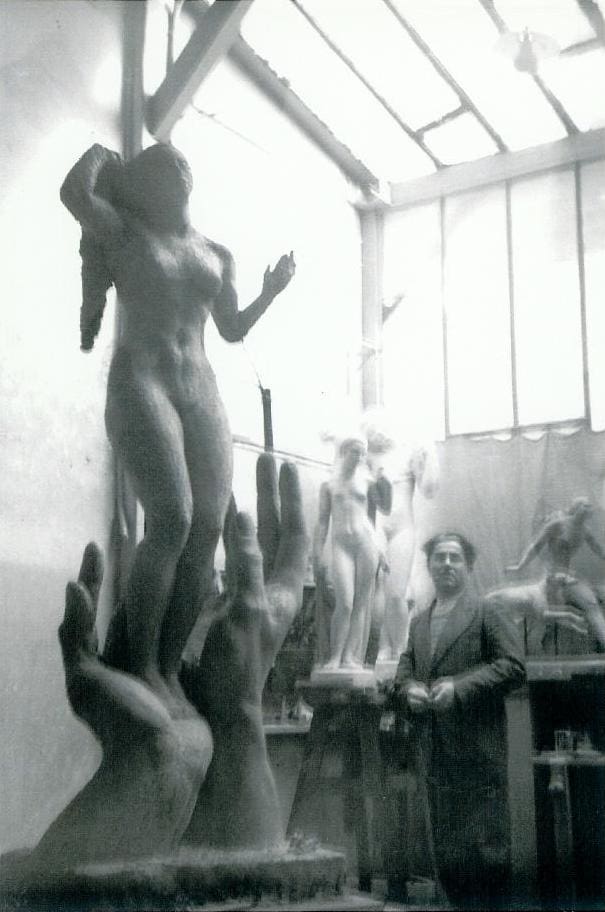
Born 1st April 1892 in St. Andre de Cubzac, Dordogne, France. Pierre was one of 7 children (4 sisters and 2 brothers) and by 1908 had produced his first known sculpture “Le Chien” (The Dog).
Pierre enlisted in Bergerac ahead of his call and served as an Infantry lieutenant during the 1st world war but was seriously wounded in 1916 at the Battle of Mesnil.
In 1919 Pierre married Valentine Foulon and they had 2 children.
Pierre then studied under Jean-Antoine Injalbert (1845 – 1933), and exhibited at the Salon des Artistes Francais of which he was an Hors-Concours member, the Salon d’Automne and the Salon des Artistes Decorateurs.
He received a silver medal in 1921, a gold medal in 1926 and a diploma of honour in 1937 at the Exposition Internationale in Paris. He was also awarded a Medal of Honour in 1942 and was decorated with the Legion d’Honneur in 1938.
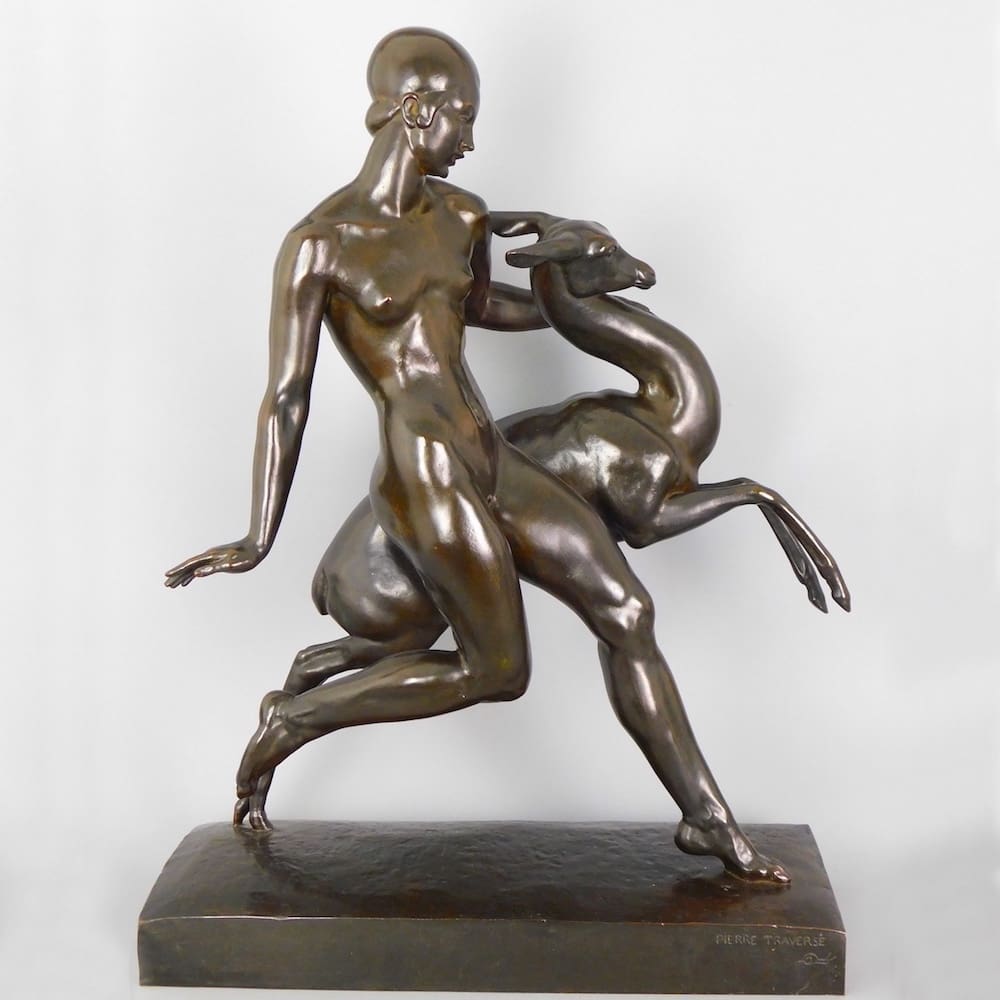
Pierre’s work can be found in the Musee du Petit Palais in Paris and other fine collections held internationally today. He was a sculptor who worked primarily in bronze, stone, and white marble. One of his most well known art deco statues is his Diane and Deer statue named L’Atalante (right).
Pierre died on the 4th July 1979 in Paris and is buried in Neauphle le Château near his wife who predeceased him by 15 years.
He produced items in a variety of sizes, some of them much larger than life-size. Pierre also produced paintings, mainly of scenery, in his early career.
If this information is interesting to you then we insist that you read our Blog on Pierre Traverse which dives into much greater detail on his life.
Tribout, George Henri (b. 1884)
French artist born in Paris in 1884. He studied at the Universite de Notre Dame in Boulogne. He started painting in the Cubist style and exhibited at the Salon des Independants in 1909. At the time he lived in Saint Cloud and he was friend with Ensor, Montald, and Stephen Zweig, who all advised him on his painting. After the 1st war he painted landscapes and portraits and exhibited at the Galerie Alligons in Paris, his works were permanently displayed there. He exhibited in the expositions of ceramics at L’Exposition des Arts Decoratifs in 1925, in Paris. At this time Tribout also designed posters, theatrical costumes and sets and ceramics. Many of his ceramics works were produced by Sevres.
Triomphe, Joseph Sapey (1897 – 1956)
A French sculptor born in March 1897 in Lyon and died July 18, 1956 in Paris. He was a student of Jean-Baptiste Larrivé at the National School of Fine Arts in Lyon, where he obtained the first prize in 1923 followed by the Paul Chenavard prize at the École nationale supérieure des beaux-arts in 1926. During the 1920s he exhibited at the Salon d’Automne in Lyon, reliefs and various topics, nudes, animals in the simplistic line of François Pompon , religious allegories and treated with art stylization close of the Art Deco which prefigures neoclassicism , such as the bust of La Tête de Geoffroy. In 1926 the French government brought from him for the Salon d’Automne in Lyon his statue The Virgin. During the 1930s he designed perfume bottles for Lanvin, and base reliefs for musical and electric companies like Pathe-Marconi and Hohner accordions. He had an atelier in Paris. In September 1943, his workshop at 5 rue Jean-Ferrandi in Paris was totally destroyed by a bomb targeting the Montparnasse station . All works from this period are destroyed. Many or his works are in public collections.
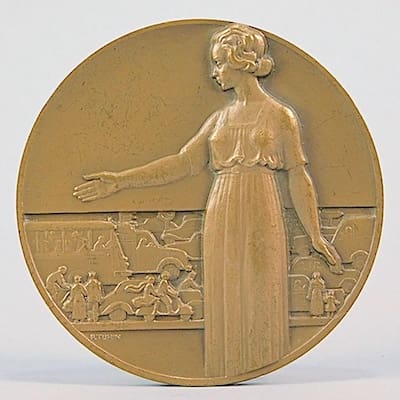
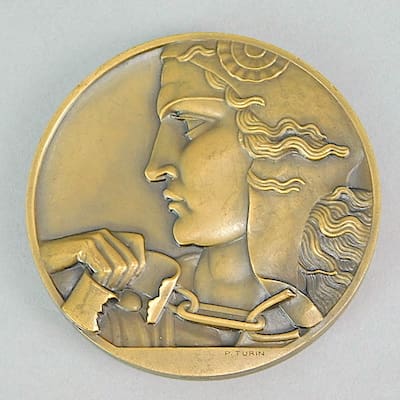
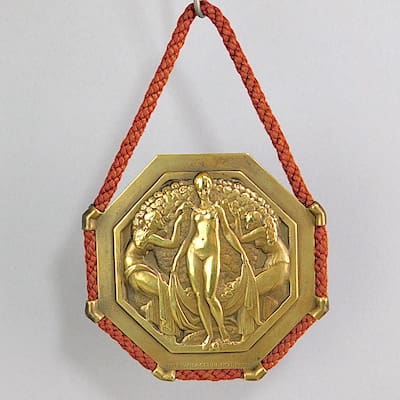
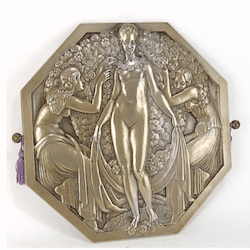
Turin, Pierre (1891 – 1968)
French medalist. He studied at Ecole Nationale Superieure des Beaux-Arts in Paris, pupil of Vernon and Patey. Won the Premier Grand Prix de Rome de gravure en medailles in 1920. Medaille d’honneur at Salon des Artistes Francais.
Tutter, Karl (1883 – 1969)
born in Germany, Karl Tutter was one of the most famous porcelain modellers of the 20th century, along with Carl Werner. He gained fame and acclaim internationally for his porcelain masterpieces and was probably the artist most responsible for the reputation of Hutschenreuther art figurines. He was a prolific artist for Hutschenreuther, and produced memorable pieces including Mephisto, Sonnenkind, Nach dem Bade and Finale, for over 40 years.