
A – B – C – D – E – F – G – H – I – J – K – L – M – N – O – P – R – S – T – U – V – W – Z

Wagenfeld, Wilhelm (1900 – 1990)
German architect-industrial designer, was an assistant instructor at the Bauhaus school in 1925. His MT8 table lamp is one of the earliest examples of Bauhaus design philosophy and is still being produced. Best known for his jewellery and glasswork, he designed many kitchen and tableware products in the 1940’s. Later projects included hospitality packs for Lufthansa, porcelain tableware for Rosenthal, appliances for Braun, and lighting for WMF and Schott. His designs and writing stressed a functional approach as a prerequisite to good design.
Wahliss, Ernst
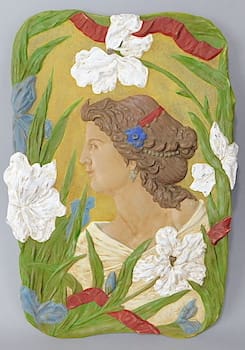
Ernst Wahliss of Turn-Wien, Austria, was a highly regarded artist who designed Amphora art pottery and art nouveau figures and busts. He enjoyed much success beyond Europe.
Wahliss produced between 1897 and 1906 some of the most beautiful female art nouveau busts and figures which are highly sought after today by collectors given their beauty and technical complexity.
Wahliss was unique among the amphora manufacturers for having his own retail shops in London and Vienna.
Walery, Lucien (1863 – 1935)
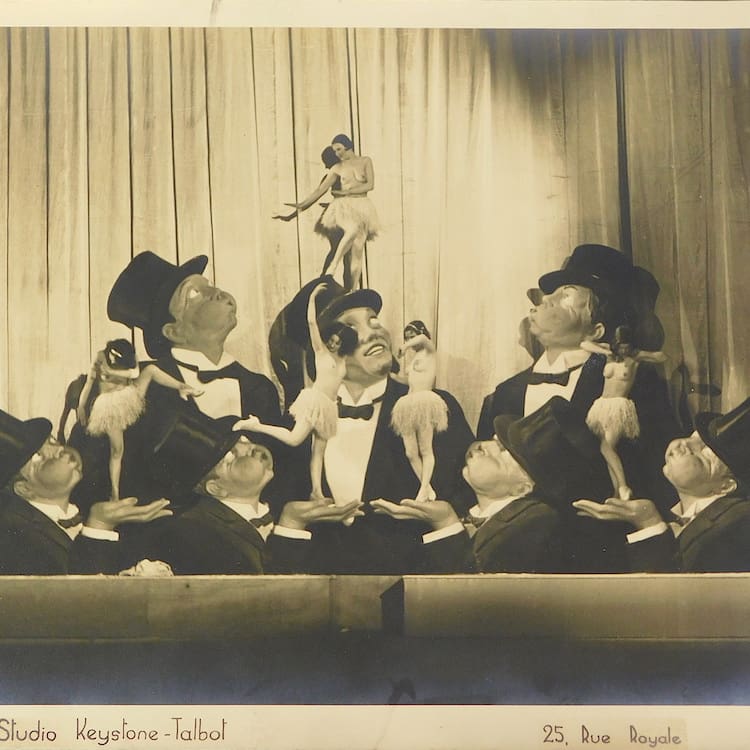
Lucien Walery’s contribution to the art deco movement is primarily due to his photography and reproduction as photogravures of a catalogue of nude dancers in Paris in 1923 – many from the Ballet Russe and Folies Bergere in art deco poses – some of which were copied by the statue artists of the time.
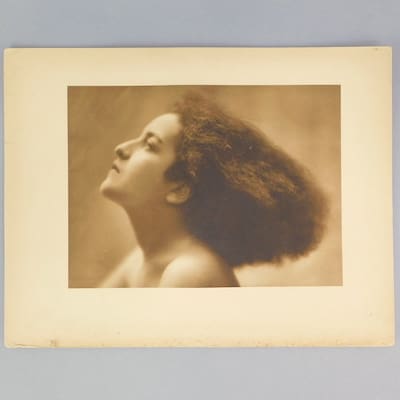
There is some confusion over the name of Walery as there were two or more photographers using the same name including the Lithuanian Count Stanislaw Julian Ostrorog (1830-1890) who used the name as an adaption of his wife’s name Waleria. His son also followed in his fathers footsteps and Walery and his son were later based in Britain and were responsible for a number of photographs of famous people of the time including Queen Victoria.
The younger Count Ostrorog is often confused with Lucien Walery, who lived and worked in Paris in the period 1900-1930, and is known for his photographs of dancers mentioned above as well as photographs of leading ladies of the period including Mata Hari and Josephine Baker. Lucien signed his photographs ‘Walery – Paris’, ‘Yrelaw’, or ‘Laryew’.
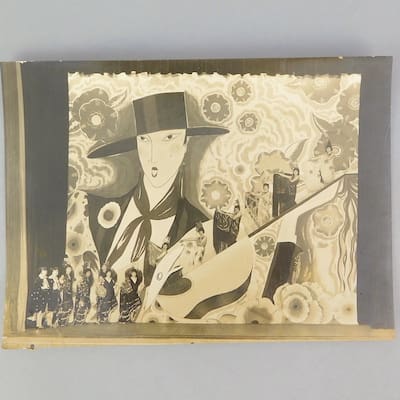
Some believe that Lucien is the same as the younger Count Ostrorog, who is supposed to have moved to Paris, around 1900. More likely Lucien is altogether a different person of which there appears to be very little information.
Because of the nature of his photographs, (which were considered very risque to say the least in the 1920’s), he published them using his pseudonym which was Laryew. Walery was just a rearrangement of the letters of his name. Many artists did this at that time. He moved to Marseilles and then on to Paris following in his fathers footsteps as a photographer to the rich and famous. Whilst in Paris he befriended Josephine Baker and photographed the girls of the Folies Bergere. He is considered by many to have been a true master of art deco photography. I have several of these photogravures and apparently all the ladies in them were dancers from the Folies Bergere, each one is numbered with a Roman numeral. Our selection of Walery pictures were published as a collection of 100 photogravures by Librairie des Arts Decoratifs. However, we do not have the entire catalogue and we also have several doubles of the same picture.
Walther, Ludwig (1890 – 1972)
Ludwig Walther was born in Erbach, Germany in 1890 where he also died in 1972.
He trained under Carl Haebler in Baden-Baden and later under Ferdinand Preiss in Berlin, where he specialised in the production of dancers.
Many of the ivory nudes from the Preiss-Kassler workshop attributed to Preiss were designed by Walther.
Weiss, Claire (1906 – 1997)
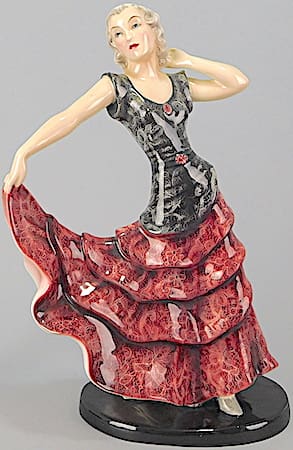
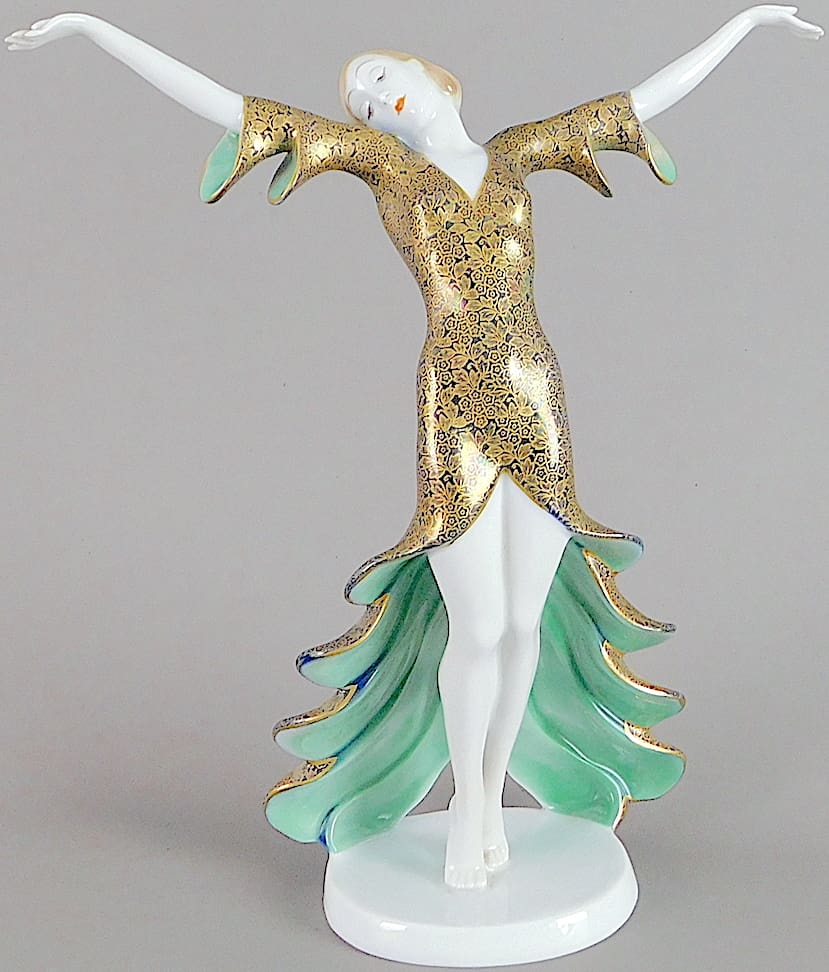
A ceramic sculptural artist based in Vienna and worked in the Arsenal foundry.
Studied at Budapest Art School from 1924 to 1928 and then worked in Berlin.
Created models for Goldscheider, Rosenthal and Lenci.
Werner, Carl (1895 – 1980)
A sculptor and one of the most important German porcelain modellers of the 20th century.
He studied at the University of Art, Weimar and also in Prague and Cologne. In 1922 he started work as a sculptor for Hutschenreuthr AG and in 1960 he was appointed head of the department.
He created many wonderful figurines including Die roten Schuhe, Bajadere and Schwerttanzer and also many animalier sculptures.
Wiener Werkstatte (Vienna Workshops) (1903 – 1932)
Series of Austrian craft workshops founded by Koloman Moser who was inspired by the attempts of the Vienna Secessionists to bring more abstract and purer forms to design. Mostly famous for its ceramic creations including many wall masks. Associated designers included Josef Maria Olbrich and Koloman Moser. Their designs included silver, glass, metalwork, furniture and even buildings. Koloman Moser was originally trained as an architect (as is often the case), he was influenced by the Scottish born Charles Rennie Mackintosh and the Glasgow School.
Wright, Frank Lloyd (1867 – 1959)
A prolific commercial and residential American architect and designer, father of the Prairie school of architecture. His works are well documented.
W.M.F. (Wuttembergische Metallwarenfabrik), (1880 – present)
This Austrian metalwork foundry was the most successful German art pewterer of the Art Nouveau period. Mass producing good quality, mainly decorative wares in high Nouveau style. The firm also produced items in glass.